
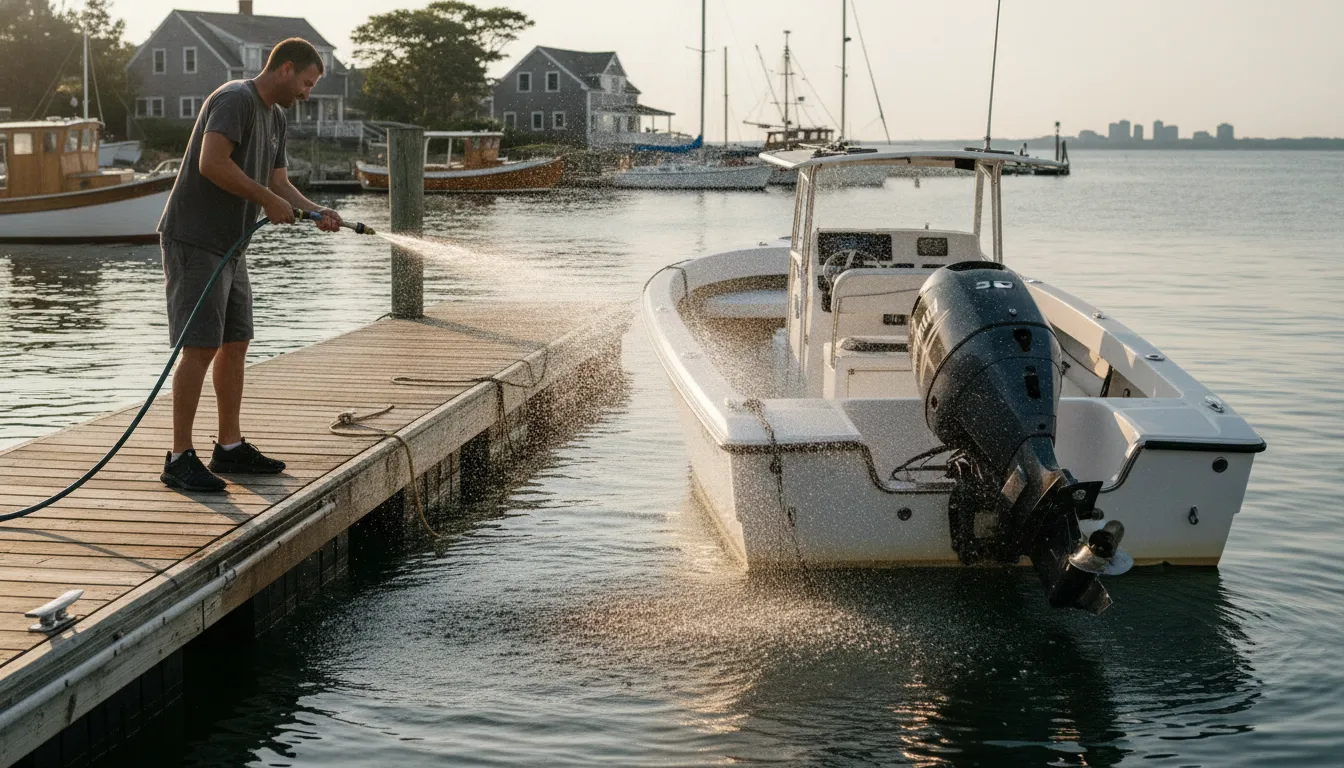
Boating from Boston Harbor to the North Shore is easier when your outboard receives consistent attention between trips. Saltwater, fuel, cooling water, and seasonal use can all affect performance, but routine care does not have to mean attempting complex repairs. A quick rinse, visual check, and service plan can help you spot concerns early.
Interested in easier boating? Book a Carefree Boat Club tour.
Outboard motor maintenance combines after-trip rinsing and inspection with model-specific fluid checks, scheduled service, and prompt attention to warning signs. Follow the owner’s manual and use a qualified marine technician for repairs or questions beyond a basic visual check.
The right routine starts immediately after you return to the dock. Here is what to look for after every trip, how Massachusetts saltwater conditions shape your rinse-down, and when a concern should move from your checklist to professional service.
What Does Outboard Motor Maintenance Include After Every Trip?
An after-trip routine helps you catch small problems before they interrupt your next outing. Modern outboards are more complex and need consistent basic care. The exact steps depend on the engine. Follow the owner’s manual. Ask a qualified marine technician when a check moves beyond a visual observation.
What should you check before leaving the boat?
- Shut down and look for anything unusual. Note new vibrations, sounds, visible leaks, or a change in how the motor operated. Do not diagnose a problem by guesswork. Record what you observed so you can describe it accurately to a technician.
- Inspect the cooling-water path. Make sure the cooling-water intakes are clear of weeds, mud, and debris. A blocked intake can interfere with cooling. The engine-specific manual controls whether any additional flushing or post-use procedure is required. This outboard maintenance guide explains why cooling-system care belongs in routine maintenance.
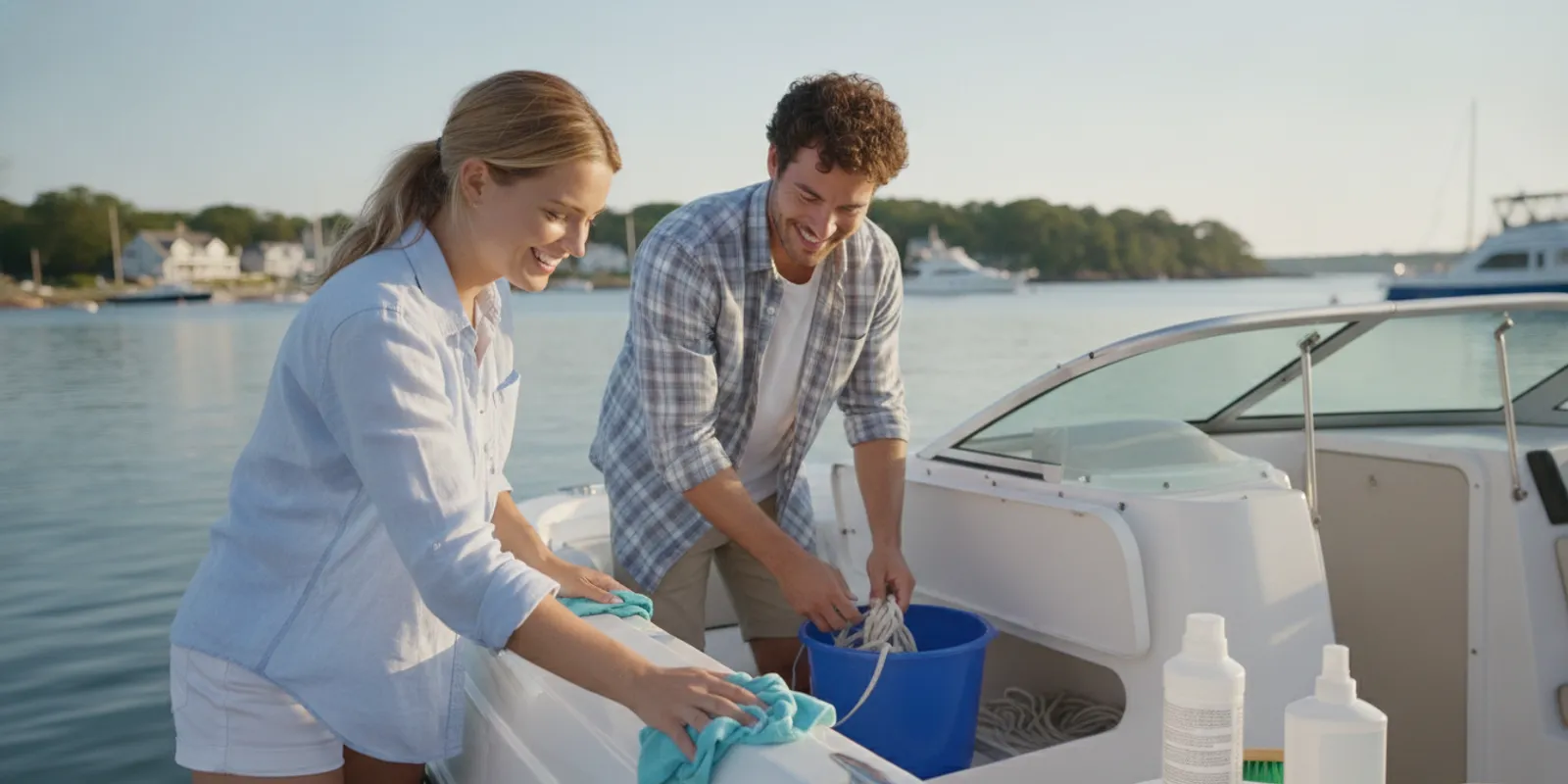
- Rinse and clean as appropriate. Remove salt, dirt, and debris according to the manufacturer’s directions, then complete a quick visual check of accessible components. Use this post-outing boat cleaning checklist to keep the process consistent without turning it into an improvised repair session.
- Review the next departure. Before using the boat again, check the controls, steering, throttle response, fuel-system condition, and fluid levels. For operating context, review these pre-departure boat checks.
- Escalate instead of experimenting. Most outboards need periodic maintenance and adjustment, but the correct schedule varies by engine. When uncertain, consult the authorized owner’s manual for that motor or a dealer, as this Oregon State-hosted outboard service bulletin advises.
Private boat owners may handle these observations, while repairs and model-specific service belong with the right professional. Carefree Boat Club members do not personally carry the full maintenance burden for club boats. Trained dock staff conduct weekly 50-point inspections covering engine operation and fluid levels, steering and throttle response, fuel-system integrity, hull condition, bilge pumps, and electrical systems.
How Should You Flush and Rinse an Outboard Motor in Massachusetts Waters?
Saltwater and brackish water leave residue on an outboard. So a rinse-down should be part of your post-trip routine after boating in Boston Harbor, along the North Shore, or in another coastal area. Start by following the engine manufacturer’s instructions for connecting the correct flushing equipment. Keep cooling-water intakes clear, and never improvise a procedure that conflicts with the owner’s manual.
What should you check before and during a rinse?
Before flushing, inspect the lower unit and cooling-water intake area for weeds, mud, sand, or other debris. A blocked intake can interfere with cooling, while residue left on exposed surfaces can contribute to corrosion over time. Rinse the boat and motor with fresh water as directed, paying attention to salt deposits around fittings and other accessible exterior areas. Avoid forcing water into electrical connections or other openings that are not intended for rinsing.
Flushing is not the same as running an engine dry. Do not operate an outboard without an adequate water supply, and do not invent a flush duration. The appropriate connection, operating procedure, and timing depend on the engine design and manufacturer instructions. The University of Alaska Fairbanks outboard maintenance guide emphasizes keeping cooling intakes clear and maintaining the water-pump system.
Afterward, look for continuing salt residue, leaks, damaged hoses, or an unusual cooling-water telltale. Check the surrounding work area for pooled water or loose connections before securing the boat. If something looks wrong, stop and consult the owner’s manual or a qualified marine technician rather than guessing. Add this rinse-down to your Massachusetts boating season planning so it remains consistent from spring launch through the final coastal outings.
Which Fuel, Oil, and Cooling Checks Belong on a Maintenance Checklist?
Fuel, oil, and cooling checks are small observations that can reveal a problem before it becomes a difficult day on the water. Start by identifying the engine type and following its owner manual. Maintenance strategies differ among carbureted two-strokes, direct-injection two-strokes, and four-stroke engines, so guidance for one design should not be applied automatically to another. The University of Alaska Fairbanks outboard maintenance guide provides useful background, but the engine maker’s specifications control your actual procedure.
What should you inspect before treating a symptom as a repair?
| Check | Why it matters | Reader action | Escalation |
|---|---|---|---|
| Fuel tank, vent, hoses, and connectors | Water, debris, restricted air flow, cracks, abrasion, corrosion, or dirt can affect fuel delivery. | Look over the system. Confirm the vent allows free air passage when opened, and check hoses and connectors visually. | Stop and ask a qualified marine technician to investigate any leak, damaged hose, or suspect connector. |
| Fuel-water separator and filter canister | Water accumulation, rust, or dirt can signal contamination in the fuel system. | Check the separator periodically for water. Follow the manual for safe draining or filter replacement. | Escalate when water is present or the canister shows rust or dirt instead of guessing at the cause. |
| Oil on a two-stroke engine | Some two-stroke applications require clean TC-W III oil and a specified fuel mixture or oil reservoir. | Use only the oil type and mixture or reservoir method specified by the motor maker. Do not generalize this guidance to four-stroke engines. | Consult the engine manual or technician if the oil type, ratio, or reservoir arrangement is unclear. |
| Cooling-water intakes and impeller condition | Blocked intakes or an impeller that is not in good shape can compromise cooling. | Keep intakes clear during a visual check. Do not disassemble components unless the manual and your experience support it. | Have a technician assess overheating concerns or an impeller issue before the next outing. |
| Primer bulb and carburetor, where fitted | A soft bulb, failed internal check valves, or a carburetor leak can point to fuel-system trouble. | Inspect for leaks and squeeze the primer bulb as described by the engine manual. | Do not operate with a suspected leak. Arrange qualified service. |
For a broader Massachusetts-focused review of onboard conditions, use this Massachusetts boat inspection checklist. Keep the emphasis on observation: clean fuel, correct model-specific oil guidance, clear cooling intakes, and prompt escalation when something looks wrong. The UAF guide is a helpful reference for these checks, but it does not replace the instructions for your particular outboard.
When Should You Schedule Professional Outboard Service?
Schedule professional service when the manual calls for it. Arrange it after unusually heavy use or an unanswered concern. No single interval fits every outboard. Carbureted two-strokes, direct-injection two-strokes, and four-stroke engines can have different maintenance needs, so the owner’s manual for your particular model should guide the timing. The Oregon State-hosted outboard bulletin also recommends consulting a dealer or the engine-specific authorized manual when you are uncertain about service: review the outboard maintenance guidance.
What should a professional service visit cover?
A qualified marine technician can handle adjustments and inspections that go beyond a quick dockside look. That may include reviewing the cooling system, confirming that water-pump and intake components are in proper condition, and checking fuel-system parts that show wear or contamination. The Alaska Sea Grant guide notes that cooling intakes should remain clear and that the lower-unit oil should be changed annually for the small kicker engines discussed in that guide. That recommendation has a limited scope. It is not a universal annual rule for every outboard, so use your engine maker’s schedule instead: read the cited outboard maintenance guide.
Plan service before Massachusetts boating gets busy. Schedule it after winter storage, heavy use, or a new sound, starting issue, fluid concern, or cooling symptom. Do not wait for a convenient appointment if the engine is showing a serious warning sign. Stop using it and ask a technician for direction.
For broader ownership planning, see our guide to Massachusetts boat maintenance costs and review New England winterization planning before the off-season. Those resources can help you organize questions for a marine professional without replacing the model-specific manual.
What Warning Signs Mean Your Outboard Needs Attention Before the Next Trip?
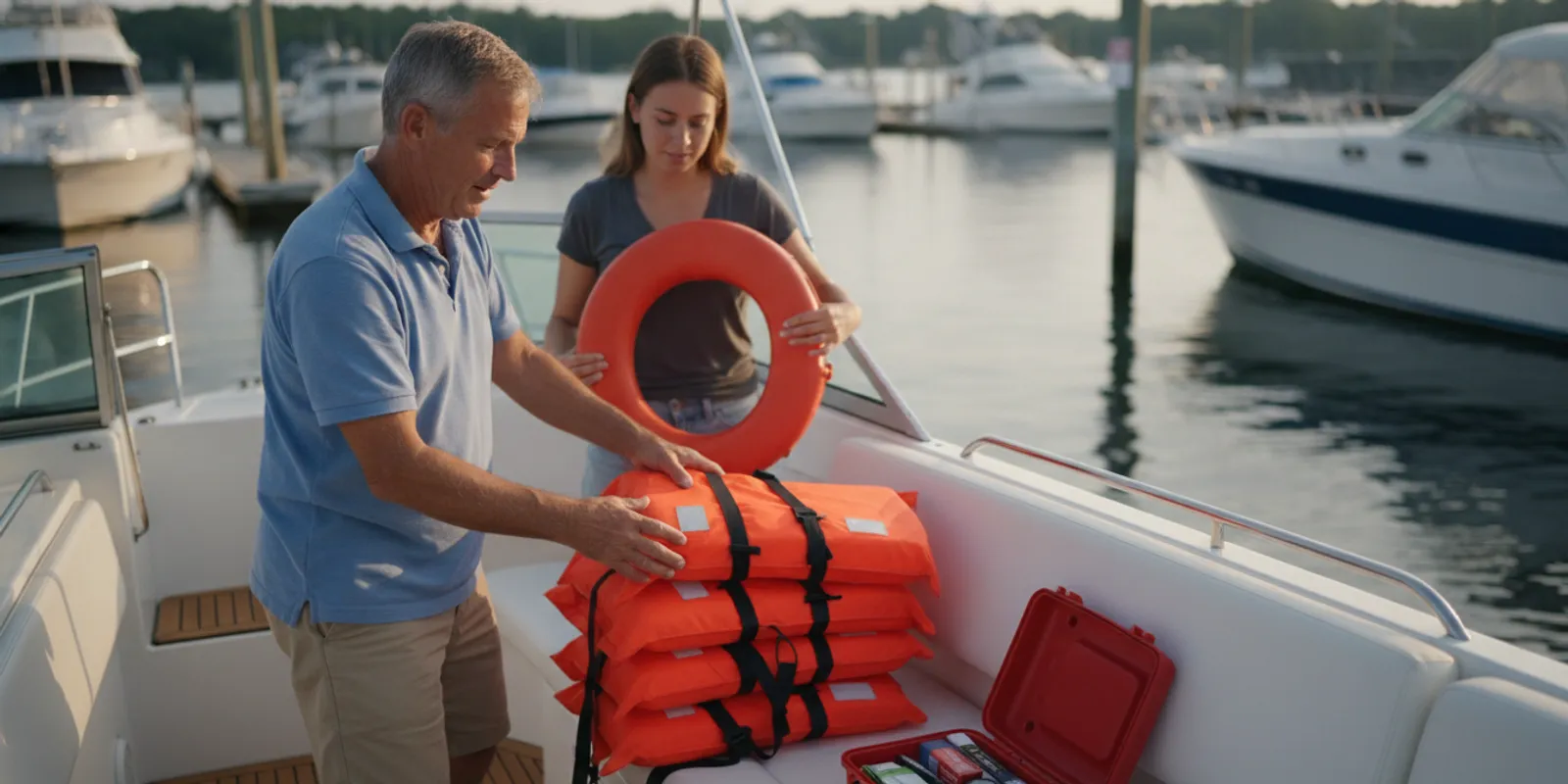
Routine outboard motor maintenance is easier when you know which changes deserve attention. A weak cooling-water stream, an alarm, a new fuel smell, or a change in engine sound can signal a problem. Investigate it before leaving the dock. Start with a visual check, follow the engine-specific owner’s manual, and avoid troubleshooting beyond your experience.
Which symptoms should make you stop and escalate?
Cooling intakes should remain clear, and the engine should not show signs of overheating. Fuel-system checks also matter: hoses should not have cracks or abrasion, connectors should not show concerning corrosion or dirt, and a filter or carburetor should not be leaking. The maintenance guide from the University of Alaska Fairbanks recommends checking these components as part of basic outboard care: review the outboard maintenance guide for model-specific context.
- Weak or absent cooling flow: Stop and investigate rather than continuing to run the motor.
- Overheating or an oil-pressure alarm: Shut down safely and arrange qualified service before the next trip.
- Fuel leaks or a strong fuel odor: Treat this as an immediate stop-and-escalate issue. Do not operate until the source is addressed.
- Repeated stalling or sudden power loss: Record when it happens and have the fuel, ignition, and engine systems checked.
- Severe vibration or shifting trouble: Stop using the boat if operation feels unsafe and request an inspection.
- Milky gear lubricant: Ask a marine technician to investigate possible water intrusion before further use.
Do not rely on a single successful restart to dismiss a warning. In Massachusetts, changing conditions and saltwater exposure can make a developing issue more consequential. If you are unsure what a symptom means, consult the manual or a qualified technician. Newer boaters can also build confidence through a Massachusetts boat inspection checklist and on-the-water training.
How Does Outboard Motor Maintenance Fit a Carefree Boating Routine?
For a privately owned boat, outboard motor maintenance can mean tracking service needs, arranging repairs, protecting the engine between trips, and preparing for Massachusetts’s changing seasons. Carefree Boat Club separates boating enjoyment from those ownership responsibilities. Members can focus on learning the boat, making a safe departure, and enjoying Boston Harbor or the North Shore while the club manages the service program.
What Do Members Handle, and What Does the Club Handle?
Members are not expected to carry out the club’s maintenance and repair workload. The service model includes boat maintenance and repairs, as well as cleaning, winterization, and storage. Basic operating knowledge still matters. Training covers motor starting, warm-up, shutdown, basic troubleshooting, and fuel-efficiency guidance, so members can operate thoughtfully and recognize when a concern should be reported. You can learn more about on-the-water training before your first outing.
Trained dock staff conduct weekly 50-point inspections. Those checks include engine operation and fluid levels, steering and throttle response, fuel-system integrity, hull condition, bilge pumps, and electrical systems. This recurring oversight is different from asking a member to diagnose an engine or perform a repair. If a mechanical question comes up, staff can direct it into the appropriate service process rather than leaving the member to guess.
The club operates in Boston, Danvers, and Gloucester, giving Massachusetts boaters locally grounded access to different harbor and coastal settings. Members also receive reciprocal access to Carefree boats at 150+ participating locations nationwide. Browse the Carefree boat fleet to understand the types of boats available, then contact the club to arrange a tour and ask how the maintenance responsibilities work at your preferred location.
For educational purposes, the same habits still matter: follow the engine-specific manual, complete appropriate visual checks, and report unusual sounds, leaks, or performance changes promptly. The goal is not to turn every member into a marine technician. It is to make each outing more informed while the club’s staff and service model handle the work that comes with keeping boats ready.
Ready to spend more time boating? Book a Carefree Boat Club tour.
Frequently Asked Questions About Outboard Motor Maintenance
How often should an outboard motor be professionally serviced?
Use the service interval in your engine’s owner manual, because schedules vary by model, engine type, operating hours, and service milestone. Plan periodic maintenance and adjustment, and ask a dealer or qualified marine technician when the manual is unclear. The Oregon State-hosted outboard bulletin recommends consulting an authorized manual or dealer when you are uncertain about service.
How often should you change outboard oil?
That depends on whether the engine is a four-stroke or two-stroke and on the manufacturer’s schedule. For a four-stroke, follow the manual for engine oil and filter changes. For a two-stroke, use only the specified oil and follow the maker’s instructions for premixing fuel or filling the oil reservoir. Do not substitute a generic interval or oil type.
Should you flush an outboard motor after every use?
After saltwater or brackish-water use, flushing is a sensible routine when the engine maker’s procedure calls for it. Use the approved flushing method, keep cooling-water intakes clear, and never run the motor dry. Follow the manual for connection, water supply, and operating instructions rather than relying on a universal run time.
What warning signs mean an outboard needs attention before the next trip?
Stop and arrange an inspection for an overheat or oil-pressure alarm or weak cooling-water flow. Also stop for a fuel leak, strong fuel odor, repeated stalling, severe vibration, sudden power loss, shifting trouble, or milky lower-unit lubricant. These symptoms can have different causes, so avoid guessing at a repair and use a qualified technician when the problem is not obvious.
What belongs on an outboard motor maintenance checklist?
Start with a visual check of fuel hoses, connectors, the primer bulb, fuel-water separator, oil level, lower unit, cooling-water intakes, and visible leaks. Add the model-specific service items from your manual, then record unusual sounds, alarms, vibration, or performance changes for follow-up. A checklist supports inspection; it does not replace professional service.
Ready to Make Massachusetts Boating Easier?
A consistent care routine helps you spend more time enjoying Boston Harbor, the North Shore, and Cape Ann. Carefree Boat Club can show you how its maintenance and training model supports a simpler boating experience. This is useful when you want practical guidance without taking on every ownership task yourself.
Book a Carefree Boat Club tour to learn more about easier Massachusetts boating.