
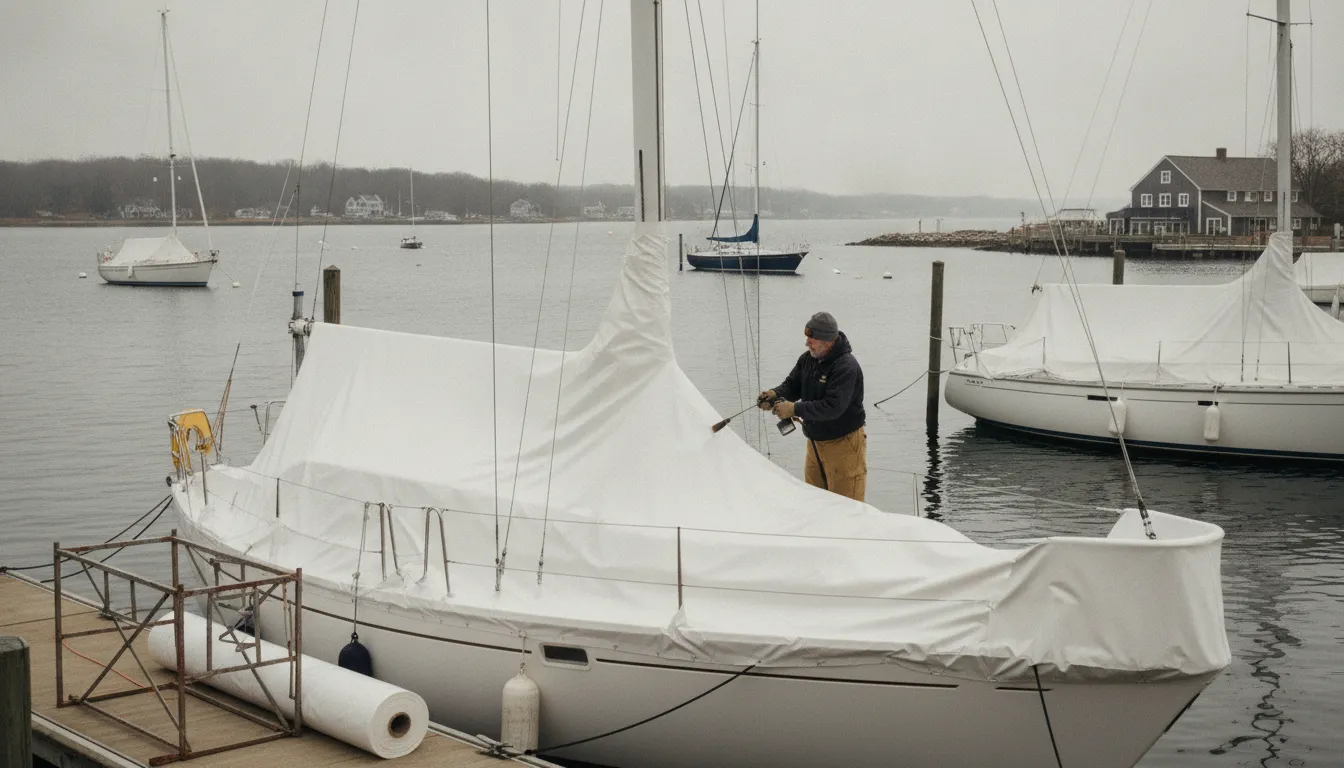
In New England, putting a boat away for winter is more than a quick end-of-season chore. Freezing temperatures, snow loads, haul-out logistics, and spring recommissioning can turn a few weeks of boating preparation into a recurring annual expense. Alongside boat club vs boat ownership decisions, the hidden costs of boat ownership are easy to overlook until the first layup bill arrives.
For many owners, boat winterization cost new england services range from about $220 to $700, while a DIY job may require roughly $250 in supplies. Shrink wrapping commonly adds $12 to $25 per foot, and storage is often separate. Indoor storage combined with yard services can push the total from $500 toward $1,800.
Book a tour to learn how Carefree Boat Club can make your boating season more flexible.
The price depends on what your boat needs, how it is stored, and whether you handle the work yourself or hire a marina. Understanding those pieces makes it easier to compare the real burden of ownership with a membership model that includes professional winterization and storage. Start with the service and storage costs owners typically face.
How Much Does Boat Winterization Cost in New England?
For most New England boat owners, professional winterization costs roughly $220 to $700, depending on the engine, boat size, and services included. A do-it-yourself winterization may cost about $250 in supplies. A simple outboard service can fall closer to $140 to $235, while a complete boatyard package can start around $500 and reach $1,800 when indoor storage is included.
Those figures are starting points, not a single seasonal price. New England’s freezing temperatures, snow loads, and longer layup period can require more extensive protection than winter storage in a milder climate. Winterization is not simply an optional service here. Proper preparation helps protect engine components from freezing damage, rust, and corrosion, as noted in this academic winterization guide.
What is included in the winterization estimate?
A basic professional service may cover engine preparation, fuel treatment, an oil and filter change, cooling-system work, and lubrication. Shrink wrapping is often priced separately at approximately $12 to $25 per foot. That means the length of your boat can affect the final bill even before storage, repairs, or haul-out charges are added.
It is also important to separate winterization from dockage and storage. In the Greater Boston market, slip fees can run about $150 to $250 per foot, and storage is usually billed separately from the winterization service. Ask the marina whether its estimate includes hauling, blocking, cover installation, indoor or outdoor storage, spring commissioning, and any repairs discovered during the inspection.
Why can a boatyard package cost $1,800 or more?
The higher end generally reflects a bundled service rather than winterization alone. A boatyard may haul the boat, wash the hull, complete engine and drive work, install shrink wrap, and store the vessel indoors. Indoor storage offers greater protection from snow and freeze exposure, but it carries a higher premium. Repairs, oversized boats, multiple engines, and specialized systems can also move the total beyond a basic service estimate.
When comparing quotes, request an itemized breakdown instead of choosing the lowest headline price. A lower estimate may exclude shrink wrap, storage, spring commissioning, or the work needed for a sterndrive. Planning ahead around the New England boating season can help you schedule haul-out before demand and weather complicate the process.
What Does Boat Winterization Include? A Step-by-Step Breakdown
- Start with the owner’s manual. Use the manual for your exact engine and vessel as the primary reference, since cooling, fuel, and drive-system procedures can vary by model. The University of Delaware’s winter layup guidance also recommends keeping it close throughout the process: winterization guidance for boats.
- Flush the cooling system and wash down the hull. Flush the cooling system with fresh water to remove salt and debris. Then wash the hull and transom after haul-out to reduce corrosion and stain buildup over the winter.
- Change the oil and filter. Fresh oil and a new filter help prevent acid buildup in used oil from damaging engine components while the boat is inactive.
- Fog the engine with light oil. Applying light oil as directed by the engine manufacturer helps protect internal parts from rust and corrosion during the storage period.
- Prepare the fuel system. Top off the fuel tank and add the recommended stabilizer or conditioner. For applicable engines, drain the carburetor, clean the fuel system components, and change in-line fuel filters.
- Lubricate controls and service the propeller. Lubricate the steering, throttle, and shift linkages with the correct grease. Remove the propeller for inspection, then clean and grease the shaft before reinstalling or storing the propeller as directed.
- Inspect the sterndrive and underwater fittings. Check sterndrive hoses, clamps, and the transom boot for defects, and inspect struts, shafts, and other underwater fittings for looseness, bending, or weakness before the boat is covered.
- Cover or shrink-wrap the boat. Finish by protecting the vessel from snow, ice, moisture, and winter exposure with a properly fitted cover or shrink wrap. A professional marina or boatyard can coordinate haul-out, winterization, and storage when the full layup is more than you want to manage yourself.
Indoor vs. Outdoor Storage: Which Is Right for Massachusetts Winters?
Massachusetts boat owners generally choose between indoor storage, outdoor storage with shrink-wrap, or leaving a properly winterized boat in the water. The right choice depends on your boat, budget, marina access, and tolerance for spring cleanup and weather exposure. In New England, winter conditions are not a minor consideration. Freezing temperatures, snow accumulation, and icing can all create risks for an idle vessel.
When does indoor storage make sense?
Indoor storage offers the strongest protection from heavy snow loads, repeated freezing, and prolonged exposure to wind and moisture. A heated facility adds another layer of protection for vulnerable systems, although it usually commands a higher premium than outdoor storage. That extra cost may be worthwhile for a larger boat, a vessel with sensitive systems. Or an owner who wants to reduce the amount of spring inspection and cleanup.
Indoor storage is not a substitute for winterization. The engine, fuel system, plumbing, steering components, and other systems still need to be prepared according to the boat and engine manufacturer’s requirements. A marina or boatyard can coordinate the haul-out, winterization, cleaning, and storage as one service, which helps ensure the work is completed in the proper sequence. The University of Delaware’s winter boat guidance also emphasizes that a marina or boatyard can haul, winterize, and store a boat properly: winterization guidance for boats.
Is outdoor storage a practical alternative?
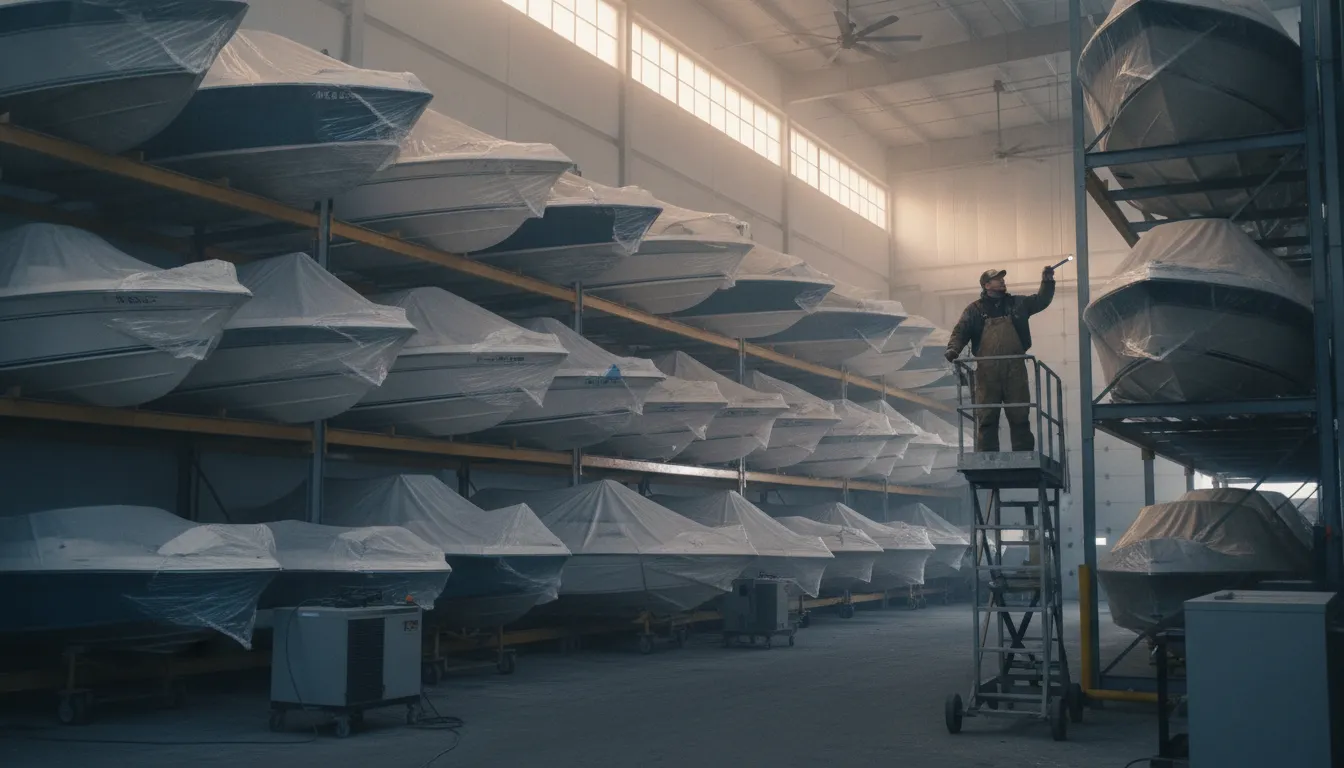
Outdoor storage is typically less expensive, but the boat remains exposed to Massachusetts weather. Shrink-wrap is the standard protective layer because it helps keep snow, rain, and debris out while the boat is laid up. The cover should be installed with adequate support and ventilation, rather than treated as a quick seasonal cover. Outdoor storage also makes the condition of the storage site and the quality of the yard’s preparation especially important.
Ask the marina what is included before comparing quotes. Some facilities provide security surveillance, water, and electricity as part of their storage or dockage arrangements. Those utilities can support winterization and maintenance work, while recorded cameras can provide added peace of mind. The specific services vary by facility, so confirm whether haul-out, shrink-wrap, blocking, winterization, monitoring, and spring launch are separate charges.
Why is leaving a boat in the water riskier?
Icing conditions are the key concern when a boat remains in the water. Even when a boat is not hauled out, winterization is still recommended, and severe icing can increase the possibility of freezing-related engine damage. Do not assume that a plugged-in boat or a winter cover solves every risk. Ask a qualified marina what in-water winterization, monitoring, and emergency response involve for your location.
For many owners around Boston, Danvers, Gloucester, and the North Shore. The most practical choice is the option that combines competent winterization with reliable storage and a clear spring launch plan. Comparing the full package, rather than only the indoor or outdoor storage line item. Gives you a more realistic view of your seasonal boat winterization cost in New England.
Year-Round Boat Ownership vs. Seasonal Membership: The True Cost Difference
Comparing ownership with seasonal membership requires looking beyond the first winterization invoice. A boat owner pays for a series of services that arrive at different points in the fall, winter, and spring. The total boat winterization cost in New England can include labor, protective covering, dockage, storage, maintenance, and repairs. Each line item may seem manageable by itself, but the combination can make the off-season one of the most expensive parts of boating.
| Winter responsibility | Year-round ownership | Seasonal boat club membership |
|---|---|---|
| Fall winterization | Professional service may cost $220-$700, depending on the vessel and work required. | Maintenance and winterization are handled as part of the club experience. |
| Weather protection | Shrink wrap commonly runs $12-$25 per foot, with indoor or outdoor storage selected separately. | No personal boat to wrap, haul, or prepare for extended winter storage. |
| Slip and storage | Slip fees may run $150-$250 per foot, while storage fees can be separate from service charges. | Storage is managed by the club rather than arranged and paid for by the member for a personal vessel. |
| Spring readiness | Owners may pay for commissioning, inspections, and repairs before the first trip. | A maintained fleet is ready to use without the owner’s spring commissioning delay. |
Why the service fee is only part of the ownership calculation
The visible winterization charge is rarely the entire expense. Owners may also pay to haul the boat, transport or install shrink wrap. Rent a storage space, maintain a slip, and correct issues discovered after the boat is opened in spring. Unexpected repairs can add another layer of cost, particularly when freezing temperatures, corrosion, or deferred maintenance reveal problems after several months out of the water.
New England weather makes this planning especially important. A proper winter layup protects the engine and the rest of the vessel from freezing, rust, and corrosion. Skipping a required service may save money in the short term while exposing the boat to a much larger repair bill later. Conversely, paying for every recommended service means the owner is committing time and money before knowing how much of the next season the boat will actually be used.
How seasonal membership changes the value equation
With a seasonal boat club membership, the member is not maintaining a private boat through a Massachusetts winter. The club handles the maintenance, winterization, and storage responsibilities, while the member has access to a fleet that is ready for use when the boating season begins. That removes the annual sequence of arranging a haul-out, comparing storage options, scheduling spring commissioning, and waiting for repairs to finish.
That difference can be substantial. In some New England locations, annual winter storage alone can cost thousands of dollars. Membership shifts the focus from preserving one asset year-round to enjoying boating when it fits the family’s schedule. Members can also use Carefree boats at 150+ participating club locations nationwide, adding flexibility that a single privately owned boat cannot provide. The best comparison is therefore not one winterization invoice against one membership payment. It is the full ownership burden, including hidden costs and uncertainty, against dependable access to a maintained boat without the seasonal layup routine.
How Can New England Boaters Avoid Winterization Costs Entirely?
There is another way to think about the boat winterization cost New England owners face each year: remove the ownership responsibility instead of trying to make the annual process more efficient. With a Carefree Boat Club membership, members use a professionally maintained fleet without having to prepare, haul, store, and recommission a personal boat for every winter.
That means the typical fall checklist is no longer yours to manage. You are not arranging winterization service, coordinating a haul-out, finding outdoor or indoor storage, or returning in spring to troubleshoot a boat that has been sitting for months. Carefree handles the maintenance and storage cycle for its fleet, so boats are prepared through the off-season and ready for members when the boating season returns.
This arrangement addresses more than the initial service invoice. Boat ownership can bring separate storage charges, maintenance needs, and unexpected repairs after winter layup. Those expenses can become especially significant in New England, where freezing temperatures, snow, and seasonal storage requirements add complexity. A club membership replaces that recurring series of tasks with a simpler way to plan time on the water. For a broader look at the financial side of this choice, review our guide to boat club membership costs.
The convenience also starts before you reach the dock. Members can reserve a boat that has already been serviced and prepared, rather than spending the first warm weekends of spring waiting for commissioning or completing repairs. You can focus on planning a Boston Harbor outing, exploring the North Shore, or spending time with family on the water instead of managing a seasonal layup routine.
Carefree membership also extends beyond one local launch point. Members receive reciprocal access to Carefree boats at more than 150 participating club locations nationwide, creating added flexibility for boating trips in other regions. You get the benefits of access and variety without taking on the year-round storage and winterization obligations attached to personal ownership.
Book Your Carefree Boat Club Tour Today
Frequently Asked Questions
How much does it cost to winterize a boat in New England?
Professional winterization commonly ranges from $220 to $700, depending on the boat, engine, and services included. A simple outboard service may fall closer to $140 to $235, while a broader boatyard package can start around $500 and reach $1,800 when indoor storage is included. These figures are research benchmarks, so request an itemized estimate for your boat.
What does professional boat winterization include?
A complete service may include changing engine oil and the filter, flushing the cooling system, stabilizing fuel. Fogging the engine, lubricating steering and moving parts, inspecting the sterndrive or underwater fittings, and washing the hull. The exact checklist should follow your owner’s manual and the engine manufacturer’s requirements. Source: University of Delaware winter boat guidance.
How much does shrink wrapping a boat cost?
Shrink wrapping typically costs about $12 to $25 per foot, with the final price influenced by boat size, framing, access, and local yard rates. It protects an outdoor-stored boat from snow and precipitation, but it does not replace engine winterization or other mechanical preparation.
Does winterization include boat storage?
Usually, no. Winterization is the service that prepares the vessel for freezing conditions, while storage, haul-out, blocking, and shrink wrapping may be separate line items. Some marinas bundle them into one package, so confirm exactly what the estimate covers before scheduling service.
Ready to Skip the Winterization Work?
Carefree can help you spend more time enjoying New England boating and less time planning winter storage, maintenance, and spring preparation. To see how the club experience works for your boating plans, book a free boat club tour and talk with the team.