
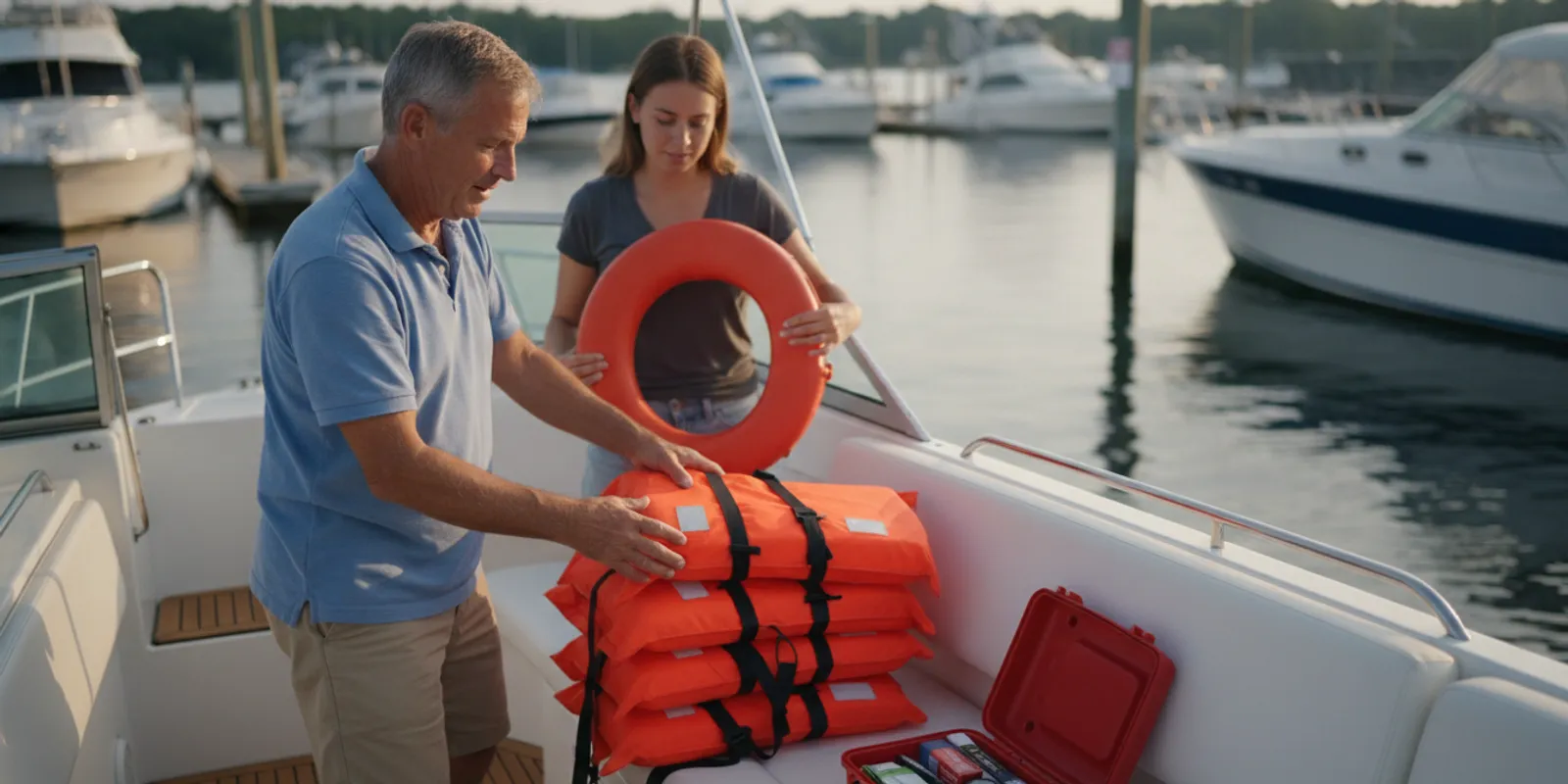
A boat safety equipment checklist helps you confirm the essentials before leaving the dock, rather than discovering a missing item after conditions change. For Massachusetts boaters, preparation means checking required gear, matching supplies to the trip, and making sure everyone aboard knows where equipment is stored.
Schedule a tour and talk with our team
What Should a Boat Safety Equipment Checklist Cover?
Start with the equipment that protects people, supports communication, and helps you respond to a problem. Requirements can differ by boat type, size, and the waters you use, so treat this as a practical preparation guide, not a substitute for checking the current rules for your vessel and trip.
Before departure, identify the equipment on board and check that it is present, accessible, and usable. A device that is buried under bags, has a dead battery, or does not fit its intended user is not ready when needed. Review the current Massachusetts boating safety handbook and relevant local requirements for details that apply to your boat.
- Personal flotation devices: Check that suitable life jackets are aboard for everyone, that they fit, and that they can be reached quickly. Make sure wearers know how to put them on. Do not leave them sealed away or covered by other gear.
- Throwable flotation device: Know where the throwable device is and keep it easy to grab. Everyone should know which item to throw and how to keep it available rather than stowed out of sight.
- Sound signaling device: Confirm that an appropriate horn, whistle, or other required sound signal is present and works. Keep it accessible to the person at the helm.
- Visual distress signals: Check whether the signals appropriate to your boat and operating area are required. Inspect condition and expiration dates where applicable, and learn how to use them safely before an emergency.
- Fire extinguisher: Confirm the boat has the required extinguisher equipment for its configuration. Check its condition, pressure indicator if present, and access. Make sure passengers know where it is.
- Navigation lights: Test the lights before any trip that could extend toward dusk or low visibility. Carrying the equipment is not enough if a bulb, connection, or power source has failed.
- Anchor and rode: Make sure the anchor is suited to the boat and likely bottom conditions, and that the rode is connected and ready. An anchor is not a substitute for propulsion or assistance, but can help in some situations.
- Communication equipment: Have a charged phone in a protective case and, where appropriate to the trip, a marine radio. A phone may lose service or power, so consider how you would call for help if that happens.
- First-aid supplies: Keep a stocked, dry kit aboard and check for depleted or expired items. Pack supplies that make sense for the group and outing, and know where the kit is stored.
- Basic backup items: A flashlight, spare batteries, simple repair supplies, and drinking water can be useful additions. Choose based on the vessel, route, forecast, and time away from shore.
Think of each item as part of a response, not just a box to tick. If someone goes overboard, flotation should be reachable and the crew should know where to direct attention. If visibility drops, working lights and a sound signal matter more than gear hidden below other supplies. For a minor injury, a first-aid kit is useful only if someone can find it and the contents suit the situation.
The U.S. Coast Guard Foundation’s boating safety resources offer additional departure-checklist guidance. Compare that advice with the equipment and procedures appropriate for your boat and location.
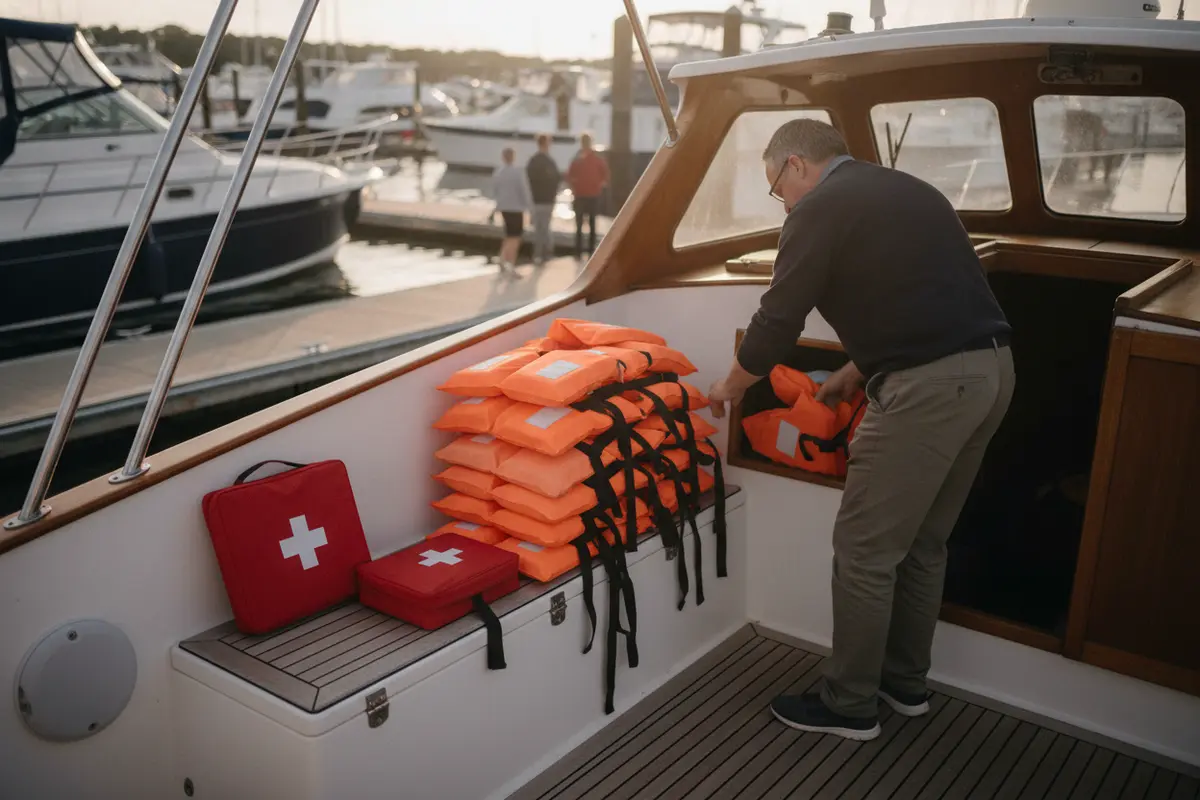
How Do You Check Safety Gear Before Leaving the Dock?
A repeatable check is easier to remember than a rushed glance around the boat. Work from people and critical equipment to the boat’s systems, then brief the passengers. If something important is missing or not working, pause and resolve it before departure.
- Count people and check fit. Confirm that everyone expected aboard is present and that flotation devices are suitable and accessible for them. Account for children and guests who may not know the boat.
- Locate the essentials together. Point out life jackets, throwable flotation, sound signal, fire extinguisher, first aid, and communication equipment. Do not assume guests know where anything is.
- Check condition and operation. Look for damage, corrosion, depleted batteries, expired items, or equipment that is difficult to reach. Test lights and powered devices using the manufacturer’s instructions.
- Review the route and conditions. Consider expected weather, visibility, distance, time aboard, and whether the plan could change. Add clothing, water, sun protection, and other trip-specific items.
- Agree on a simple response plan. Explain who should alert the operator, where to sit, and what to do if asked. Keep instructions calm and brief, especially for first-time passengers.
- Make a final walk-around. Check that gear is secured but remains accessible, loose items will not obstruct movement, and nothing important has been left on the dock.
Make the sequence concrete. For example, one person can check passenger count and flotation while the operator checks lights, communications, and the route. Then walk through the boat together and point to the equipment rather than asking, “Does everyone know where it is?” A guest who can identify the life jackets, throwable device, extinguisher, and communication tool is better prepared than someone who has only heard them listed.
For a useful checklist reference, the NSW government’s boating safety checklist covers equipment checks for recreational boats. It reflects rules and conditions in New South Wales, not Massachusetts, so use it for general preparation ideas only and verify local requirements separately.
Which Safety Equipment Should You Compare Before a Trip?
Think of the table as a quick audit. Whether an item is legally required depends on the vessel and operating area; check the applicable rules rather than relying on a generic list. The table focuses on practical readiness questions that apply to most pre-departure reviews.
- Life jackets: Check: suitable sizes, serviceable condition, and access. Before departure: Confirm each person can locate and wear one.
- Throwable flotation: Check: correct item present and unobstructed. Before departure: Point it out and keep it within quick reach.
- Sound signal: Check: required device present and functional. Before departure: Test or inspect according to its instructions.
- Visual distress signals: Check: correct type for the boat and area; condition dates. Before departure: Review safe use and storage.
- Fire extinguisher: Check: suitable, in date or serviceable as applicable. Before departure: Check condition and show passengers its location.
- Lights and communications: Check: lights function; phone or radio has power. Before departure: Test lights and secure communication devices.
- First aid and trip supplies: Check: kit is stocked, dry, and suited to the outing. Before departure: Add water, flashlight, and weather-appropriate layers.
Use this comparison to assign attention, not to assume every boat has the same setup. A device can be present but still fail a readiness check because it is damaged, discharged, hard to reach, or unfamiliar to the people aboard. When checking a powered item, follow the manufacturer’s instructions; do not improvise a test that could damage equipment or create a hazard.
How Should You Adapt the Checklist to Massachusetts Conditions?
Make the inspection specific to the vessel rather than relying on a generic checklist alone. Check the manufacturer’s instructions for powered equipment and follow the recommended maintenance schedule. Inspect straps, buckles, closures, and fabric on flotation devices for damage. Look for corrosion or loose connections around electrical gear, and confirm that batteries are charged. If an item is damaged, expired, or unfamiliar, set it aside for a closer review instead of counting it as ready.
It also helps to make the first trip of a season a slower systems check. Before guests arrive, give yourself time to locate the equipment, test what can be tested safely at the dock, and ask for help with anything you do not understand. After an outing, return items to their assigned places, dry equipment when appropriate, and record supplies that need attention. That habit reduces the chance that a rushed departure leaves a gap.
Massachusetts boating plans can range from a short harbor outing to a longer trip along the coast. The equipment and preparation that make sense depend on the route, the forecast, the boat, and who is aboard. Check current local marine forecasts before departure and be willing to shorten or cancel a plan when conditions are not suitable.
For Boston Harbor, Gloucester, and other North Shore waters, account for changing wind, visibility, traffic, and the time needed to return. Do not treat a calm marina as proof that conditions will stay calm offshore. Carry layers even on a sunny day, keep devices protected from spray, and make sure someone ashore knows the general plan when that is appropriate for the outing.
Trip length changes what deserves extra attention. For a brief outing near your launch point, confirm that essentials are still accessible and that the return plan is clear. For a longer route, spend more time considering backup communication, drinking water, weather-appropriate clothing, and the consequences of a delay. This does not mean packing every possible item; it means asking what the crew would need if the outing took longer than expected.
Choose equipment for the actual trip, not an imagined worst-case inventory. A day close to shore with a crew familiar with the boat may call for a different supplemental kit than a longer outing with guests who have never been aboard. The baseline remains the same: required equipment present, working, and accessible; passengers briefed; and a plan that matches current conditions.
If you are new to boating, review the club’s Boating 101 guide and on-the-water training information for beginner support. Practical instruction complements good equipment checks. It does not remove the need to follow applicable rules or make sound decisions on the day.
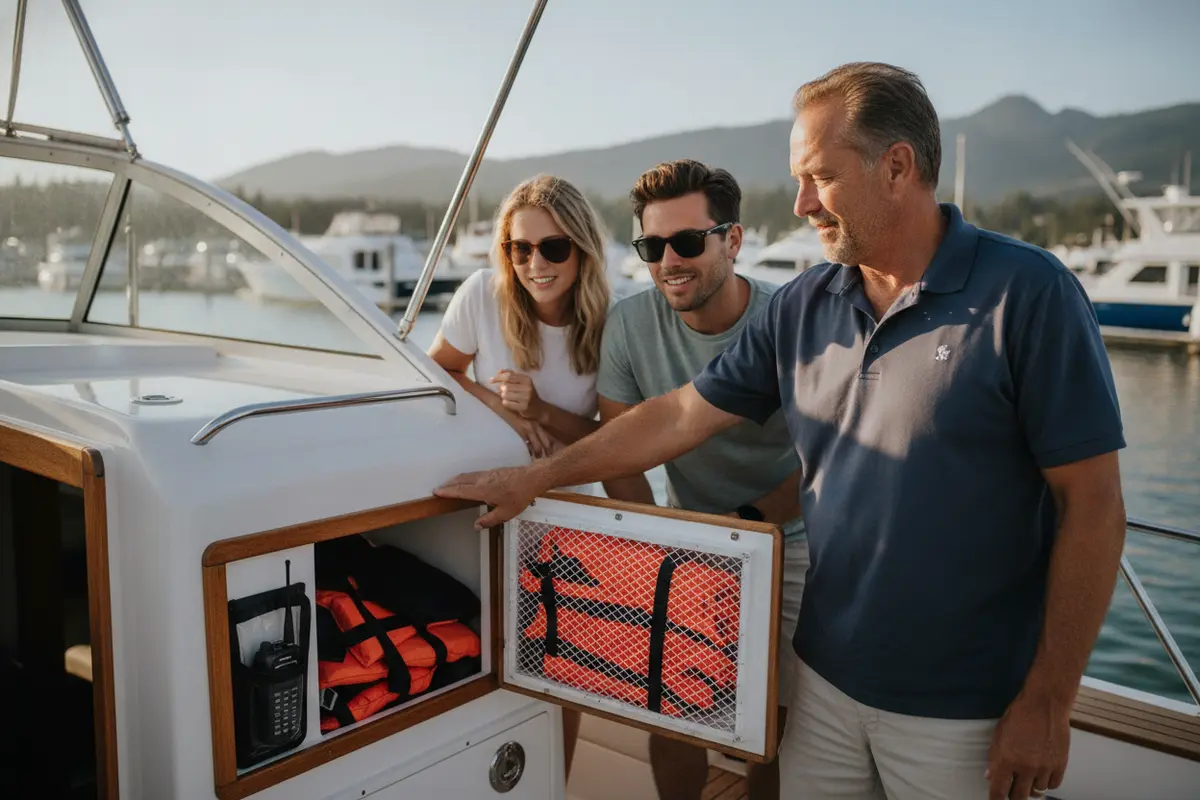
What Should Passengers Know Before the Boat Moves?
A short briefing helps guests feel more comfortable and makes the equipment more useful. Explain where the life jackets are, how to reach the throwable device, where communication equipment is kept, and who is operating the boat. Ask whether anyone needs help understanding or using the gear.
Show passengers how to move safely around the boat and where to sit while underway. Tell them to follow the operator’s directions, keep walkways clear, and speak up if they feel unwell or see a concern. For children, make the briefing age-appropriate and keep a responsible adult attentive to them.
A useful briefing can be brief without being vague. Say what to do, where to go, and whom to tell: “Keep this path clear, stay seated while we are moving, and tell me if you notice a problem.” Invite guests to repeat where key items are located or ask a question. This gives the operator a chance to correct confusion while still at the dock, when there is time to explain without rushing.
On a club boat, ask the team to show you the location and operation of the onboard safety equipment before heading out. A good handoff includes time to ask questions rather than assuming a new boater will know every control or storage space. To learn about available boats and layouts, see the Massachusetts fleet overview.
How Can You Keep the Boat Safety Equipment Checklist Useful?
Keep a copy of your checklist with the boat’s trip-planning materials and revisit it when the vessel, crew, or route changes. A list is most useful when it prompts an actual check, not when every box gets ticked from memory. Note equipment that needs replacement or charging, and do not assume someone else has already tested it.
For a membership overview and common questions, visit the Massachusetts boat club membership page and the frequently asked questions. You can also learn more about the club’s Gloucester location or Boston location. Ask specific questions about the boat, orientation, and safety procedures before planning an outing.
What Should You Do When the Plan or Conditions Change?
Safe preparation includes deciding what would make you change the plan. Before leaving, agree on a simple turnaround point: a change in wind, visibility, passenger comfort, equipment status, or timing may mean choosing a shorter route or returning to the dock. The person operating the boat should make the call, but passengers should feel comfortable raising a concern early. A small adjustment made before a situation becomes uncomfortable is easier than trying to solve several problems at once.
Keep essential equipment reachable while underway. Bags, towels, coolers, and personal items should not block access to flotation devices, the fire extinguisher, communications, or exits. Secure loose objects so they do not slide around. Avoid putting frequently needed safety gear in a locker that is difficult to open or beneath items that would have to be moved first.
For communication, tell passengers which device to use and whom to contact if the operator is occupied. Keep the phone or radio protected from water, charged, and close enough to use. If your route or the boat’s equipment calls for a radio, learn the basic operating steps before departure rather than trying to work it out under stress. A charged phone is useful, but it should not be treated as the only way to summon assistance in every location.
After the trip, take a few minutes to restore the setup. Return gear to its designated place, note anything used or damaged, and replenish consumable supplies. If something needs maintenance, communicate that clearly before the next outing so the next operator does not assume the boat is fully prepared. Repeating the same simple routine before and after each trip makes the checklist part of the boating habit, not a one-time exercise.
Talk with Karen or Eric about a tour
What Are Common Questions About Boat Safety Equipment?
Is this checklist a complete list of legal requirements?
No. It is a practical readiness guide, not a legal determination. Equipment requirements may depend on vessel type, size, and operating area. Check current Massachusetts and federal requirements that apply to your particular boat and trip.
Should everyone wear a life jacket?
Everyone should know where suitable life jackets are and how to put them on. Rules about carrying and wearing them can vary by age, vessel, and circumstances, so verify current requirements and choose the safest practice for the conditions.
How often should I inspect onboard safety equipment?
Check it before each outing, and inspect it periodically according to the maker’s directions. Recheck after equipment has been used, exposed to water, moved, or stored for a long period.
What should I do if safety gear is missing or does not work?
Do not treat an inaccessible or malfunctioning item as ready. Replace, repair, recharge, or otherwise resolve the problem before departure, and confirm the boat still meets applicable requirements.
Taking a few minutes to check the people, equipment, and plan can make it easier to respond calmly if a problem arises. Keep the checklist practical, verify local requirements, and leave the dock only when the boat and conditions are ready.
https://addlinks.pro/AACsy
I have a question, can you contact me at jonasmarcantonio@m.spheremail.net ? Cheers!