
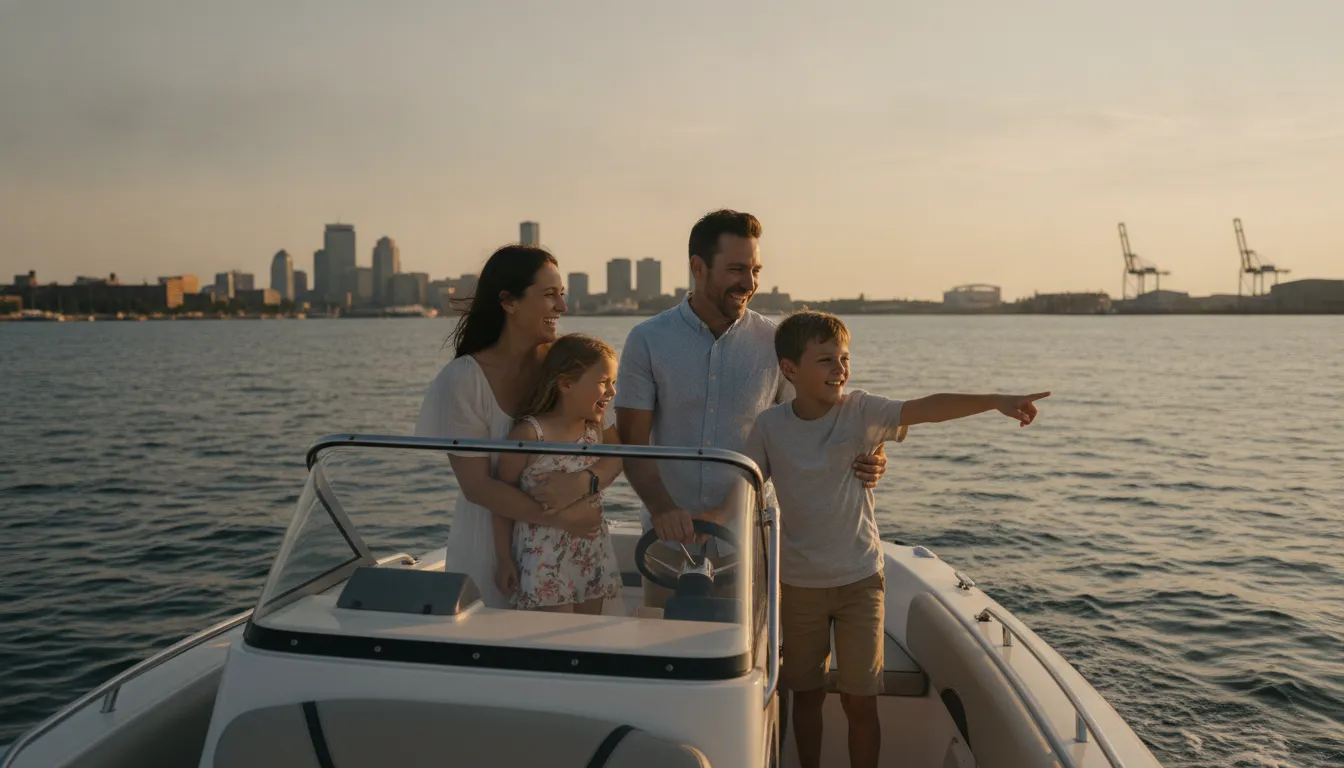
Paddle boating means moving a small boat under your own power on calm water. That might be a kayak, a canoe, a stand-up paddleboard, or a pedal boat. Around Boston, the North Shore, and Cape Ann, it is an easy way to try the water without buying a boat. It is a poor match for wind, a long crossing, or a group that wants shade and a helm.
Schedule a Massachusetts boat club tour
This guide stays on that choice. It explains what people mean by paddle boating and where a short paddle fits in Massachusetts. It also covers when a powered Carefree Boat Club boat is the better plan. It does not list rental shops or prices. Rental prices and shop lists change by season, and a directory would be a different article.
What Does Paddle Boating Actually Mean?
People use “paddle boating” for two different watercraft. Sorting that out matters before you book.
A paddle craft moves because you move it. You sit in a kayak or canoe and pull a paddle, or you stand on a board and use a longer paddle for balance. Speed depends on wind, current, and how long the group can sustain a steady stroke. A tandem kayak is an easier first hour than a solo board in a breeze.
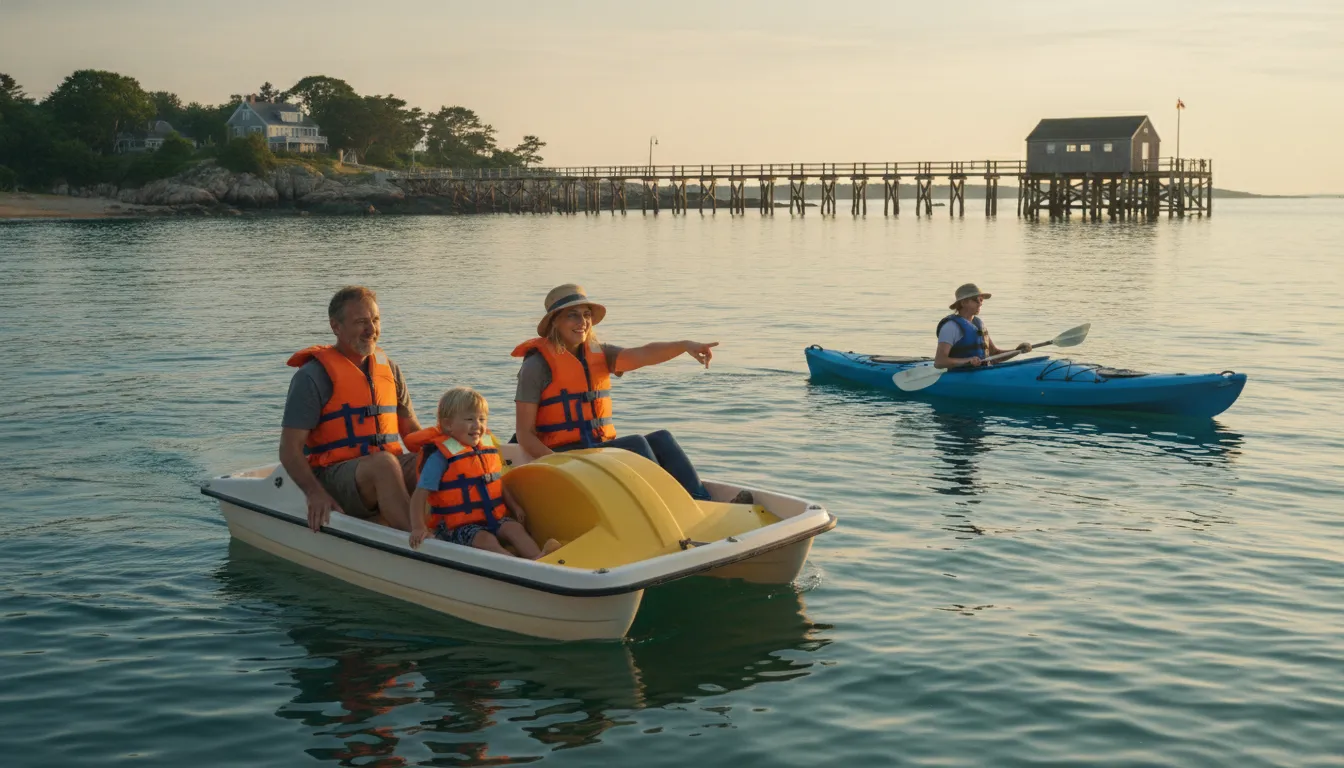
A pedal boat, sometimes called a paddle boat, is the plastic catamaran with bicycle pedals and a small rudder. One person can pedal it on flat water, though two people make the return easier. The second set of pedals and a hand on the tiller keep the boat pointed.
Steering feels backward at first. You push the tiller away from the direction you want the bow to go, then correct with a short pedal stroke. Practice that in a cove before you aim at a dock.
Neither watercraft has an engine. You will not cover Boston Harbor the way a center console does, so skip any Cape Ann loop that depends on a schedule. Treat paddle boating as a one- or two-hour outing in protected water rather than a harbor cruise.
How Hard Is Paddle Boating on Your First Day?
On flat water with no wind, paddle boating is manageable. A pedal boat takes about the same effort as a slow bike. A sit-inside kayak needs a short lesson in paddle grip and how a sweep stroke turns the boat. Most adults can manage an hour if the launch is sheltered.
Difficulty jumps when the water does. A 10-knot breeze on the Charles or on Boston Harbor can push a light kayak or a pedal boat off its line. A falling tide in a narrow river adds current you cannot out-pedal. Cold water is the part people underestimate. The National Weather Service warns that cold water pulls heat from the body quickly, and New England harbors stay cold well into late spring. A life jacket remains necessary, and pool confidence does not change the risk.
A practical first session looks like this:
- Pick a weekday morning with light wind and a forecast you have actually read, not a gusty Saturday afternoon.
- Stay inside a cove, a pond, or a no-wake pocket, and turn around while you still have energy left.
- Put a life jacket on every person before the boat leaves the beach.
- Keep a spare paddle and a way to call for help. A phone in a dry bag helps, and a plan told to someone on shore helps more.
- Stop when someone is cold, tired, or arguing, because tired paddlers are how small boats drift into channels.
If that list already feels like more work than fun, you are not failing at boating. A human-powered boat is a workout with weather attached. A powered boat with a helm, seats, and a trained checkout is a different kind of day.
Where Does Paddle Boating Fit Near Boston, the North Shore, and Cape Ann?
Greater Boston offers protected water and exposed harbor water, and they are not the same outing.
Lakes and sheltered river pockets suit a first paddle. Lake Cochituate in Natick, Wayland, and Framingham is a common beginner lake because the basins are enclosed. The Charles River has many launches, from the Esplanade to quieter water upriver, but city sections share the river with rowing shells and tour boats. You need a short route and a clear turnaround rather than a plan to see the whole river.
Saltwater paddles near Boston demand more skill and a wider safety margin. Hingham Harbor and the coves around Winthrop can be calm in the morning and bumpy once the sea breeze fills in. Plymouth Bay is harder again. Those places suit people who already know how to cross a breeze and read a chart. They are a weak first day in a pedal boat.
North Shore and Cape Ann conditions change from one mile to the next. The Danvers River is narrower and more sheltered than the open water outside Gloucester Harbor. The working waterfront adds boat traffic, wind, and open water. A kayak can fit a quiet corner, but it is a bad tool for an island crossing if a squall shows up at lunch.
Use Massachusetts boating destinations to compare harbors, then read the Massachusetts boating season before you lock a date. June through September is the comfortable window for most families on Massachusetts water. April and May can still mean cold water, so the life jacket stays on. If the real plan is to show the kids Gloucester, start with what to see in Gloucester Harbor. Then decide whether you need a motor to finish the loop.
Carefree Boat Club does not keep kayaks or pedal boats in its fleet. Members in East Boston, Danvers, and Gloucester use powered center consoles, dual consoles, and pontoons. A paddle morning and a club afternoon can share a weekend, but they should not share one route plan.
How Do Paddle Boats and Club Boats Compare for a Massachusetts Day?
Match the hull to the day you actually want. A pedal boat wins a one-hour pond loop when a child wants to help steer. It loses a harbor cruise, a fishing stop, or any plan that has to beat weather home.
| Day you want | Kayak, canoe, or paddleboard | Pedal boat | Carefree Boat Club powerboat |
|---|---|---|---|
| One quiet hour on flat water. | Strong fit if you can paddle back. | Strong fit for kids and a short loop. | More boat than the hour needs. |
| Family that wants seats and shade. | Poor fit; you sit low and get wet. | Poor fit once wind picks up. | Strong fit on a pontoon or dual console. |
| Fishing or a longer coastal run. | Only for skilled paddlers inshore. | Not a fit. | Strong fit on a center console. |
| Skill you need the first time. | Stroke, balance, and a turn plan. | Pedals plus a tiller lesson. | On-the-water training with an instructor. |
| What you maintain. | Your own boat, or a rental return time. | Usually a rental return time. | Club maintains the boat; you replace fuel used. |
| Where it belongs. | Lakes, rivers, and protected coves. | Ponds and no-wake basins. | Boston Harbor, the Danvers River, Gloucester, with a plan. |
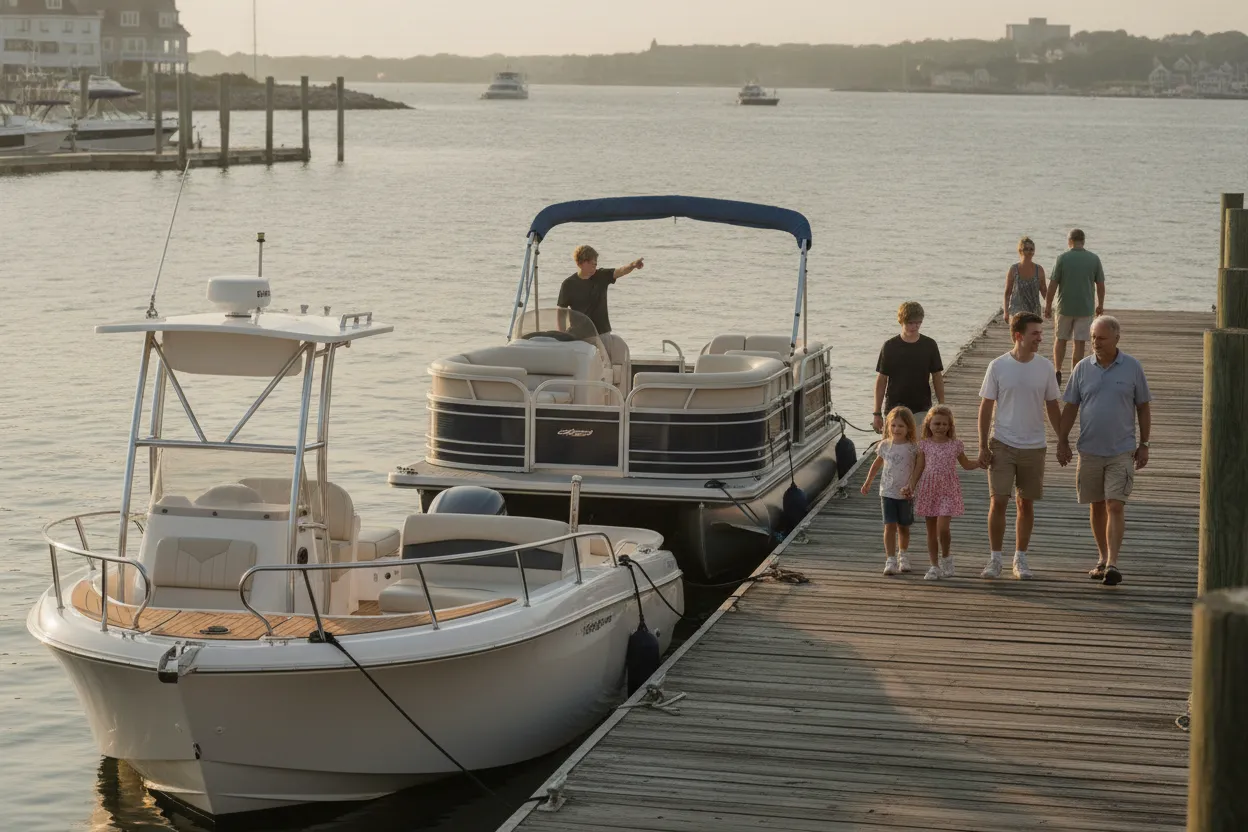
The club fleet is members-only. Carefree Boat Club does not rent or charter those boats to the public. Local styles include center consoles such as the SeaPro 239 CC and Cobia 237 CC. Dual consoles include the SeaFox Traveler 228 DC. Pontoons include the Bennington 22 RSC Tri Toon in Boston and the Bennington 226SRL Tri-Toon in Danvers. Ask which hull is at the dock the week you visit. Models rotate, and a tour is how you see the real boat.
Family boating in Massachusetts is easier when someone can sit, talk, and hand out snacks without balancing a board. A pontoon is built for that. A center console is built for fishing and a coastal ride. The Massachusetts fleet page is the place to compare those layouts before you talk with the team.
What Should You Check Before a Paddle or a Powered Outing?
The checks are short, and skipping them is how a fair forecast can end in a tow.
Read the marine forecast rather than only the town forecast. The National Weather Service Boston office covers eastern Massachusetts. Its cold-water guidance is the right lens for spring and fall. Wind above a light breeze is a reason to move a paddle. A heavier boat may still be fine if you stay in the harbor and leave time to get home.
Carry a wearable life jacket for every person in the group. Massachusetts follows the same core equipment idea as federal rules. Carry a life jacket for each person. A motorboat also needs lights, a fire extinguisher, and the signals its size requires. On a kayak, that life jacket goes on your body. A club boat should already have jackets, a throwable, and the rest of the safety kit on board. Confirm the count matches your group at checkout instead of assuming the kit is complete.
Know the motorboat rules if anyone will drive. The Massachusetts boating law summary says no one under 12 may operate a motorboat unless an adult 18 or older is aboard and directly supervising. Personal watercraft follow a stricter rule. They are not part of this club’s fleet.
Starting April 1, 2026, Massachusetts phases in a boater safety certificate for motorboat operators. You carry proof on the water. Ages and deadlines depend on birth year, so read the state page rather than a screenshot from last season.
Paddle craft are not motorboats. The same habits still apply. Do not cut off a channel, do not overload the boat, and do not drink and drive anything that floats.
For the powered side of the choice, read whether you need a Massachusetts boating certificate. Then use beginner boating safety tips and safe boat navigation basics before a first harbor loop. The beginner’s guide to boating and how to drive a boat cover helm skills a paddle never teaches.
Carefree Boat Club training is included for members, and a certified instructor covers club checkout, general navigation, docking, and safety on the water and off. New members can often be on the water within a few days, sooner if they already know the basics. That training is for the club’s boats, not a kayak course.
When Is a Boat Club a Better Fit Than Another Paddle Rental?
Rent a paddle boat for one short hour on flat water if you are fine returning it on a clock. Choose a club boat when the plan repeats. That might be weekends with family, a fishing morning, a sunset loop, or a guest who will not sit in a kayak.
Carefree Boat Club of Massachusetts is a private membership club. Boats at Boston Harbor Shipyard and Marina, Danversport Marina, and Gloucester are for members, not a walk-up rental. The East Boston dock is 256 Marginal Street, Danvers is 107 R Elliott Street, and Gloucester is 8 Norwood Court. Members book half-day blocks, can use boats at any of the three local docks, and replace only the fuel they use. A co-member who lives in the same household must be at least 25 years old. Pets can come aboard subject to club policy, and the membership year runs from April through the following April.
Reciprocal access at other Carefree locations is a membership benefit, not a promise that a kayak will be waiting. If you want the powered boat, start with the Boston, Danvers, and Gloucester location pages, then the membership options. Plan details live on that page, and this article is not a price sheet.
Still unsure which day you want? See the boats and ask what training your group would need.
Request a tour in Boston, Danvers, or Gloucester
Frequently Asked Questions
How difficult is paddle boating?
On flat water with light wind, an hour in a pedal boat or a stable kayak is manageable for most adults and older children. Wind, current, traffic, and cold water make it harder fast. If you would not be comfortable turning around halfway, pick a shorter route or a heavier boat.
How do you steer a paddle boat?
On a pedal boat, the pedals move you forward and a tiller or handle turns a small rudder. Push the tiller toward the side you want to turn away from, then straighten it once the bow swings. In a kayak, you steer by paddling harder on one side or with a sweep stroke. Practice away from docks and busy channels.
Can one person paddle a paddle boat?
Yes, one adult can pedal a typical two-seat pedal boat on calm water, and one person can also paddle a solo kayak or canoe. A second person helps with steering, traffic, and the trip back when someone gets tired. Do not count on a child to be the only source of power.
Where can you go paddle boating near Boston?
Beginners do better on enclosed water, such as Lake Cochituate or a quiet stretch of the Charles, than on open Boston Harbor. On the North Shore, keep paddles in sheltered water such as parts of the Danvers River. Skip a long Cape Ann crossing, check wind and tide the morning you go, and leave harbor loops to a boat that can handle them.
Do you need a boating certificate to paddle?
A kayak, canoe, paddleboard, or pedal boat is not a motorboat under state law, so Massachusetts motorboat rules are a separate set. The state boating law summary requires adult supervision for operators under 12. It also phases in a boater safety certificate for motorboat and personal watercraft operators beginning in 2026. If you will drive a club boat, read that page and carry the proof that applies to you before you leave the dock.