
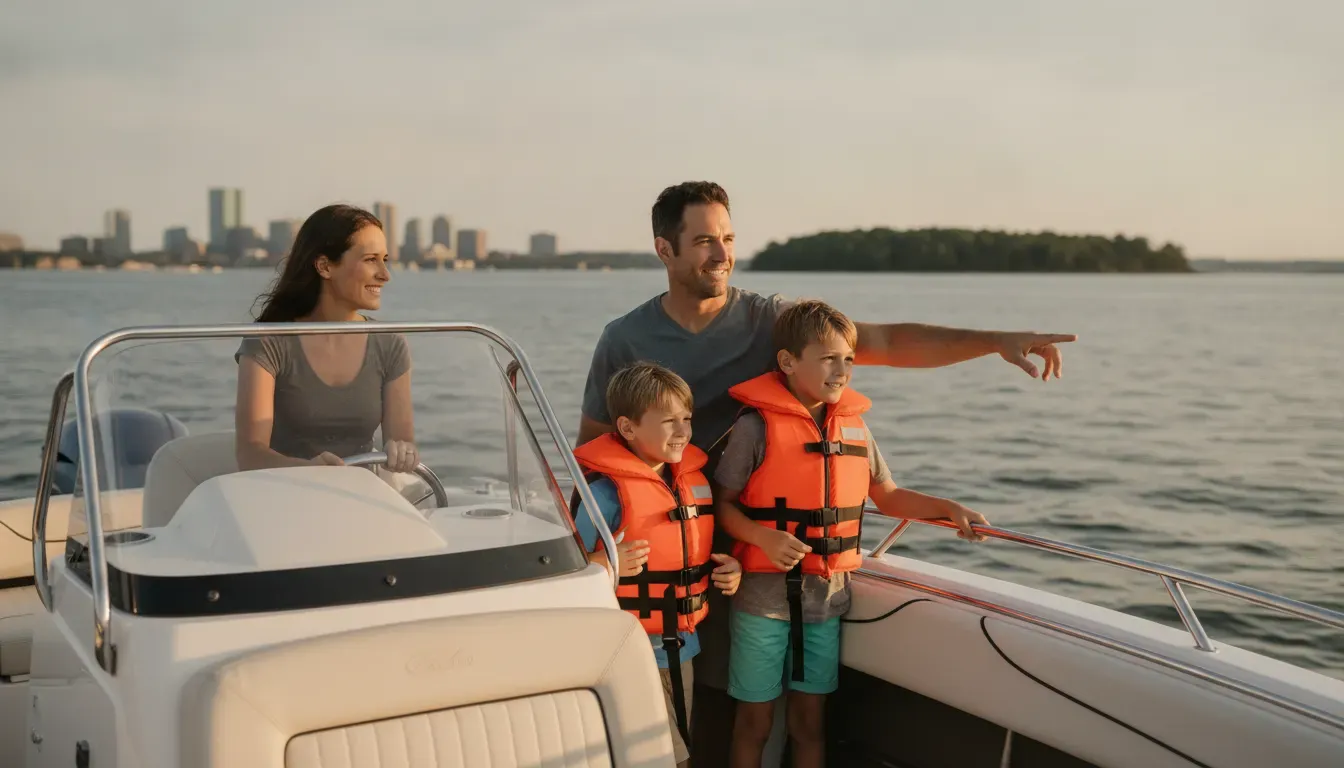
Family boating in Massachusetts does not have to mean trying to fit a complicated project into an already crowded weekend. The best outings usually start with a simple plan: choose a manageable destination, prepare for the people aboard. Check the conditions, and leave enough time to enjoy the water without rushing back to the dock.
Book a Carefree Boat Club tour to plan your family’s time on the water
How Can Families Make More Time for Boating?
Families make more time for boating when they reduce the tasks between deciding to go and leaving the dock. A realistic destination, a short pre-departure checklist, and a boat that is ready for the planned activity help turn a free afternoon into a comfortable outing. The goal is not to pack every possible activity into one trip. It is to create a repeatable routine that makes getting on the water feel manageable.
Start by choosing the kind of day your family actually wants. A calm harbor cruise, a picnic near an accessible shoreline, a fishing trip, and a longer Cape Ann outing require different boats, supplies, weather windows, and time commitments. Discuss the plan before making the reservation so everyone knows whether the day is focused on exploring, swimming, relaxing, or learning.
- Choose one primary destination and one nearby backup.
- Allow time for the drive, check-in, departure, return, and cleanup.
- Check the forecast and water conditions before leaving.
- Pack water, food, sun protection, layers, and personal medication.
- Keep a flexible turnaround time if weather or energy levels change.
What Should Families Check Before Leaving the Dock?
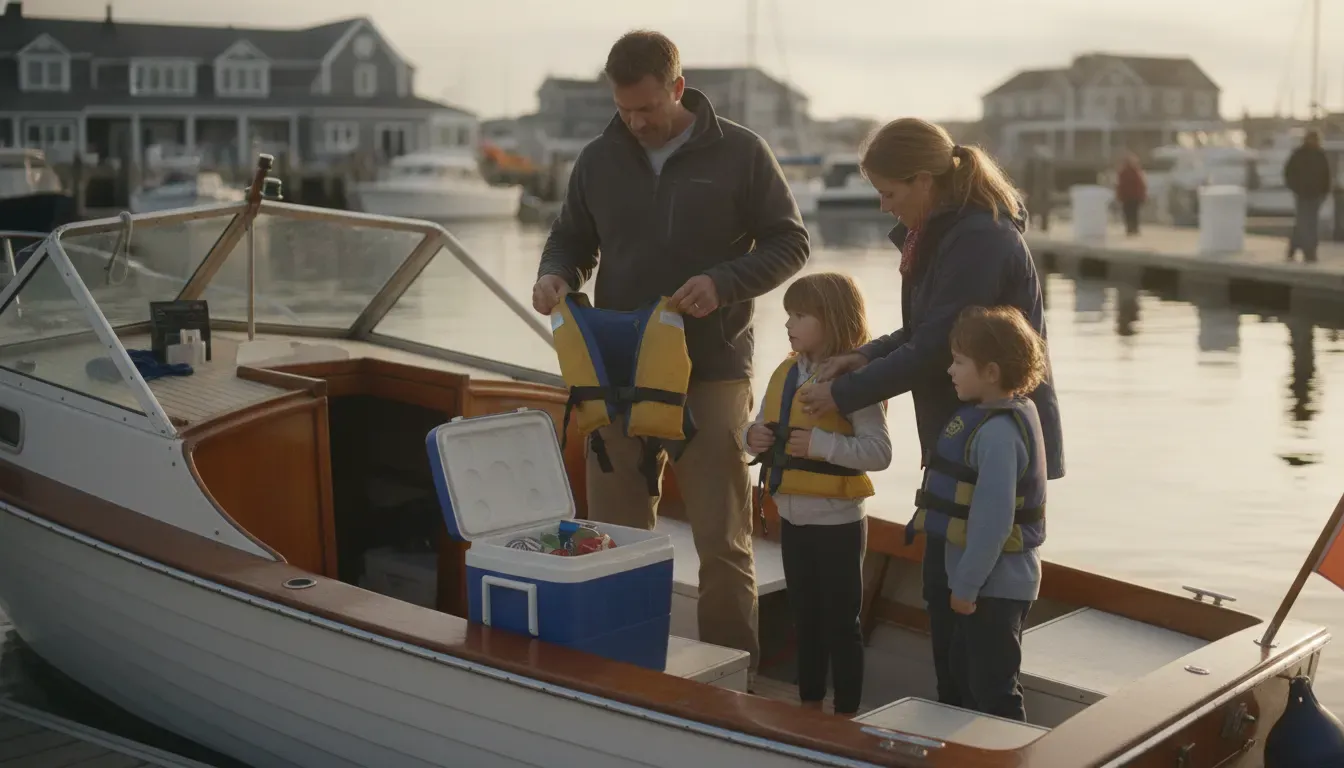
A family-friendly boating routine begins with a consistent safety check. Before departure, confirm that every person has a properly fitted life jacket available and that required safety equipment is aboard. Review the route, weather, communication plan, and return time with the adults on board. Massachusetts provides boating-law and safety resources that families can use alongside the club’s orientation and on-water training.
Make the check visible and simple. The adult operating the boat should know where the life jackets, first-aid supplies, anchor, communication equipment, and other safety gear are located. Children can participate in age-appropriate ways, such as helping identify their life jacket or listening to the plan, while an adult remains responsible for supervision and decisions.
Before a Massachusetts outing, review the Massachusetts boating safety guidance and the state’s boating-law summary. These resources are useful references, but they do not replace hands-on instruction or careful judgment on the day of the trip.
How Can Training Make Family Boating More Comfortable?
Training helps families spend less of a boating day solving avoidable problems. Carefree Boat Club members receive on-water and off-water training that can cover departure and docking routines, boat systems, safety equipment, navigation, local waterways, and practical boating questions. That support is especially valuable when different adults in a family want to build confidence at the helm.
Use training to practice the parts of an outing that create the most stress. A family may want to review docking at a particular marina. Learn how to read a local channel, practice anchoring, or understand how to plan around wind and current. Carefree trainers also teach local waterways, places to go, things to do, and fishing spots. The result is more than a general orientation. It is a chance to learn the waters your family is most likely to use.
Massachusetts boaters who still need a formal safety course can review the state’s boating safety course information. Club training and a state-approved course serve different purposes, so ask what education is appropriate for the adults who will operate the boat.
Talk with Carefree Boat Club about training for confident family outings
Which Massachusetts Boating Area Fits Your Family’s Day?
Boston, Danvers, and Gloucester offer different starting points for family boating in Massachusetts. Choose the departure location that matches the day’s pace, the experience level of the adults aboard, and the distance your family wants to travel. A shorter first outing can be more enjoyable than an ambitious route that leaves everyone tired before the return trip.
| Departure area | Family-boating planning angle | Questions to ask before reserving |
|---|---|---|
| Boston | Plan a harbor-focused outing with city and island views. | How much time should we allow for harbor traffic, route planning, and returning on schedule? |
| Danvers | Consider a North Shore outing that starts from a convenient local marina. | Which route fits our group’s experience and the day’s weather window? |
| Gloucester | Plan for Cape Ann scenery, harbor time, or a longer coastal day. | Are the conditions and the group ready for the distance and open-water exposure? |
For a first Boston outing, the Boston Harbor boating guide can help your family think through destinations, navigation, and practical planning. Families considering North Shore departures can also review the Danvers location and Gloucester location before choosing where to begin.
What Makes a Family Boating Day More Comfortable?
Comfort comes from matching the boat, schedule, and supplies to the people aboard. A younger child may need more shade, snacks, breaks, and predictable timing than an experienced adult expects. Someone prone to motion sickness may do better with a shorter route and a calmer forecast. Planning for these needs does not make the trip less adventurous. It gives the family more capacity to enjoy it.
Keep the first few outings intentionally simple. Choose a route with a clear return option, avoid making every trip a long-distance expedition, and let the group learn what works. A useful family checklist includes:
- Life jackets that fit each person correctly.
- Drinking water and food that can be handled safely underway.
- Sun protection, layers, and rain gear for changing conditions.
- Motion-sickness supplies recommended by a healthcare professional when appropriate.
- A phone or other communication method protected from spray.
- A destination plan with a backup option.
- Enough time to return without rushing the final part of the day.
Keep fuel planning in the routine as well. Fuel is a member-paid boating expense, not a membership benefit, so ask how the current process works and include it in the day’s plan. That small detail prevents confusion at the end of an otherwise enjoyable outing.
How Can Membership Reduce the Work Behind Family Boating?
Boat ownership can add maintenance, cleaning, storage, insurance, and seasonal responsibilities to the time a family wants to spend together. Carefree Boat Club’s membership model is designed around boating without owning. Members reserve through the online reservation system or by phone, then use the club’s local support and training to make the outing easier to plan.
The right membership approach depends on how often the family expects to boat, which days are realistic, and what kinds of outings they want to take. Do not choose based only on an ideal summer calendar. Think about school schedules, work commitments, weather flexibility, and whether more than one adult wants to operate the boat. A conversation with the local team can clarify which membership option fits those patterns without guessing at a price from an article.
Families can also benefit from reciprocal access at more than 150 participating Carefree Boat Club locations worldwide. That broader network can add options when travel takes you beyond Boston, the North Shore, and Cape Ann, subject to the applicable reservation and location rules.
To compare the time and responsibility involved in ownership with a membership model, read about the challenges of boat ownership. For the local fleet and boat types, visit the Carefree Boat Club fleet page.
What Should Families Ask Before Planning Their Next Outing?
A short planning conversation can prevent most avoidable frustrations. Ask who will operate the boat, what each person wants to do, what conditions would change the plan, and how much time the family really has. If the group is new to boating, schedule training before a high-stakes trip. If the family is already comfortable, use the conversation to choose a new destination or practice a new skill.
- Which departure location makes the day easiest for everyone?
- What is our primary destination and our backup?
- Which adult is responsible for navigation and return timing?
- What training or practice would make this outing more comfortable?
- What will we do if the weather changes?
- What does each person need to stay comfortable on the water?
These questions also make it easier to decide whether a boat club is a practical fit. The best membership is not the one with the most ambitious plan. It is the one that helps your family turn available time into consistent, safe boating experiences.
It helps to make the plan visible to everyone who may join the outing. Keep the departure time, marina, expected return, weather check, and backup plan in one shared place. That simple habit reduces last-minute questions and gives the operator a chance to spot a problem before the boat leaves the dock. It also gives family members a role without turning the day into a list of chores.
After each trip, take a few minutes to record what worked. Note the route, the conditions, the boat layout, the time needed, and the skills that should be practiced next. One family may learn that a shorter morning trip is more comfortable than an all-day outing. Another may find that everyone enjoys a harbor cruise more when snacks and layers are packed in advance. These observations build a realistic boating routine over time.
That routine is especially useful in Massachusetts, where a calm morning in Boston Harbor can feel very different from a windy afternoon around Cape Ann. Treat each outing as a chance to learn the local water, not as a test of how far the family can travel. A thoughtful pace leaves room for changing conditions, questions from passengers, and the small moments that make boating memorable.
Families can also decide on a simple signal for changing the plan. Anyone aboard should know that speaking up about weather, discomfort, or fatigue is encouraged. The operator can then shorten the route, return to the marina, or choose the backup activity without treating the change as a failure. Good family boating leaves room for a safe decision at every stage of the day.
For many families, the most valuable result is not a single big destination. It is knowing how to plan a day that people will want to repeat. Clear roles, practical training, a suitable boat, and a flexible route create that foundation. Over time, the family can add new harbors, fishing areas, island stops, and longer trips at a pace that matches its experience.
Book your Carefree Boat Club tour and start planning more family boating time
Frequently Asked Questions About Family Boating
What is the safest way to start family boating in Massachusetts?
Start with a manageable route, a favorable forecast, properly fitted life jackets, a clear return plan, and an adult who is comfortable operating the boat. Review Massachusetts boating-safety guidance and use hands-on training to build confidence before attempting a longer or more exposed route.
How can families prepare children for a boating day?
Explain the plan in simple terms, identify each child’s life jacket, set clear boundaries before departure, and keep food, water, shade, and breaks available. Adults should maintain active supervision and adjust the route when the group’s comfort or the conditions change.
Does Carefree Boat Club offer boating training?
Yes. Carefree Boat Club provides on-water and off-water training for members. Training can address boat systems, departure and docking routines, safety equipment, navigation, local waterways, and practical questions about planning an outing.
Can a boat club help families spend more time on the water?
A boat club can reduce ownership responsibilities and give members a structured way to reserve and use boats. Carefree Boat Club combines local locations, training, and membership support so families can focus more of their available time on boating without owning a boat.
Where can families go boating with Carefree Boat Club in Massachusetts?
Carefree Boat Club has Massachusetts locations in Boston, Danvers, and Gloucester. Each departure area offers a different planning context, from Boston Harbor outings to North Shore and Cape Ann boating. The local team can help members understand the waterways and choose an appropriate plan.