
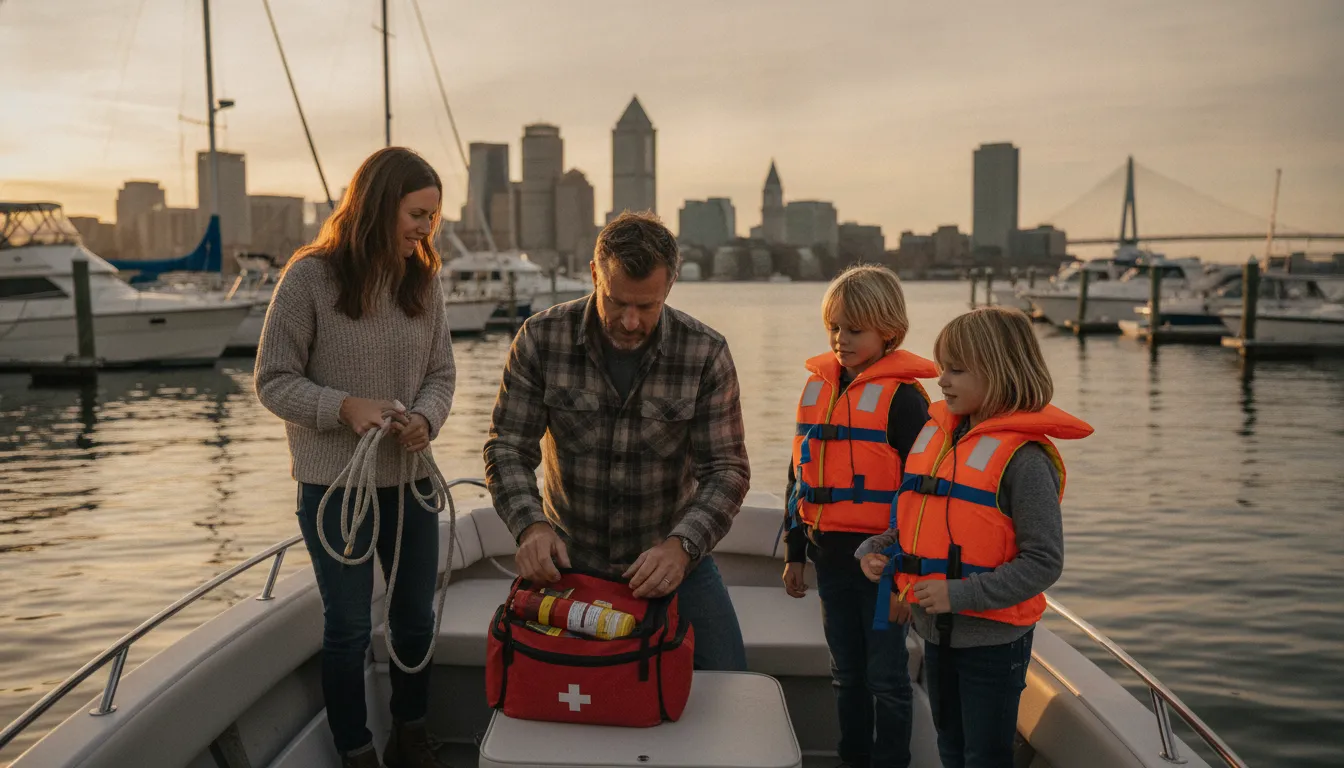
Boating in Massachusetts is most enjoyable when you handle the legal details before leaving the dock. In 2026, operators need to pay particular attention to a new statewide education requirement. They also need to understand age limits, safety equipment, alcohol restrictions, and rules that can differ by waterway.
Book a Carefree Boat Club tour
The biggest update in the massachusetts boating safety laws is that, starting April 1, 2026, anyone operating a motorboat or personal watercraft in Massachusetts must have a valid boater safety certificate. Operators under 12 face additional supervision rules. Personal watercraft operators must be at least 16.
That certificate is only one part of a responsible pre-departure check. The sections below explain the core requirements and what to carry onboard. They also show how to account for local rules when boating from Boston, Danvers, Gloucester, or elsewhere along the North Shore.
What Are the Key Boating Safety Laws in Massachusetts?
Massachusetts boating safety laws are entering an important transition in 2026. Starting April 1, 2026, anyone operating a motorboat or personal watercraft in Massachusetts must have a valid boater safety certificate, according to the Massachusetts boating law summary. This requirement is part of the state’s updated boater safety framework. It includes changes associated with the Hanson Milone Act.
The certificate requirement applies broadly. It is worth planning ahead before taking the helm for the first time this season. If you are sorting out the difference between a safety certificate and a boating license, this Massachusetts licensing guide provides helpful background. Always confirm the current requirements with Mass.gov before relying on an older course, certificate, or checklist.
What age restrictions apply to Massachusetts boat operators?
Age rules remain an important part of safe operation. A person under 12 may not operate a motorboat unless that person is onboard and directly supervised by a competent adult who is at least 18 years old. Personal watercraft have a stricter rule. The operator must be at least 16 years old, with no exceptions. These requirements are separate from the certificate rule. Meeting one requirement does not automatically satisfy the others.
Families should discuss who may operate each type of vessel before leaving the dock. A young passenger may be ready to learn basic boating skills. However, instruction and direct supervision do not remove the age limits that apply to motorboats or personal watercraft.
What identification and registration details should boaters check?
Massachusetts law includes requirements for identification numbers on motorboats under MGL c. 90B. Before operating a boat, confirm that its required identification information is present, current, and readable. The Massachusetts Environmental Police oversee boat and recreational vehicle safety and titling. Their official resources are useful for questions about documentation or ownership records.
There is also a local layer to compliance. Cities and towns may establish and enforce boating rules for certain great ponds that do not exceed 500 acres. A rule that applies in one inland waterway may not apply in another. Check local notices and harbor or waterway guidance in addition to statewide requirements.
Mass.gov summaries are practical starting points, not substitutes for reviewing the current law. Requirements can change, and local, state, and federal rules may overlap. For a trip from Boston toward the North Shore or Cape Ann, verify the current certificate, identification, and waterway requirements before departure.
Key Massachusetts boating requirements
| Requirement | Who or what it covers |
|---|---|
| Boater safety certificate | Motorboat and personal watercraft operators beginning April 1, 2026 |
| Age limits | Motorboat and personal watercraft operators |
| Identification numbers | Motorboats under MGL c. 90B |
| Local rules | Certain great ponds and their municipalities |
Who Must Wear a Life Jacket and What Safety Equipment Is Required?
Life jackets, formally called personal flotation devices or PFDs, are central to a safe departure. The exact legal requirement can depend on the vessel and activity. Do not assume that one equipment list applies to every boat. Massachusetts boating safety laws establish different requirements for different classes of motorboats. These include rules for lighting, fire extinguishers, and signaling equipment. Review the current requirements for the boat you will operate, especially when changing from a runabout to a personal watercraft.
For personal watercraft, the rule is direct. Every operator must wear an approved PFD at all times. The operator must also attach the safety lanyard to themselves and the cutoff switch. That lanyard is designed to stop the engine if the operator is separated from the watercraft. These are statutory safety requirements, not optional suggestions. A PWC operator should also remember that steering requires thrust. Simply cutting the engine does not provide the same control as slowing and steering safely.
On a conventional motorboat, choose an appropriately sized, approved PFD for every passenger. Make sure each person can put it on correctly. Wearing one is a prudent habit even when a particular situation does not require it by the same rule that applies to a PWC. Children, weak swimmers, and anyone moving around the boat deserve particular attention. Check that straps, buckles, closures, and flotation material are in usable condition before leaving the dock.
What should you inspect before starting the engine?
A short inspection helps separate legal compliance from preventable problems. Before departure, work through a consistent checklist:
- Confirm that each person has a properly fitted, approved PFD within immediate reach, and that PWC users are wearing theirs.
- Verify the required equipment for the vessel class, including applicable lights, fire extinguishers, and signals. Keep items accessible rather than buried under gear.
- If operating a PWC, connect the safety lanyard to yourself and the cutoff switch before starting.
- Check throttle control and steering before starting the engine, as advised by the Massachusetts safety guidance.
- Look over the immediate operating area, passenger seating, fuel or battery condition, and weather before committing to the trip.
The final items on this list are prudent preparation rather than a universal legal checklist. Local rules can add requirements, and Massachusetts guidance can change. The Massachusetts Environmental Police manage boating safety and titling matters, while the state’s official law summaries provide the best starting point for confirming current requirements. When in doubt, check the current state guidance and any local boating rules before launching.
Review Massachusetts boating equipment rules before your next outing.
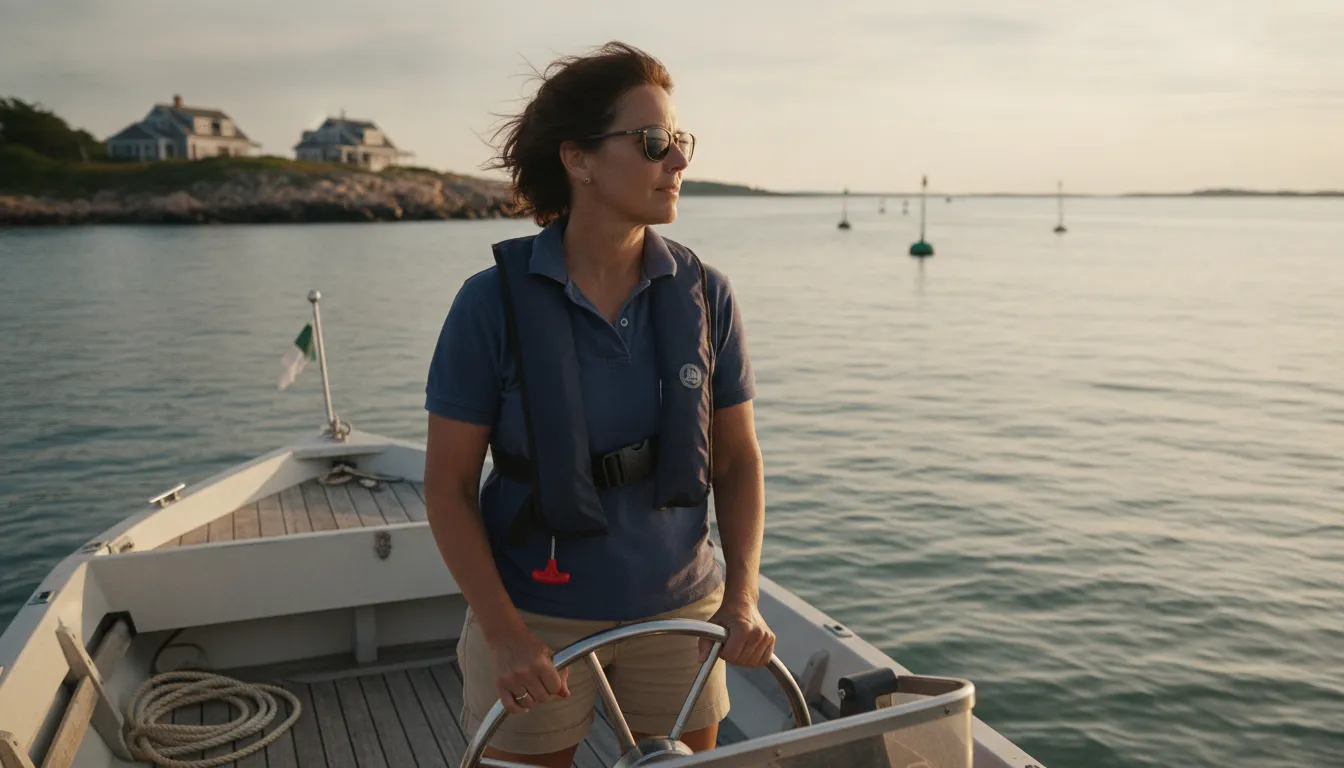
What Are the Massachusetts Rules for Speed Limits and No-Wake Zones?
Massachusetts boating safety laws are especially specific when you operate a personal watercraft, such as a jet ski, surf jet, or wetbike. A personal watercraft is treated as a Class A inboard motorboat, but the rules summarized by the Massachusetts Environmental Police include restrictions that are particular to PWCs. Before heading out from Boston, Danvers, Gloucester, or another local launch, review the current Massachusetts personal watercraft safety law summary and check for rules posted on the water.
Within 150 feet, a PWC must slow down. PWC operators must maintain a slow, no-wake speed of 6 MPH or less within 150 feet of a swimmer. Another watercraft, raft or float, shoreline, boat launch, or moored or docked boat. These listed distance and speed requirements apply to personal watercraft where the state source specifies them. They should not be casually generalized as one universal speed limit for every type of boat or every waterway.
A no-wake speed is not simply a suggestion to be courteous. It is a practical way to reduce the PWC’s impact near people, vessels, docks, and launch areas. Approach slowly, scan continuously, and allow extra room when wind, current, traffic, or visibility makes the distance difficult to judge.
Some PWC restrictions are stricter than a no-wake requirement. Massachusetts prohibits operating a PWC within 150 feet of any bathing beach. The state summary also lists these prohibited activities:
- Operating a PWC during nighttime hours.
- Operating a PWC on waters under 75 acres.
- Operating a PWC while towing a skier or any person in any manner.
High-speed PWC operation in congested areas is considered negligent operation. Even outside the specific 150-foot situations, every PWC must be operated safely and prudently so that it does not endanger life, limb, or property. That means speed should match traffic, visibility, weather, water conditions, and your experience, rather than simply staying below a mechanical maximum.
Local rules can add another layer. Massachusetts cities and towns may make and enforce specific boating rules for great ponds that do not exceed 500 acres. A familiar lake, harbor, or launch may therefore have posted restrictions that differ from the statewide summary. Look for signs and notices before launching, and confirm current requirements with the municipality or the Massachusetts Environmental Police. State boating summaries can change, and operators remain responsible for knowing applicable local, state, and federal laws.
What Does Massachusetts Law Say About Alcohol and Boating Accidents?
Massachusetts treats boating under the influence as a serious safety issue. The recreational boating law summary identifies operating a boat under the influence of alcohol or controlled substances as prohibited under MGL c. 90B, sections 8-8B. The rule applies to the responsibility of the person operating the vessel, not simply to whether alcohol is present on board. A responsible plan is simple: if you are operating, do not drink or use controlled substances.
The law also expects prudent operation. For personal watercraft, Massachusetts says the operator must act in a safe and prudent manner so as not to endanger life, limb, or property. That standard is a useful reminder for every vessel. Safe operation includes maintaining a proper lookout and adjusting decisions to conditions. Avoid choices that put passengers, swimmers, other boaters, or property at risk. The exact rules can vary by vessel and waterway. Review current Massachusetts boating safety laws before a trip.
What should you do after a boating incident?
First, focus on immediate safety. Check on everyone aboard and move away from ongoing danger when it is safe to do so. Seek emergency help when someone is injured or the situation is otherwise urgent. Avoid arguing about fault at the scene. Gather the practical details you can safely document, including the location, vessels involved, people present, and visible damage.
Massachusetts law includes accident-reporting requirements under MGL c. 90B, section 9. Reporting responsibilities can depend on the circumstances. Do not guess about whether a report is required or what information it should contain. Consult current guidance from the Massachusetts Environmental Police or another appropriate official source for a specific incident. A boating club, marina, or insurance representative may help you identify the right official channel. That support does not replace the applicable legal process.
These steps are not legal advice, and a summary cannot answer every incident-specific question. If alcohol, injury, property damage, or a dispute is involved, preserve relevant information and seek qualified guidance promptly. Staying sober at the helm and operating conservatively are effective ways to prevent a difficult situation from becoming more serious. Knowing the reporting expectations before leaving the dock also helps.
How Do 2026 Boating Certificate Deadlines Affect Massachusetts Boaters?
The most important certification change in the 2026 Massachusetts boating safety laws is the statewide deadline of April 1, 2026. Beginning on that date, every person operating a motorboat or personal watercraft in Massachusetts must have a valid boater safety certificate. The rule applies to all operators. Boaters should not assume that their birth date, years of experience, or prior time on the water removes the need to prepare.
This is especially important for families who share a boat. Each person who may take the helm should understand the requirement and have the appropriate proof available before leaving a Boston, Danvers, Gloucester, or other Massachusetts marina. A certificate is not a substitute for good judgment, but it gives operators a formal foundation in navigation, safety, and responsible boat handling.
What is the birth-date nuance for Massachusetts boaters?
Age rules still matter, but they are separate from the broad certificate requirement. A person under 12 may not operate a motorboat unless accompanied onboard and directly supervised by a competent person who is at least 18. Personal watercraft operators must be at least 16, with no exceptions. In other words, a younger operator cannot use a certificate to bypass an age restriction. And an experienced adult should not treat a birth date as an automatic exemption from the April 1 requirement.
Because boating regulations can change, confirm the current interpretation with the Massachusetts boating law summary before your first trip of the season. The Massachusetts Environmental Police oversee boat and recreational vehicle safety and titling, and the state’s official guidance remains the best reference for compliance.
How should you prepare before the deadline?
Plan an approved boating safety course early rather than waiting for spring weekends to fill. After completing the course, keep the certificate or other required proof onboard whenever you operate. Store it where the operator can quickly access it, and make sure every regular driver knows where it is. If you are comparing training options, review this online boating safety course resource, then verify that the course meets current Massachusetts requirements.
Use April 1, 2026, as a practical readiness checkpoint. Confirm eligibility and complete approved education. Carry proof and review any local rules that may apply to your launch point or destination.
How Can Greater Boston Boaters Stay Legal and Safe?
Boating around Boston Harbor, Danvers, Gloucester, the North Shore, and Cape Ann can put you on very different waterways in a single season. A safe outing starts before you leave the dock. Check the route and confirm the boat’s required equipment is aboard. Make sure everyone understands who is operating and what to do if conditions change.
Local rules deserve special attention. Massachusetts law allows cities and towns to make and enforce boating rules for certain great ponds of 500 acres or less. A restriction on one local pond may not apply in the same way on open coastal water. Review current state guidance and posted notices for the specific harbor, river, pond, or launch you plan to use. The Massachusetts Environmental Police manage boat and recreational vehicle safety and titling. Their current guidance is an important reference as rules change.
A practical pre-departure check
- Confirm that the operator has the required Massachusetts boater safety certificate, when applicable, and keep proof available onboard.
- Review the day’s route, weather, tides, marked hazards, shallow areas, and any local restrictions.
- Check throttle control and steering before starting the engine. For a personal watercraft, attach the safety lanyard and wear an approved PFD throughout the ride.
- Confirm that required lighting, fire extinguishers, and signals are present for the motorboat class, and that passengers know where safety equipment is stored.
- Agree on a sober operator and a simple plan for communication, passenger movement, and returning to the dock.
Training makes this checklist practical rather than theoretical. At Carefree Boat Club, members receive unlimited professional training with certified instructors, including hands-on familiarity with the club boats and their safety equipment. That matters when moving between a Danvers departure, a Gloucester trip, and unfamiliar waters near Cape Ann. Members can use on-the-water training to build confidence with departure procedures, controls, docking, and local-waterway habits.
Membership can also support safer planning beyond Massachusetts. Carefree members receive reciprocal access at more than 150 participating club locations nationwide. So they can prepare for each destination instead of assuming one boat or one waterway behaves like another. Learn more about Carefree Boat Club membership and the training and access benefits available to members.
Book a Carefree Boat Club tour
Frequently Asked Questions
Do I need a boating safety certificate to operate in Massachusetts?
Starting April 1, 2026, anyone operating a motorboat or personal watercraft in Massachusetts must have a valid boater safety certificate. Keep proof available while operating, and check the current requirements before your first launch because age and vessel rules can differ. The official overview is available from Mass.gov.
How old must you be to operate a boat or personal watercraft?
A person under 12 cannot operate a motorboat unless accompanied onboard and directly supervised by a competent person who is at least 18. Personal watercraft operators must be at least 16, with no exceptions. These age limits are separate from the certificate requirement, so meeting one rule does not replace the other.
What safety equipment should I check before leaving the dock?
Start with properly fitted, approved personal flotation devices for everyone onboard. Required equipment can also include lighting, fire extinguishers, and signaling devices, depending on the motorboat class. If you operate a personal watercraft, wear a PFD and attach the safety lanyard to yourself and the cutoff switch. Review the current equipment list before departure.
Can local Massachusetts communities have additional boating rules?
Yes. Cities and towns may make and enforce specific boating rules for great ponds that do not exceed 500 acres. Local restrictions can affect speed, operating areas, or permitted activities, so review posted notices and local guidance for the waterway you plan to visit. When in doubt, confirm the current rule with the relevant municipal authority or Massachusetts Environmental Police.
Ready to Prepare for Safer Boating?
Understanding Massachusetts boating safety laws is an important part of planning confident days on the water. A local conversation can help you connect the rules with practical preparation for your boating goals.