
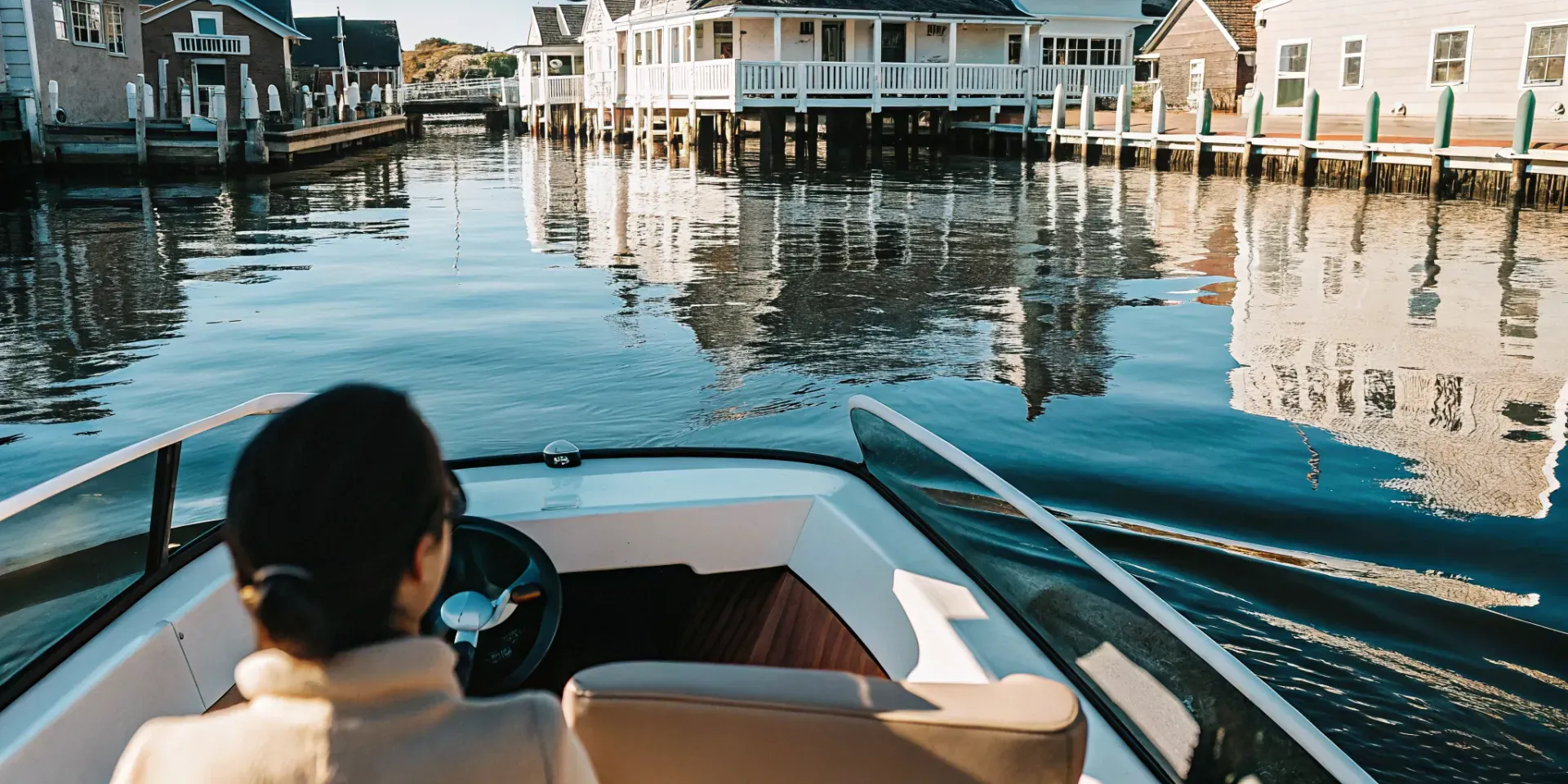
Thinking about getting into boating can feel like you’re staring at a huge checklist of tasks and expenses. Between the boat itself, the maintenance, and the gear, it’s easy to feel overwhelmed before you even start. But let’s take a step back and focus on the very first item on that list, the one that’s required no matter how you plan to boat. This guide is here to show you that learning how to get a boating license is the least intimidating and most straightforward part of the entire journey. We’ll walk you through the simple steps and affordable costs, proving that this initial hurdle is actually just a small, easy step toward a lifetime of fun on the water.
Key Takeaways
- Understand Your State’s Rules: Most states require a boater education card, not a formal license, to prove you’ve completed a safety course. These requirements vary by age and location, so your first step is always to check the specific laws for where you plan to boat.
- Getting Certified is Simple and Affordable: You can complete a state-approved online course in just a few hours for a low cost, often under $50. The process involves passing an exam and sometimes paying a small state fee for your physical card, making it an accessible entry into boating.
- Your Card is a Starting Point, Not the Finish Line: Passing the test gives you the knowledge, but true skill comes from hands-on experience. A boat club membership offers a practical way to build confidence on the water without the financial burden and responsibilities of boat ownership.
Do I Need a Boating License?
The first question many aspiring boaters ask is about licensing. While it sounds like getting a driver’s license for a car, the process for boating is a bit different. In most states, what you need isn’t a “license” but a boater education card or a safety certificate. This card proves you’ve completed a boating safety course and understand the rules of the water.
The requirements for who needs a card, at what age, and for what type of boat vary widely from state to state. It’s essential to know the specific laws for the waters you plan to be on. Even when you join a boat club where comprehensive training is part of the package, like the on-water training we provide at Carefree Boat Club, understanding your state’s legal requirements is a key part of being a responsible boater.
Who Needs a Boater Education Card?
The short answer is: it depends on your state. Many states are moving toward requiring safety certification for all operators of motorized boats. For example, some states are phasing in this requirement over several years. A case in point is California, where “starting January 1, 2025, everyone who drives a motorized boat for fun on California waters must have this card.” This trend highlights a growing emphasis on safety and education for everyone on the water. To be sure, you should always check the specific rules for your area. The BoatUS Foundation offers a helpful state-by-state guide to local boating laws.
Age Requirements by State
Age is another key factor that states regulate. You’ll find minimum age requirements for operating a boat alone, and these often change based on the engine’s horsepower. For instance, in California, “if you’re driving a boat with more than 15 horsepower, you need to be at least 16 years old, unless an adult is supervising you.” Here in Massachusetts, the rules are different. Operators between 12 and 15 years old must complete a safety course to operate a motorboat without adult supervision. For personal watercraft (like jet skis), everyone needs to complete a course, regardless of age.
A Closer Look: California’s Boating Rules
To understand how these state programs work, let’s use California as an example. “The California Boater Card is like a license you need to drive a motorized boat in California. It’s officially approved by the state.” This card serves as official proof that the holder has successfully passed a state-approved boating safety course. This model is common across the country; a state agency or its approved partners oversee the education and certification process. Getting the card involves taking a course, passing an exam, and then applying to the state for the official, durable card you’ll carry with you.
The California Boater Card Phase-In Explained
The process of getting a state-issued card is usually straightforward. Using the California example, the first step is that “you must show proof that you’ve completed a boating safety education course.” After passing your course, you apply to the state. “Once your application, payment, and proof of education are approved, you’ll get a temporary California Boater Card by email,” which you can use immediately. The cost is typically minimal; for California, “the total fee is $11 ($10 for the card plus a $1 service fee).” This simple process ensures that boaters get the necessary education before heading out on the water. You can find more details on the process on the official California Boater Card website.
What Does a Boating License Cost?
Getting your boating license, or more accurately, your boater education card, is one of the most affordable steps you’ll take in your boating journey. Unlike the hefty price tag of a boat, the cost of getting certified is surprisingly low. The final price tag is usually a combination of two things: the fee for the safety course itself and a separate administrative fee for the state to issue your card.
While the exact costs vary from state to state, they are generally very reasonable. For example, in California, the entire process can cost less than a tank of gas. This small investment is all about ensuring you have the foundational knowledge to be safe and confident on the water. Think of it as your ticket to countless days of fun, whether you’re exploring the coast of Gloucester or cruising around the Boston Harbor. Let’s break down what you can expect to pay.
Breaking Down Course Fees
The first cost you’ll encounter is the fee for a state-approved boating safety course. These courses are designed to teach you the rules of the water and essential safety practices. The price can range from free to around $50, depending on the provider and your state.
For instance, to get a California Boater Card, which is the state’s required credential for operating a motorized boat, you must first pass one of these courses. Many private companies offer state-approved courses online, giving you the flexibility to learn at your own pace from home. These courses are the core of your education, covering everything from navigation rules to handling emergencies. The fee typically covers the educational materials and the final exam, making it a straightforward part of the process.
State Application and Card Fees
Once you’ve successfully passed your boating safety course, the next step is to pay a fee to the state for your official boater card. This is a separate administrative fee that covers the cost of processing your application and printing the physical card. Don’t worry, this fee is usually quite small.
To give you a real-world example, after completing the course in California, you would then pay the state’s application fee. According to the official site, the total fee is just $11, which breaks down to $10 for the card and a $1 service fee. You can see how this works and apply now on their website. Most states follow a similar model, so you can expect a modest fee to finalize the process and get your card in hand.
How to Save: Available Discounts
If you’re looking to save a few dollars, you’re in luck. There are several ways to reduce the cost of your boating education. Many organizations offer free or discounted courses that still meet all state requirements. A little research can go a long way in finding a great deal.
For example, the BoatUS Foundation offers a completely free online boating safety course that is approved by many states. This is an excellent option if you want a quality education without the cost. Additionally, it’s always worth checking for special discounts. Some providers offer reduced pricing for military members and first responders, as seen with some boating safety courses that have specific military discounts. Always check a provider’s website for promotions or special group rates before you sign up.
Finding the Best Online Boating Safety Course
Once you know your state’s rules, it’s time to find a course. The good news is you have plenty of options, and many of them are online, making it easy to learn at your own pace from the comfort of your home. Different providers offer courses with various features, formats, and price points, so you can find one that fits your budget and learning style.
The most important factor is ensuring the course is officially approved by your state’s boating agency. A certificate from an unapproved course won’t be valid for getting your boater education card. National providers are often a safe bet, as they offer certified courses for multiple states. You can typically find a list of approved providers on your state’s official boating website. Below are a few of the most popular and reputable providers to start your search.
Boat-Ed
Boat-Ed is one of the largest and most recognized providers of boating education in the country. They partner with state agencies to offer official, approved courses tailored to each state’s specific laws and regulations. Their online platform is designed to be engaging, with illustrations and interactive animations to help you learn the material. After completing the lessons, you’ll take the final exam online. Upon passing, Boat-Ed provides the necessary documentation to prove you’ve completed your state’s requirements, getting you one step closer to receiving your boater card. Their state-approved courses are a reliable choice for meeting your educational needs.
BoatUS Foundation
If you’re looking for a high-quality, budget-friendly option, the BoatUS Foundation is an excellent place to start. They offer a free online boating safety course that is approved in many states. Don’t let the “free” part fool you; this is a comprehensive and well-respected program developed by a leading boating safety organization. The course covers all the essential knowledge you need to operate a boat safely and confidently. For many new boaters, the BoatUS Foundation course is the perfect entry point, providing a solid educational foundation without any financial commitment. Just be sure to confirm it’s approved in your state before you begin.
America’s Boating Course
Offered by the U.S. Power Squadrons, America’s Boating Course is another fantastic, state-approved option. It provides a thorough overview of boating safety, from handling and navigation to equipment and emergency procedures. One thing that sets this provider apart is its occasional discounts. For example, they sometimes offer reduced pricing for military members and their families, so it’s worth checking if you qualify for any special offers. Their platform is straightforward, allowing you to select your state and get started on the required material right away. It’s a solid, reputable choice for earning your boater education card.
US Coast Guard Auxiliary
For those who want to learn from one of the most trusted names in water safety, the US Coast Guard Auxiliary offers a variety of educational programs. Their traditional boating safety course, often called “Boating Skills and Seamanship,” is incredibly thorough and goes beyond the basics required for a boater card. While many of their courses are held in person, they also offer online options that meet state requirements. Choosing a course from the USCG Auxiliary means you’re not just checking a box; you’re gaining deep, practical knowledge that will make you a more skilled and responsible boater for life.
What to Look For in a State-Approved Course
With several providers to choose from, picking the right one can feel a bit overwhelming. The first and most critical step is to verify that the course is approved by your state’s official boating agency. This information is usually displayed prominently on the provider’s website. Next, review the course curriculum. A quality course should cover essential topics like understanding navigation rules, required safety equipment, proper boat handling, and emergency procedures. Finally, consider the format. Some courses are text-heavy, while others use videos and interactive quizzes. Pick a style that you know will keep you engaged and help you retain the information.
Get Your Boating License in 6 Steps
Getting your boating license, often called a boater education card, is a straightforward process. It’s all about ensuring you have the fundamental knowledge to stay safe and confident on the water. Think of it as your ticket to responsible fun. Here’s how you can get yours in six simple steps.
Step 1: Check Your State’s Requirements
First things first, you need to know your local rules of the water. Boating education requirements vary by state, so it’s important to check what’s needed where you plan to boat. For example, in Massachusetts, anyone between 12 and 15 years old needs a safety certificate to operate a motorboat without an adult. A certificate is also required for anyone, of any age, who wants to operate a personal watercraft (like a Jet Ski). You can find the official details by checking your state’s environmental or boating law agency website, like the Massachusetts boating safety page.
Step 2: Choose a State-Approved Course
Once you know the requirements, your next move is to find a boating safety course that your state officially recognizes. Taking a non-approved course won’t count toward your certification, so it’s worth double-checking. States typically provide a list of certified instructors and online programs. You can choose between in-person classes, which are great for hands-on learners, or online courses that let you study at your own pace. The Massachusetts Environmental Police lists all approved course providers, making it easy to find one that fits your schedule and learning style.
Step 3: Complete the Course and Pass the Exam
Now it’s time to hit the books, or more likely, the screen. Most online courses are designed to be completed in just a few hours and are broken down into easy-to-follow modules covering everything from right-of-way rules to emergency procedures. You can work through the material whenever you have free time. At the end of the course, you’ll take a final exam to test your knowledge. Don’t stress about it; the courses do a great job of preparing you, and you can often retake the exam if you need to. A popular option like Boat-Ed shows you exactly what to expect.
Step 4: Gather Your Documents
After you pass your exam, you’ll receive proof that you’ve completed the course. This is usually a printable certificate of completion or a digital confirmation sent to your email. This document is your golden ticket. It’s the official proof you’ll need to show that you’ve met the state’s educational requirements. Make sure to save a digital copy and print one out for your records. This step is simple but essential, as it’s the bridge between finishing your course and getting your official card.
Step 5: Submit Your Application and Pay
This step can look a little different depending on your state. In some places, you’ll take your proof of completion and submit a separate application to a state agency. However, in many states, including Massachusetts, the process is much simpler. The fee for your official boater education card is often included in the price of the course. Once you pass the final exam, the approved course provider you chose will handle the “application” for you and issue your certificate directly. This means less paperwork and one less step for you to worry about.
Step 6: Receive Your Boater Card
After your course provider processes your successful exam, you’ll receive your official boater education card. It may arrive in the mail or as a digital card you can save to your phone. This is the document you’ll need to have with you whenever you’re operating a vessel. Be sure to store it in a safe, waterproof place or have the digital version easily accessible. With your certificate in hand, you’ve officially proven your commitment to safe boating. You’re now ready for your on-water adventures.
Managing Your Boater Card
After all the studying and passing your exam, you finally have your boater education card. Congratulations! Now, you just need to know how to handle it. Think of it like your driver’s license for the water; it’s your official proof that you know the rules of the waterways. Keeping it safe and understanding the rules around it is simple but important. Here’s a quick rundown of what you need to know about managing your card, from its lifespan to what to do if you accidentally lose it. This knowledge is key to enjoying a carefree day out on one of our luxury boats.
Does Your Boater Card Expire?
This is one of the best parts about getting your boater education card: in most states, it never expires. Once you’ve earned it, it’s good for life. This is true for states like Massachusetts, so you won’t have to worry about renewal classes or re-testing every few years. Your card also serves as a valuable document if you plan to boat in other states. Many states have reciprocity agreements, meaning they will recognize a boater education card that was issued in another state. Just be sure to check the specific rules for any state you plan to visit, as requirements can vary.
How to Replace a Lost Card
It happens to the best of us. You’re cleaning out your wallet or beach bag and suddenly realize your boater card is missing. Don’t panic. Replacing a lost or damaged card is usually a straightforward process. You’ll typically need to contact the same authority that issued your original card, which is often the state’s fish and wildlife or boating agency. For example, in Massachusetts, you can request a replacement safety certificate online. There’s usually a small fee for the new card; for instance, California charges $5 for a replacement. It’s a small price to pay for the peace of mind of having your official credentials back in hand.
On-the-Water Enforcement and Penalties
Once you have your card, you should carry it with you whenever you’re operating a boat, just like you would with your driver’s license. Marine patrol or other law enforcement officers can ask to see it during a stop. States are increasingly emphasizing boater education to keep everyone safe. For example, California is phasing in a requirement that all operators of motorized vessels must have a card by 2025. Failing to produce your card when required can result in a fine. To stay on the right side of the law, get familiar with your state’s specific boating laws and responsibilities. It ensures a safe, stress-free day for you and everyone else on the water.
You Have Your License. Now What?
Getting your boater education card is a huge accomplishment, but it’s really just the beginning. Passing the test means you understand the rules and safety basics, but true confidence comes from experience. Think of it like getting your driver’s license; you knew the laws of the road, but you still had to learn how to parallel park and merge onto the highway. The same goes for boating. Now that you have the license, it’s time for the fun part: getting out on the water and putting your knowledge into practice.
Build Your On-Water Skills
The best way to become a confident captain is to get hands-on experience. While your safety course covered the essentials, nothing replaces the feeling of actually handling a boat. This is where you learn to read the waves, approach a dock smoothly, and manage a busy channel. Many community boating centers and local groups offer on-the-water courses that let you practice these exact skills. Taking a class is a fantastic way to build your skills in a controlled environment with an instructor by your side. At Carefree, we provide comprehensive on-water training for all our members, ensuring you feel comfortable and capable before you head out on your own.
Simplify Boating with a Boat Club Membership
So, how do you get all this valuable on-water experience without buying a boat? For many new boaters, a boat club membership is the perfect solution. It bridges the gap between getting your license and becoming a boat owner, without the massive financial commitment and responsibilities of ownership. Joining a club gives you access to a diverse fleet of boats, so you can learn how to handle different sizes and types of vessels. This is an incredible advantage for building a wide range of skills. A Carefree Boat Club membership simplifies the entire process. We handle the maintenance, insurance, cleaning, and storage, so you can focus on what matters: enjoying your time on the beautiful waters around Boston and beyond.
Frequently Asked Questions
Is the boater education card I get in my state valid everywhere? For the most part, yes. Many states have reciprocity agreements, which means they recognize boater education cards issued by other states. However, it’s always a smart move to check the local regulations for any state you plan to boat in, especially if you’ll be there for an extended period. A quick search on that state’s boating agency website will give you the specific rules you need to follow.
How long does the whole process take, from starting a course to getting my card? You can complete the online course material in just a few hours. Most people finish it in a single afternoon. After you pass the final exam, the time it takes to receive your physical or digital card can vary. Some providers issue a temporary certificate immediately, while the official card may take a few weeks to arrive in the mail.
Do I still need a state boater card if I join Carefree Boat Club? Yes, you do. Think of them as two separate but equally important things. The state-required boater education card proves you understand the legal rules of the water. Our comprehensive on-water training, which is included with your membership, is where you build the practical, hands-on skills to confidently handle a boat. We make sure you have both the knowledge and the real-world ability to be a safe captain.
What’s the difference between the online safety course and the on-water training you offer? The online safety course teaches you the theory: navigation rules, safety equipment requirements, and what to do in an emergency. It’s the “written test” portion of your education. Our on-water training is the “behind-the-wheel” practice. With a professional instructor, you learn how to actually dock, anchor, and handle the boat in different conditions, which is where true confidence comes from.
I’ve passed my test, but I’m not ready to captain a boat alone. What’s the best next step? This is a very common and completely normal feeling. Passing the test is just the first step. The best way to build confidence is by getting hands-on experience in a low-pressure environment. This is exactly why a boat club is a perfect next step. You get unlimited access to a variety of boats and all the training you need, allowing you to build your skills at your own pace without the financial stress or responsibility of owning a boat.
https://shorturl.fm/uQf0a
https://shorturl.fm/Ei9NO