
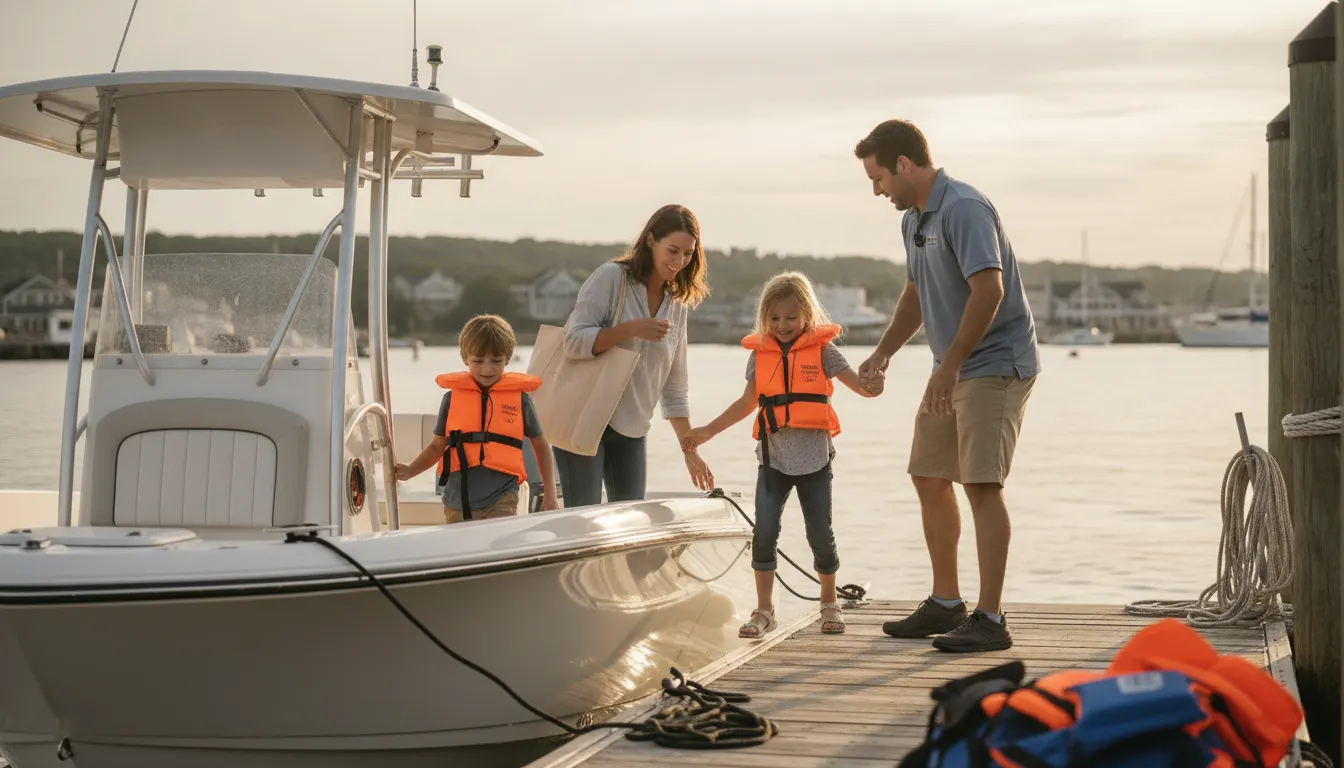
Getting a boat ready for Boston Harbor, Salem Sound, or the North Shore involves more than checking the fuel and safety gear. If the vessel is motor-powered or will operate on a Massachusetts public waterway, registration is generally part of the preparation. The details matter, especially when buying a boat, gathering ownership documents, or planning a renewal.
For anyone asking massachusetts boat registration how to register, start with the current Massachusetts Environmental Police instructions. Confirm whether your vessel falls under the registration rules, and gather the required ownership and identification documents before submitting the application. A boat club can reduce maintenance and scheduling hassles, but it does not remove a member’s legal registration responsibilities.
This guide separates vessel registration from boating safety credentials. It covers eligibility, the first-time application, paperwork, renewals, and how Carefree Boat Club supports boating without ownership hassles. First, determine whether your boat needs Massachusetts registration.
How do Massachusetts boat registration rules explain how to register?
In Massachusetts, registration generally follows how a vessel is powered and where it is operated. State law requires registration for any motor-powered boat, as well as any boat operated on a Massachusetts public waterway. That scope includes motorized fishing boats, canoes and sailboats with motors, and personal watercraft such as jet skis or wet bikes. You can review the current state requirements on the Mass.gov boat registration page.
Non-motorized boats do not need Massachusetts registration under the state’s registration summary. The same page identifies an additional exception for vessels with documented registration issued by the U.S. Coast Guard. If your situation falls into an unusual category, confirm the current rule with Mass.gov rather than relying on a general boating checklist.
Registration is different from an operator credential
Boat registration identifies the vessel and authorizes it to be operated under the applicable state requirements. It is not the same thing as an operator boating credential, such as a boating safety certificate or license requirement. A person may need to satisfy operator-safety requirements even when the registration question has already been answered. And registering a vessel does not automatically qualify someone to operate it. For that reason, treat registration and operator education as two separate compliance questions. Our Massachusetts boating license guide covers the operator side in more detail.
Boat-club access does not change these legal distinctions. If you own a vessel, you remain responsible for understanding the registration requirements that apply to it. A membership model can provide boating without ownership hassles, but it should not be described as replacing registration, titling, or any operator credential that Massachusetts requires.
The Massachusetts registration service also brings related topics together, including titling and renewal. It lists separate information for those processes, so do not assume that an exemption from registration answers every question about a vessel’s ownership records. When in doubt, check the current official guidance before using a boat on Boston Harbor, Salem Sound, or another Massachusetts public waterway.
How do you register a boat in Massachusetts?
Massachusetts provides a first-time boat-registration process for owners who need to document a vessel for use in the Commonwealth. The state agency responsible for registering motorboats is the Boat and Recreation Vehicle Registration and Titling Bureau. Because required documents can vary by the boat’s age, purchase history, size, and federal documentation, gather your records before contacting an office. Use the official Massachusetts first-time boat registration instructions as the current reference, and confirm requirements if your situation is unusual.
- Review the first-time requirements for your boat. Start with the state’s official process rather than assuming a bill of sale alone will be enough. Massachusetts may require additional ownership, tax, hull-identification, title, or federal documentation based on the vessel and transaction.
- Complete the Registration and Titling Application. Use the official application linked from the state’s boat registration page. Enter the requested vessel and owner information carefully, and check whether a co-owner or lienholder requires the state’s supplemental registration form. The same state page also provides a sample boat bill of sale and other specialized forms.
- Assemble your purchase and ownership documents. Include a bill of sale showing the seller’s name, address, and signature. If you purchased the boat from a business, the bill of sale must be on company letterhead. For a brand-new boat purchased from a dealer, department store, or internet seller, provide the original Manufacturer’s Statement of Origin.
- Provide proof of sales tax payment. The first-time process requires proof that sales tax was paid. Massachusetts directs applicants to MassTaxConnect for online sales-tax payment, and the instructions say to print the receipt as proof. Keep that receipt with the rest of your application materials.
- Document the hull identification number. Provide either a pencil tracing or a digital picture of the hull ID number, also called the serial number. If the boat was manufactured before 1972, or it does not have a proper Coast Guard-conforming 12-character hull ID, it may require a boat inspection. Do not assume the application is complete until you have checked this point.
- Check whether a title or Deletion Letter applies. Boats 14 feet and over require a title from the seller signed over to the new buyer. If the boat is documented with the U.S. Coast Guard, the Massachusetts instructions require a Deletion Letter. The instructions list the Coast Guard at 1 (800) 799-8362 for questions about obtaining that letter.
- Prepare an accepted payment method. Required registration fees may be paid by check or money order made payable to the Commonwealth of Massachusetts, or by credit card or debit card. Cash is not accepted for the listed first-time registration fees. Do not rely on an old fee figure; check the current official instructions for the amount that applies to your boat.
- Contact the registration bureau or a registration office. The bureau lists five registration offices statewide. For the Boston office, the listed phone number is (617) 626-1610, with hours of Monday through Friday, 9 a.m. to 5 p.m. The bureau page also lists offices in Fall River, Hyannis, Springfield, and Worcester, along with their phone numbers and current contact information. Confirm the latest office details before making a trip.
This process is separate from completing a boating safety course or holding an operator credential. If you are preparing to boat from Boston, Danvers, Gloucester, or elsewhere on the North Shore, verify both your vessel-registration obligations and any applicable safety requirements with Mass.gov.
What documents do you need for first-time registration?
Gathering the right paperwork before you apply can make first-time registration much easier. Massachusetts asks for documents that establish how you acquired the boat, identify the vessel, confirm sales tax, and, when applicable, document its title or prior Coast Guard status. Use this checklist, then confirm the current requirements on the official Massachusetts first-time boat registration page before submitting your application.
- Bill of sale: Include the seller’s name, address, and signature. If you bought the boat from a business, the bill of sale must be written on the company’s letterhead. Massachusetts also provides a sample bill of sale for boats among its registration resources.
- Manufacturer’s Statement of Origin: If the boat is brand new and was purchased from a dealer, department store, or through an internet sale, provide the original Manufacturer’s Statement of Origin. This document is conditional on the boat being new and acquired through one of those channels.
- Proof of sales tax payment: First-time registration requires proof that sales tax was paid. Massachusetts directs applicants to MassTaxConnect for online payment. If you pay online, print the receipt and keep it with your registration documents.
- Hull identification number record: Provide either a pencil tracing or a digital picture of the hull identification number, also called the serial number. Make sure the image or tracing is readable before you submit it.
- Inspection documentation, when triggered: An inspection may be required if the boat was manufactured before 1972 or does not have a proper Coast Guard-conforming 12-character hull identification number. The state’s boat-registration page includes a request boat inspection service for this situation. This is not a universal requirement for every first-time registration.
- Signed-over title, when applicable: For a boat 14 feet or longer, provide the title from the seller, signed over to the new buyer. This requirement applies based on the boat’s length.
- Deletion Letter, for a documented vessel: If the boat was documented with the U.S. Coast Guard, provide a Deletion Letter. Massachusetts lists the Coast Guard contact number for this document as 1 (800) 799-8362. This item is conditional on the boat having documented-vessel status.
You will also need the completed Registration and Titling Application. The state registration page links to the application and additional forms, including a supplemental form for co-owners and lienholders. It also provides specialized resources for foreign-built vessels and affidavits for surviving spouses or heirs, so use those only when your ownership situation calls for them.
Before visiting an office or submitting materials, compare your packet with the current Mass.gov checklist. Requirements can change, and a complete packet should match the boat’s age, length, purchase history, ownership structure, and documentation status.
How do renewal, title, and follow-up requests work?
Registration is not a single form you use for every situation. The Massachusetts boat-registration page groups several related services, including registration, titling, and renewal information. It also provides separate pathways for follow-up needs that can arise after a vessel is registered. Keeping those services distinct can help you choose the right instructions instead of treating every paperwork question as a new registration.
For the current process, start with the official Massachusetts boat-registration page. Requirements, forms, office procedures, and fees can change, so confirm the instructions that apply to your situation before submitting anything.
Renewal is separate from a first-time registration
A renewal request concerns an existing registration. It is different from registering a boat for the first time, and it may not require the same information or steps. The official page includes renewal guidance, but the available summary does not establish a universal renewal date or fee. Rather than relying on an old notice, saved bookmark, or informal boating advice, check Mass.gov for the current renewal instructions and any applicable deadline.
Title and inspection questions may need their own service
Titling is also separate from registration. A title question may involve ownership records or a transfer, while an inspection request addresses the condition or identification of a vessel. Mass.gov lists a boat-inspection request as a related service. That does not mean every registrant needs an inspection. It means applicants with an inspection issue should follow the instructions for that specific request instead of assuming the standard registration path answers it.
What if a document, decal, or boat is missing?
The state page lists separate options for requesting a duplicate boat registration and a duplicate decal for a boat or personal watercraft. These are useful distinctions when the registration record exists but the physical document or decal is unavailable. The page also identifies a service for reporting a boat that is lost or stolen. That report is not the same as replacing a registration or decal, so use the service that matches the event.
Finally, Massachusetts lists a cancellation service for boat registration. Cancellation is a distinct administrative action, not a renewal or duplicate request. Review the current Mass.gov instructions carefully, select the service that matches your need, and keep copies of any confirmation or documents you submit.
What does a boat club handle, and what remains your responsibility?
Owning a boat and joining a boat club can both put you on the water, but the administrative experience is different. A private owner coordinates the vessel’s upkeep, storage, insurance, paperwork, and day-to-day readiness. A Carefree Boat Club member uses a managed membership service designed to reduce those ownership hassles while preserving the member’s responsibility to operate safely and follow the law.
Carefree Boat Club of Massachusetts supports members from local facilities in Boston, Danvers, and Gloucester. The club’s membership model covers practical operations such as booking through the ResNet system. While training helps members understand check-in and check-out procedures, documentation requirements, safety equipment, reservations, cancellations, weather-related changes, and reciprocal usage booking. Learn more about on-the-water training.
| Task area | Private boat owner | Carefree member |
|---|---|---|
| Maintenance and readiness | Arranges maintenance, cleaning, repairs, and readiness before each outing. | Uses club-managed boats supported by cleaning, maintenance, and weekly 50-point safety inspections. |
| Storage and ownership administration | Coordinates storage, insurance, mooring, winterization, taxes, and related administration. | Receives boating access without taking on the vessel ownership responsibilities described in the membership service. |
| Reservations | Plans personal use of a boat they own. | Books club boating through the ResNet online reservation system. |
| Training and safety | Finds appropriate instruction and checks the boat’s safety equipment. | Can use certified instructor-led training covering safety gear, local waterways, emergency procedures, and reservation-system use. |
| Legal registration | Handles the vessel’s applicable registration and related paperwork. | Still meets all legal registration duties that apply to the member’s boating situation. Membership does not remove those duties, and the club should not be described as registering boats for members. |
The distinction matters when you are researching massachusetts boat registration how to register. Club support can simplify operational tasks, but it is not a substitute for confirming legal requirements with the Commonwealth or completing any paperwork that applies to you. Registration obligations and boating-safety training are separate issues, too. The club’s training can build confidence and explain safety requirements, but it does not change who is legally responsible for registration.
For people who want boating without ownership hassles, the model can make the practical side of boating more manageable. Members can focus on preparing for a safe outing rather than arranging every ownership task. And reciprocal access is available through the wider Carefree network at more than 150 participating locations. Review the details of Carefree Boat Club membership options, then confirm current legal requirements through official Massachusetts resources before heading out.
Frequently Asked Questions
How do I register my boat in Massachusetts?
Start with the Massachusetts Environmental Police boat registration process, gather the required documents, complete the application. And submit it with an accepted payment method through the designated registration bureau or office. Review the current instructions at Mass.gov’s first-time boat registration guide, because office procedures and fees can change.
Can I register a boat in Massachusetts with only a bill of sale?
Usually, you should expect to provide more than a bill of sale. Massachusetts requires a bill of sale with the seller’s name, address, and signature, plus other documents that may apply to your purchase. Such as proof of sales tax paid, a hull identification number image or tracing, or a Manufacturer’s Statement of Origin for a new boat. See the official document checklist before applying.
Can I register a boat in Massachusetts without a title?
Do not assume that a missing title is acceptable. Titling requirements can depend on the vessel and its length, and a documented vessel may require a Deletion Letter. Check the current Massachusetts registration and titling instructions, then contact the bureau if your ownership documents are incomplete.
Does boat club membership take care of my boat registration?
No. Membership does not remove your legal responsibility to follow registration, titling, or other state requirements for a boat you own or operate. A club can reduce ownership administration through services such as maintenance coordination, safety checks, training, and booking support, but confirm your personal obligations with Massachusetts Environmental Police. Carefree Boat Club membership is designed to provide boating access without the routine ownership workload.
Ready to make boating simpler?
Understanding registration requirements is one part of enjoying time on the water. A Carefree Boat Club membership can help reduce the everyday ownership responsibilities around boating, while you remain responsible for your legal registration obligations. If you are exploring boating without ownership hassles in Boston, Danvers, Gloucester, or the Massachusetts North Shore, book a tour to learn whether membership fits your plans.
https://addlinks.pro/Jw4ZJ