
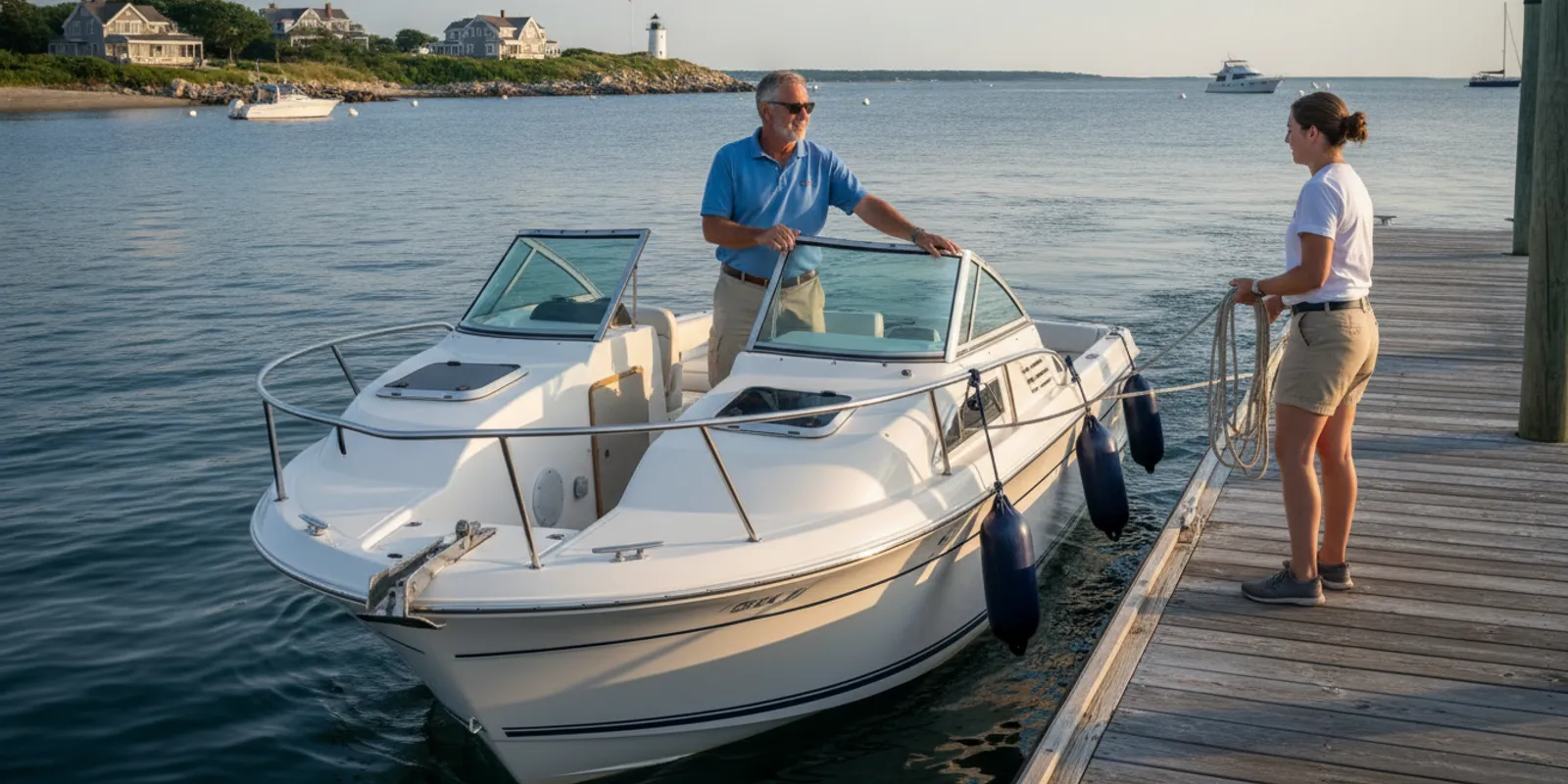
Learning how to dock a boat is easier when you treat it as a slow, planned maneuver rather than a last-second turn. Wind, current, dock layout, and the boat’s response all matter. A steady approach, clear communication, and permission to stop and reset help make docking safer for everyone aboard.
Schedule a tour and talk with our team
What Should You Check Before Approaching a Dock?
Take a moment to understand the space before committing to the approach. Look for the intended slip or open section of dock, nearby boats, pilings, shallow areas, and people in the water or on the dock. Notice how much room you have to turn and whether you can make a slow approach without crossing another boat’s path.
Check the conditions around the boat. Which way is the wind pushing? Is current moving the boat toward or away from the dock? A flag, nearby moored boats, or the surface of the water can give you clues, but conditions may differ around structures. The BoatUS Foundation’s docking guidance also emphasizes assessing the space available to maneuver before choosing an approach.
- Choose a clear side and approach route, with an exit or reset option in mind.
- Reduce speed early. At docking speed, the boat should be moving only as fast as needed to maintain control.
- Ask passengers to remain seated or stable until you assign a task.
- Prepare fenders and lines before entering a tight area.
- Agree on simple signals and who will handle each line.
If you are new to the boat, make sure you understand its controls and turning response before maneuvering near a dock. A refresher in basic boating skills can help you build a calm routine, and the club’s on-the-water training page explains how members can learn with support.
How Do You Prepare the Boat and Your Crew?
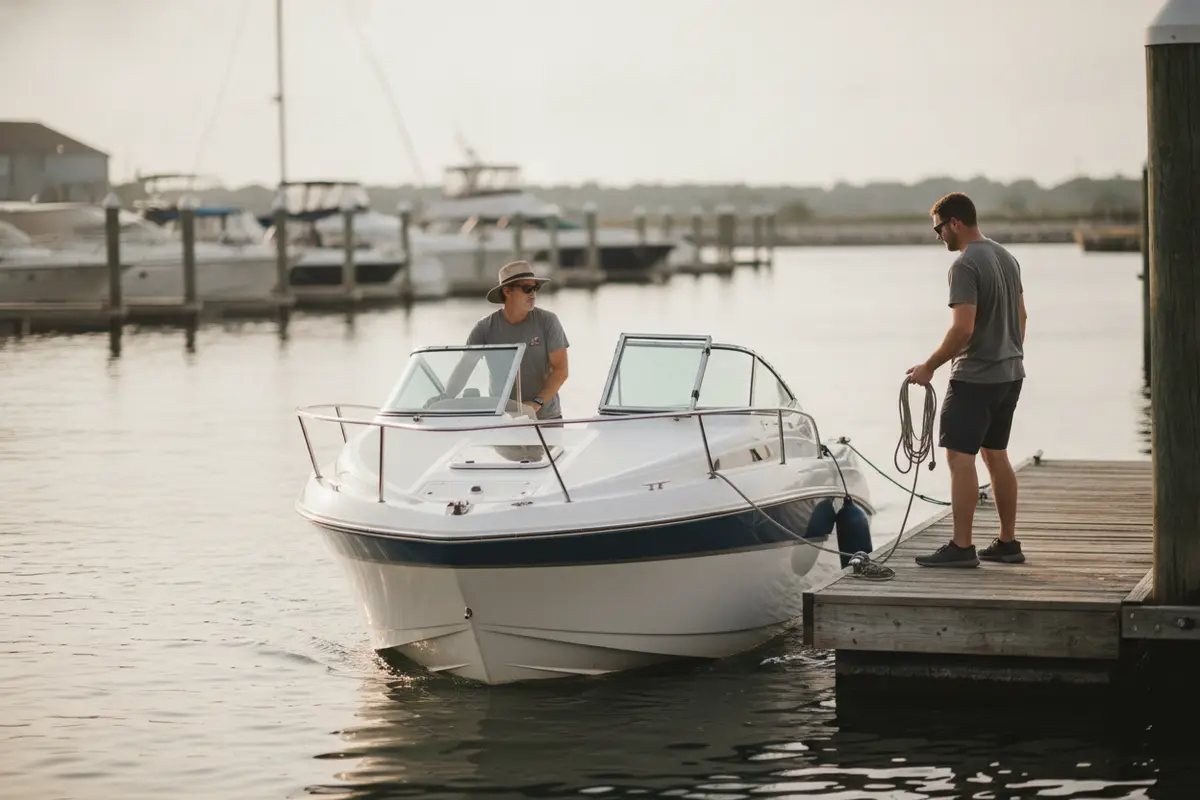
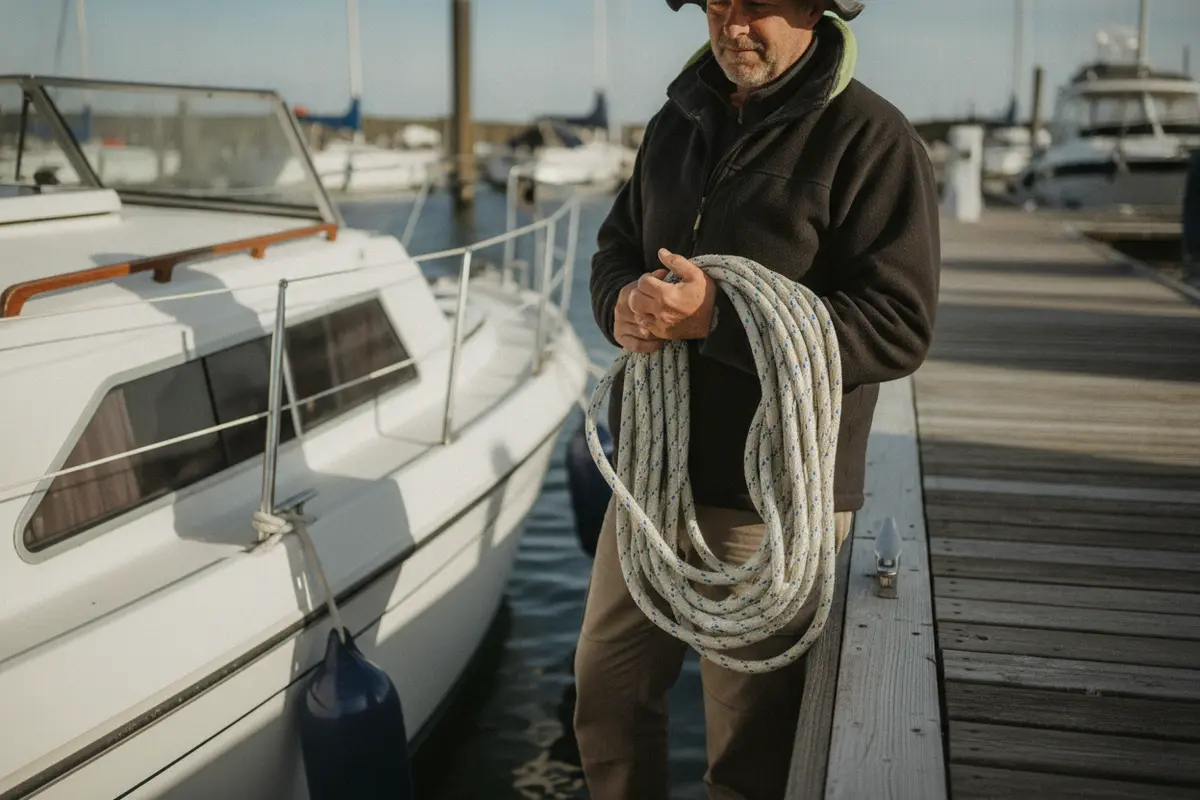
Do the preparation while you still have room to maneuver. Put fenders on the side that may touch the dock, at a height that will protect the boat where it meets the dock edge. Have dock lines ready and free of knots or tangles. Keep lines inside the boat until needed so they do not fall in the water or catch on equipment.
Give each person one clear job. The helmsperson stays focused on steering and speed. A passenger may be asked to hold a line or report distance, but should not jump onto the dock or try to stop the boat with their hands or body. Tell everyone to keep hands and feet inside the boat and use a fender to protect the hull. If no one is available to assist, it is fine to take a slower, simpler approach or wait for help.
Use brief, agreed signals. For example, one person can call “stop” when the boat is close enough to secure, while the helmsperson confirms instructions. Avoid shouting several directions at once. If people cannot hear one another, pause in a safe area and agree on gestures or positioning before trying again.
How Can You Assign Clear Roles?
Before moving into the approach lane, name who is steering, who will handle each line, and who will watch clearance. The helmsperson should not be expected to manage every passenger task while also judging speed and direction. A line handler should know which cleat or piling is the intended attachment point, but should wait until the boat is safely alongside and within reach.
Keep instructions short and specific. “Hold this line ready” is clearer than a series of last-second directions. If a passenger is inexperienced, demonstrate how to hold the line without wrapping it around a hand. Ask them to report what they see rather than pull hard against the boat’s motion. The boat operator remains responsible for controlling the vessel.
What Is a Simple Step-by-Step Docking Approach?
- Set up early. Select the landing side and position the boat so you have room to turn toward the dock. Prepare fenders and lines in advance.
- Approach at idle or the lowest controllable speed. Keep enough power to steer, but avoid carrying unnecessary momentum. A boat may continue moving after power is reduced.
- Use small control inputs. Make gradual steering and throttle changes, allowing time for the boat to respond. Avoid sharp turns close to the dock.
- Watch the boat’s movement, not only the dock. Check whether wind or current is changing your angle or carrying you off the planned line.
- Secure a line when safely within reach. The person handling it should stay balanced and never leap between boat and dock. Secure lines without wrapping them around a hand.
- Use the engine only as needed to maintain control. Once the boat is secure, follow the vessel’s operating procedures before shifting or shutting down.
Exact controls and line practices vary with boat design and dock arrangement. Review the boat’s instructions and get hands-on guidance for the specific vessel rather than assuming every boat turns or responds the same way. The navigation basics guide offers additional context for planning movement on the water.
What Should You Do If the Approach Goes Wrong?
Do not make a hurried correction just to avoid a second attempt. If the boat is too far off line, carrying too much speed, or being pushed toward an obstruction, use the controls to move back into open water while you still have room. Once clear, reduce workload, check the wind and current again, and agree on a revised plan.
A reset is useful even when nobody made a mistake. A passing wake, a gust, or another vessel entering the area can change the situation. Tell the crew that you are pausing, keep everyone in a stable position, and wait until the approach lane is clear. Avoid reversing or turning sharply near other boats unless you understand how your vessel responds and have enough space.
How Should You Adjust for Wind and Current?
Wind and current can move a boat even when it feels as though you are barely moving. Think about which direction each force will push the boat during the approach and after you reduce power. Make your plan with that movement in mind, and leave room for it rather than trying to fight it at the last moment.
If conditions are pushing the boat away from the dock, you may need a controlled approach that accounts for drift and allows a line to be secured when appropriate. If conditions are pushing you toward the dock, extra caution is needed because the boat can close the gap quickly. Keep speed very low and avoid relying on a passenger to fend off the boat by hand.
In a crosswind, the bow and stern may respond differently. Make small adjustments and watch the whole boat’s angle. If a gust changes the approach, do not force the landing. Move away from the dock, regain a safe position, and try again when you have room. Strong current, gusty wind, limited visibility, or crowded traffic may make waiting the sensible choice.
How Do You Read Drift Before Committing?
Observe the boat’s movement relative to fixed references such as pilings or the dock edge before entering a narrow space. A short period of observation can show whether the vessel is sliding sideways or whether the bow is turning. Compare that movement with the intended landing point, then decide whether you have sufficient room and control to proceed.
Wind and current may not act in the same direction. Nearby structures can also alter the flow, so do not assume that conditions at the entrance to a marina match those inside a slip. Continue watching as you move, and be ready to abandon the line if the actual drift differs from your plan.
| Condition | What to watch | Practical response |
|---|---|---|
| Light wind, little current | Approach angle and remaining momentum | Use a slow, direct approach and make gradual corrections. |
| Wind pushing away | Drift away from the landing point | Plan for drift, keep control, and avoid rushing to reach the dock. |
| Wind or current pushing toward dock | Closing distance and speed | Reduce speed early and leave room to stop or turn away. |
| Crosswind or changing conditions | Bow and stern moving differently | Use small inputs; reset in open water if the angle becomes difficult. |
These are planning cues, not a substitute for instruction. The strength and direction of wind and current, the boat’s size, and the location all change what works. If you are uncertain that you can keep the boat under control, wait for safer conditions or seek qualified help.
What Changes in a Tight Slip or Alongside a Pier?
A tight slip leaves less room to correct an approach. Identify the available turning space, neighboring boats, and any fixed obstructions before entering. If another boat or a piling blocks your preferred line, consider whether there is a safer open section of dock instead. Do not squeeze into a space simply because it appears just wide enough.
Alongside a long open pier, you may have more room to choose where to come alongside, but you still need a controlled angle and a plan for securing the boat. Aim to arrive slowly with fenders positioned where contact is likely. For a slip, be especially deliberate about alignment: if the boat is not entering cleanly, back out or turn away while space remains, then reassess.
It can help to practice basic handling in an open area under suitable conditions before attempting a difficult landing. Learn how the boat responds to steering and low-speed power, and ask an experienced instructor to demonstrate the vessel’s particular behavior. See the club’s fleet information for the types of boats members may encounter, and use the frequently asked questions to find answers about membership and boating support.
What Is Different About Returning to a Slip?
Returning after an outing may mean approaching when the dock area is busier or when conditions have changed. Before turning toward the slip, look again for traffic, people moving gear, and changes in wind or current. Do not assume the return will match the conditions you saw when leaving.
Keep a clear route past the slip if you need another attempt. Make sure the crew knows that a go-around is an acceptable outcome. Once alongside, secure the boat in an orderly way and follow the vessel’s shutdown and dock procedures rather than rushing to unload passengers.
What Docking Mistakes Should You Avoid?
- Approaching too fast: Extra speed creates momentum that may be hard to stop in a short space. Slow down before you reach the dock.
- Making a rushed turn: Late, large steering changes can make the approach less predictable. Set up early and correct gradually.
- Using hands or feet to stop the boat: People can be injured or caught between surfaces. Use fenders and safe line-handling practices instead.
- Assigning several jobs at once: Conflicting instructions add confusion. Give each person one role and use clear signals.
- Trying to save a poor approach: A go-around is a normal decision. Create space, reset, and try again rather than forcing the landing.
- Ignoring changing conditions: A gust or current can alter the plan. Keep observing until the boat is secured.
What Does a Calm Docking Routine Look Like?
Use the same sequence each time: assess the area, assign roles, prepare equipment, approach slowly, and reassess continuously. Repeating a simple checklist makes it easier to notice when something is different, such as a new obstruction or a wind shift. It also gives passengers a predictable set of instructions.
After securing the boat, take a moment to confirm that lines are holding as intended and fenders are placed appropriately. Do not leave the helm or begin unloading until the boat is stable and the operator’s procedures allow it. A tidy finish is part of the maneuver, not an afterthought.
When Should You Wait or Ask for Help?
There is no need to dock on the first attempt. Wait if the approach area is crowded, conditions are beyond your experience, or you cannot clearly communicate with the people helping. If the boat is drifting toward an obstruction or you lose control of the intended line, prioritize moving to a safe open area rather than completing the maneuver.
Ask a qualified instructor or experienced operator for a demonstration when you are unsure about the boat’s controls, local dock layout, or safe line handling. Before heading out, reviewing a boat safety equipment checklist can also help you prepare for the outing as a whole. Good preparation includes knowing where safety equipment is and how to ask for assistance.
How Can Beginners Build Confidence?
Choose practice conditions that leave room to learn. Start in an open area without nearby traffic, and focus on how small steering and power changes affect the vessel. Work on one skill at a time, such as maintaining a slow speed or judging the boat’s turning response, before combining those skills near a dock.
Ask an instructor to explain the controls and demonstrate the maneuver on the boat you will operate. A useful lesson includes time for you to practice, ask questions, and understand what to do if the first approach does not work. The club’s beginner boating overview is another starting point for people learning the basics.
What Questions Do New Boaters Ask About Docking?
Should I use reverse to stop the boat?
Boat response varies by vessel, propulsion, and conditions. Learn the specific boat’s controls and stopping behavior from its instructions or an instructor, and practice in open water before relying on a maneuver near a dock.
How close should I get before someone handles a line?
The line handler should take a line only when it is safely within reach and they can remain balanced. No one should jump between the boat and dock or use a hand or foot to stop the hull.
What if wind pushes me away from the dock?
Account for drift while there is still room to maneuver. If you cannot approach under control, move to a safe open area and wait or ask for help rather than rushing to reach the dock.
Is it acceptable to try again?
Yes. If the approach is not controlled, move away, reassess the conditions, and make another attempt when the lane is clear and the crew understands the plan.
Explore Massachusetts boat club membership
What Should You Remember About Docking?
Safe docking comes down to preparation, low speed, communication, and judgment. Read the space and conditions, prepare fenders and lines early, and use small control inputs. If the approach stops feeling controlled, move away, pause, and reset. With practice and appropriate instruction, each docking attempt can become more familiar and manageable.