

Choosing a boat gets easier when you start with the layout rather than the marketing label. An open bow can create a more social space for passengers. Comfort, storage, protection from weather, and handling depend on the specific model and the waters you plan to use.
Book a Carefree Boat Club tour to explore your boating options.
A bowrider boat is a recreational powerboat with an open forward seating area in the bow. It is commonly used for day cruising, swimming stops, and social outings, while some models are equipped for casual fishing or tow sports. Passenger capacity, seating protection, hull design, and power vary, so the manufacturer’s capacity plate and documentation matter more than a general category description.
In the sections ahead, you will see how the open-bow design affects everyday comfort. You will also learn what to consider when carrying passengers and which checks can help you decide whether this style fits your boating plans.
What Is a Bowrider Boat?
A bowrider boat is a recreational powerboat with an open seating area at the front, or bow. Instead of ending the enclosed cockpit at the windshield, the layout extends forward to create additional seats where passengers can enjoy the ride, talk, or relax while underway. A low windshield, side consoles, and removable cushions may help define the arrangement, but the exact design depends on the boat.
The term describes a boat type, not one specific model. Two bowriders can have noticeably different hull shapes, seating layouts, storage areas, engines, handling characteristics, and passenger limits. Some are designed primarily for calm-water day trips, while others may be better suited to a wider range of recreational activities. The label alone does not tell you how a boat will perform in a particular harbor, coastal route, or weather condition.
Capacity is especially important. The number of people a boat can safely carry, along with the appropriate load and operating limits, must be confirmed for the specific vessel. Read the manufacturer’s capacity plate and documentation rather than relying on a general description of bowriders. Passenger comfort can also vary based on seat depth, available handholds, protection from spray, and how easily people can move between the cockpit and bow.
Hull design and power affect the boat’s suitability, too. A prospective boater should consider where the boat will be used, who will typically be aboard, and which activities matter most before comparing models. The same questions apply when reviewing a broader range of recreational boats. You can explore the Massachusetts boat fleet to see how boat categories and model-level information are presented, without assuming that every category includes a bowrider.
In short, the open bow is the defining feature, but the details determine whether a particular boat fits your plans. Treat the category as a useful starting point, then evaluate the individual boat’s specifications, condition, equipment, and intended operating environment.
How Does the Layout Affect Comfort and Handling?
An open-bow layout gives passengers a forward seating area that can make a day on the water feel more social. People can spread out, talk with the operator, watch the route, or settle into a different seat while cruising. That flexibility is useful for families and groups, but comfort depends on the details of the individual boat. Seat shape, backrest height, handholds, nonskid surfaces, wind protection, and the amount of free deck space can vary considerably.
The bow is also more exposed than the cockpit. On a calm, sunny afternoon, that openness can improve the view and make the ride feel spacious. In changing Massachusetts weather, spray, wind, and shifting conditions may make the aft seating area more comfortable for some passengers. A practical walkthrough should include both areas. Ask where passengers will sit when the boat is underway, how they move between the bow and cockpit, and whether the available handholds support safe movement.
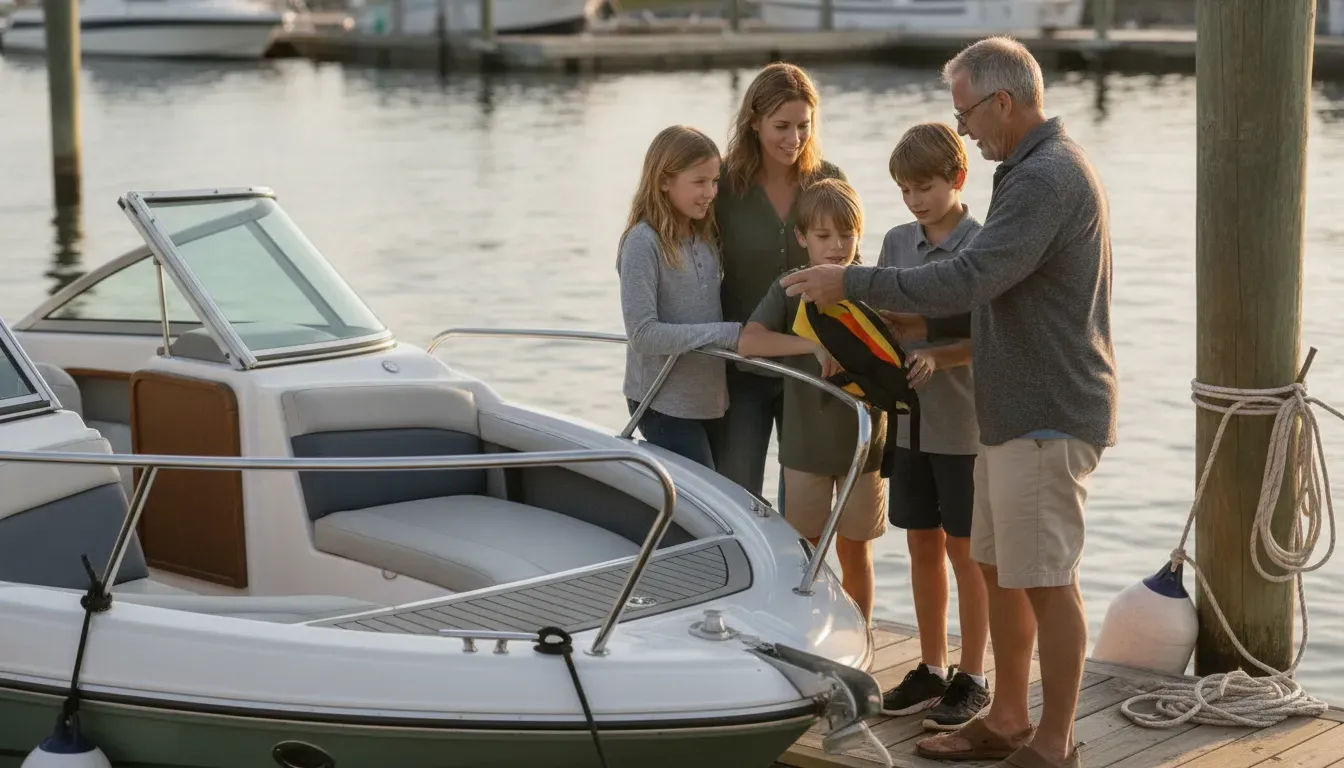
Layout can affect handling indirectly because passenger position changes how weight is distributed. People should remain within the manufacturer’s instructions and avoid crowding the bow or moving around unnecessarily while operating in rougher conditions. Hull shape, length, beam, propulsion, steering system, and overall weight all influence how a boat responds to turns, wakes, acceleration, and wind. There is no single handling profile that applies to every bowrider boat.
Storage deserves the same model-level attention. Look for practical places to secure life jackets, coolers, lines, and personal items without blocking walkways or safety equipment. Some layouts prioritize open seating, while others provide more protected compartments or easier access to the cockpit. Review the manufacturer’s specifications, capacity plate, and owner documentation rather than relying on a general size, horsepower, or passenger claim.
What Are Bowrider Boats Commonly Used For?
Bowrider boats are often chosen for flexible day trips where passengers want to move between cruising, relaxing, and participating in activities on the water. Their open forward seating can make them a comfortable fit for families and groups. But the best use depends on the specific model, its capacity, and the conditions you expect to encounter.
Day Cruising and Swimming Stops
A typical outing might include a trip along a protected shoreline, a harbor tour, or a stop in a suitable area for swimming. The open bow gives passengers a place to sit while underway when conditions and the manufacturer’s instructions allow it. Before heading out, review the forecast, identify safe swimming locations, and confirm that everyone can return to the boat easily using the available ladder and handholds.
Social Outings and Casual Fishing
Bowriders also work well for relaxed social plans, such as gathering with friends, enjoying a picnic on the water, or exploring a nearby cove. Some owners use them for casual fishing because the open layout can provide useful access around the boat. Storage, seating arrangement, freeboard, and deck space vary widely, however. So anglers should consider their gear and the number of people aboard rather than assume every bowrider will suit the same trip.
Tow Sports When the Model Is Equipped for Them
Some bowrider models can support activities such as tubing, wakeboarding, or waterskiing. That is not a universal bowrider feature. Check that the individual boat is equipped and rated for the activity, follow the capacity plate and owner’s manual, and use the required safety equipment. A boat’s ability to carry passengers comfortably does not automatically mean it is appropriate for towing.
For Massachusetts and New England boating, connect the boat to your launch plan before choosing an outing. A calm, protected route may be appropriate for one afternoon, while changing wind, colder water, or a more exposed passage may call for a different plan. Think about passenger comfort, weather windows, local water conditions, and where you can safely launch, dock, or return if conditions change.
How Should You Think About Passenger Capacity and Safety?
A comfortable day on a bowrider boat starts with treating capacity and safety as practical planning questions, not afterthoughts. Passenger limits, seating layout, weight distribution, and equipment vary by model, so read the specific manufacturer’s capacity plate and operating documentation before inviting a full group aboard.
What Should You Check Before Leaving the Dock?
Stay within the posted passenger and weight limits, then distribute people so the boat remains balanced. Keep passengers seated in the areas intended for them, especially when underway or when conditions change. In the open bow, everyone should remain behind the appropriate seating or handholds, rather than sitting on gunwales, engine covers, or other unsuitable surfaces.
Plan one approved personal flotation device for every person aboard. Inspect each device for worn or torn seams, damaged straps, weak buckles, zippers, soft spots, or mold. PFDs also need to be accessible, correctly sized, and suitable for the people using them. A beginner’s guide to boating can help new boaters build these habits before their first outing.
Safety equipment should be usable, not merely present. Check that required fire extinguishers are onboard, fully charged, unobstructed, and easy to reach. Walk the deck to confirm that rails, lifelines, and grab rails are secure. Nonskid surfaces should be clean and free from excessive wear, reducing avoidable slips when people move around the boat.
Before departure, test navigation lights and electronics, including the GPS or chart plotter when fitted. Review the route, weather, fuel situation, communications plan, and emergency contacts. Make sure everyone knows where the PFDs, extinguisher, anchor, and other emergency equipment are stored. Operators should also review Massachusetts boating license requirements and any applicable local rules before taking the helm.
Good preparation does not eliminate changing conditions, but it gives the operator more options when wind, waves, or passenger activity shifts. Recheck the boat and the group whenever you pause, pick up passengers, or change plans.
What Should You Check Before Choosing a Bowrider Boat?
A thoughtful inspection helps you choose a boat that fits the way you actually spend time on the water. Start with your intended activities, the people you expect to carry, and the Massachusetts waters you plan to navigate. A boat suited to calm, protected outings may not be the right choice for longer coastal trips or changing conditions.
Use the manufacturer’s documentation and the boat’s capacity plate as your baseline. Passenger limits, seating, storage, hull design, power, and equipment vary by model, so do not rely on a general description of bowrider boats. The following checklist condenses practical inspection points from the UC Davis powerboat pre-inspection checklist.
| Check | Why it matters |
|---|---|
| Intended use and local waters | Confirms the layout and equipment match cruising, swimming, fishing, towing, or the conditions you expect to encounter. |
| Capacity plate and passenger layout | Shows the manufacturer’s limits. Check that seating, walkways, rails, and bow access support your usual passengers without crowding. |
| Storage and deck condition | Inspect lockers, hinges, cleats, nonskid surfaces, grab rails, and the deck for wear, loose fittings, corrosion, or unsafe movement. |
| Hull and exterior | Look for damage, stress cracks, poorly repaired areas, and loose or corroded hull fittings before arranging a sea trial. |
| PFDs and fire extinguishers | Confirm there is an approved personal flotation device for each person aboard. Check PFD seams, straps, buckles, zippers, soft spots, and mold. Fire extinguishers should be accessible, charged, unobstructed, and in good condition. |
| Fuel system and wiring | Check the tank for rust or contamination, hoses and fittings for leaks or cracking, and wiring for secure marine installation and chafe protection. |
| Engine, steering, and gauges | Review service records, including recent certified marine mechanic work. Confirm the motor or outdrive moves freely and the gauges function. |
| Electronics and emergency equipment | Test navigation lights, depth finder, chart plotter, GPS, batteries, anchor line, and other required safety equipment rather than assuming they work. |
| Qualified marine inspection | A marine professional can identify mechanical, structural, or electrical concerns that a visual walk-through may miss before you commit to the boat. |
Pre-purchase inspection. Ask for service documentation and make time for a qualified marine inspection. A clean appearance is useful, but it cannot confirm the condition of the fuel system, engine, steering, hull, or electrical work. Treat unclear records or unresolved safety concerns as reasons to pause and investigate further.
Is a Bowrider the Right Fit for Your Boating Plans?
A bowrider can be a strong fit when your boating plans center on daytime cruising, swimming stops, and time with family or friends. The open forward seating area creates a social space, but it also means more exposure to wind, spray, and changing conditions. Think about who will be aboard, how they will use the space, and whether everyone can remain comfortable when the weather changes.
Start with your regular activities. A bowrider may suit relaxed harbor trips, coastal sightseeing, and casual outings. Fishing, towing, or longer runs require a model that is specifically equipped and rated for those activities. In Massachusetts, your plans might include protected harbor routes, North Shore cruising, or trips from a launch point near Gloucester. Match the boat to the waters you expect to use instead of assuming that one layout handles every route equally well.
Passenger needs matter just as much as the boat’s seating plan. Families with young children, older passengers, or guests who prefer more protection should look closely at seating security, handholds, nonskid surfaces, shade, and storage. Confirm the manufacturer’s capacity plate and documentation for the specific model. Hull design, power, passenger limits, and suitability vary, so a comfortable test ride can reveal practical issues that photographs and general descriptions do not.
Ownership also includes maintenance, winter preparation, cleaning, systems checks, storage, and launch planning. If you want to build confidence without taking on every ownership responsibility immediately, Carefree provides verified on-the-water training covering safety equipment, boat systems, radio procedures, navigation, motor operation, docking, and emergencies.
Carefree operates in Boston, Danvers, and Gloucester, with reciprocal access at 150+ participating locations nationwide. Its fleet includes a dual-console category with protected passenger seating, but that should not be read as a claim that Carefree has bowriders. Review the current fleet and ask which layout best matches your plans before deciding. You can explore the Massachusetts boat fleet and compare the available categories with the passengers, waters, and activities you have in mind.
Book a Carefree Boat Club tour to discuss your boating options.
Frequently Asked Questions
What is a bowrider boat?
A bowrider boat is a recreational powerboat with an open seating area in the bow, or front, of the vessel. The layout creates additional space for passengers, but seating, hull design, power, storage, and weather protection vary by model. Check the manufacturer’s specifications for the specific boat before making a decision.
What are bowrider boats commonly used for?
Bowrider boats are commonly used for day cruising, swimming stops, social outings, and casual fishing. Some models may also be equipped and rated for tow sports. Match the boat’s design and documented capabilities to your intended activities, local waters, passenger needs, and typical weather conditions.
How many passengers can a bowrider safely carry?
There is no universal passenger number for every bowrider. Follow the capacity plate and the manufacturer’s documentation, then account for passenger weight, gear, weather, and route conditions. Carry an approved personal flotation device for every person aboard, and inspect each device for damage, weak seams, secure straps, buckles, zippers, soft spots, and mold. A UC Davis powerboat checklist supports these inspection steps.
How does bowrider boat cost vary?
Cost varies with factors such as the model, age, condition, engine and power, equipment, maintenance history, and included features. Compare boats using the same criteria, and account for inspection, storage, insurance, maintenance, and safety equipment. A qualified marine inspection can help you understand the condition behind the asking price.
Ready to Explore Your Boating Options?
A tour can help you connect the right boating setup with your preferred activities, passengers, and local waters. You can ask practical questions and get a clearer sense of whether the club experience fits your plans.