
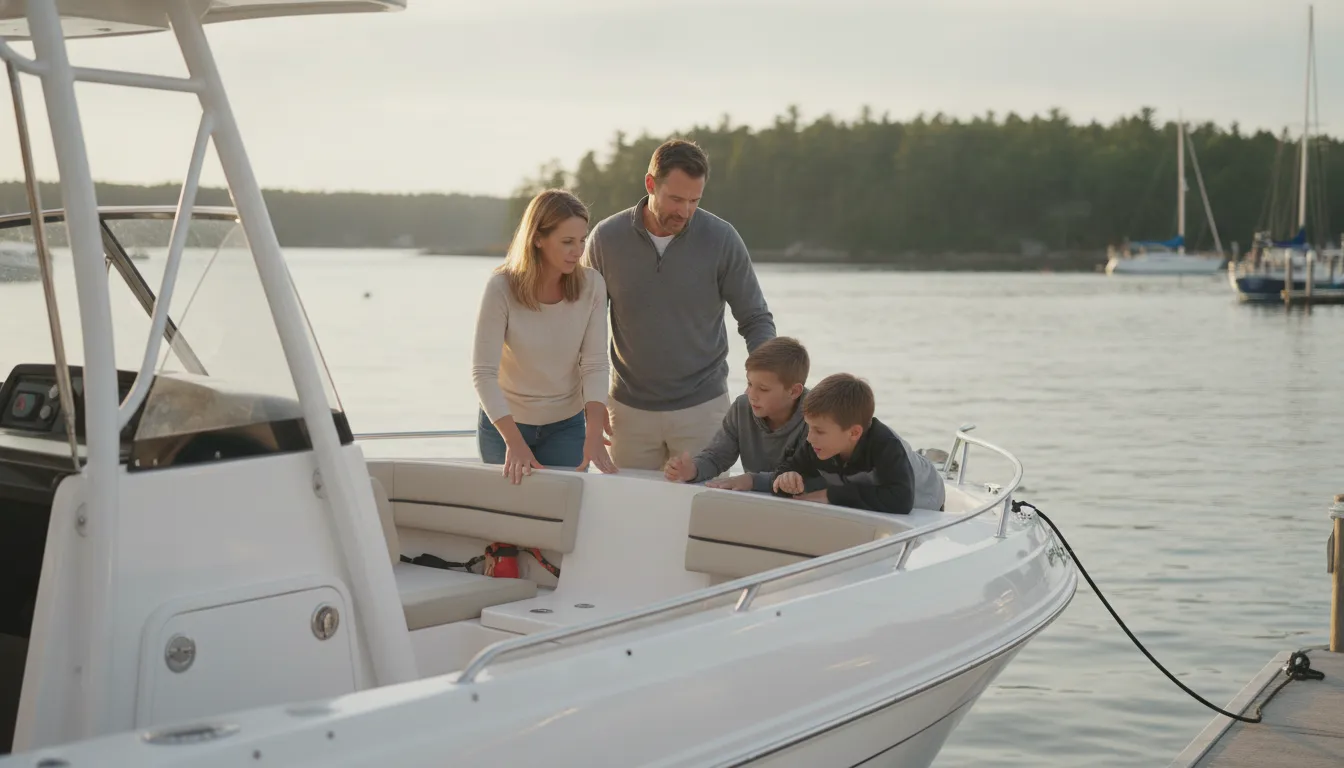
Choosing a Boston Whaler starts with a practical question: what do you want your time on the water to look like? A compact boat for trailerable family outings calls for different priorities than an offshore fishing platform, a social cruising boat, or a vessel used as a tender. The right model is the one that fits your typical passengers, waterways, storage plan, and experience level.
Talk with Carefree Boat Club about boating options in Massachusetts.
Boston Whaler boats span several layouts and uses, including fishing, cruising, and tender applications. Before choosing a model, compare its intended use, deck layout, passenger and gear capacity, storage needs, and the ownership responsibilities that come with it.
Model names and published specifications can change, so verify current details with the manufacturer. Begin by looking beyond size alone and consider how each design supports the kind of boating you actually plan to do.
What Are Boston Whaler Boats Designed to Do?
Boston Whaler boats are designed as versatile platforms for fishing, cruising, and tender use. The right fit depends less on the brand name alone and more on how you expect to spend time on the water. A boat used for casting in shallow areas may need a different arrangement from one intended for family outings, longer cruises, or trips between a yacht and shore.
How Do the Main Layouts Support Different Uses?
For fishing, the manufacturer describes options for offshore, inshore, and inland use, with an emphasis on maneuverability, storage, and angler-focused features. A center console layout keeps the helm near the middle of the boat and leaves circulation space around it, which helps when several people fish or move around the deck.
Side console boats place the helm to one side, leaving a more open area for passengers, gear, or straightforward utility use. This arrangement can suit smaller boats and simpler day trips. Dual console boats add a second protected seating area opposite the helm, creating a practical balance between passenger comfort, watersports, fishing, and cruising. Walkaround designs provide a helm and side access around a cabin or enclosed forward area, which can make them useful when you want some shelter without giving up access to the deck.
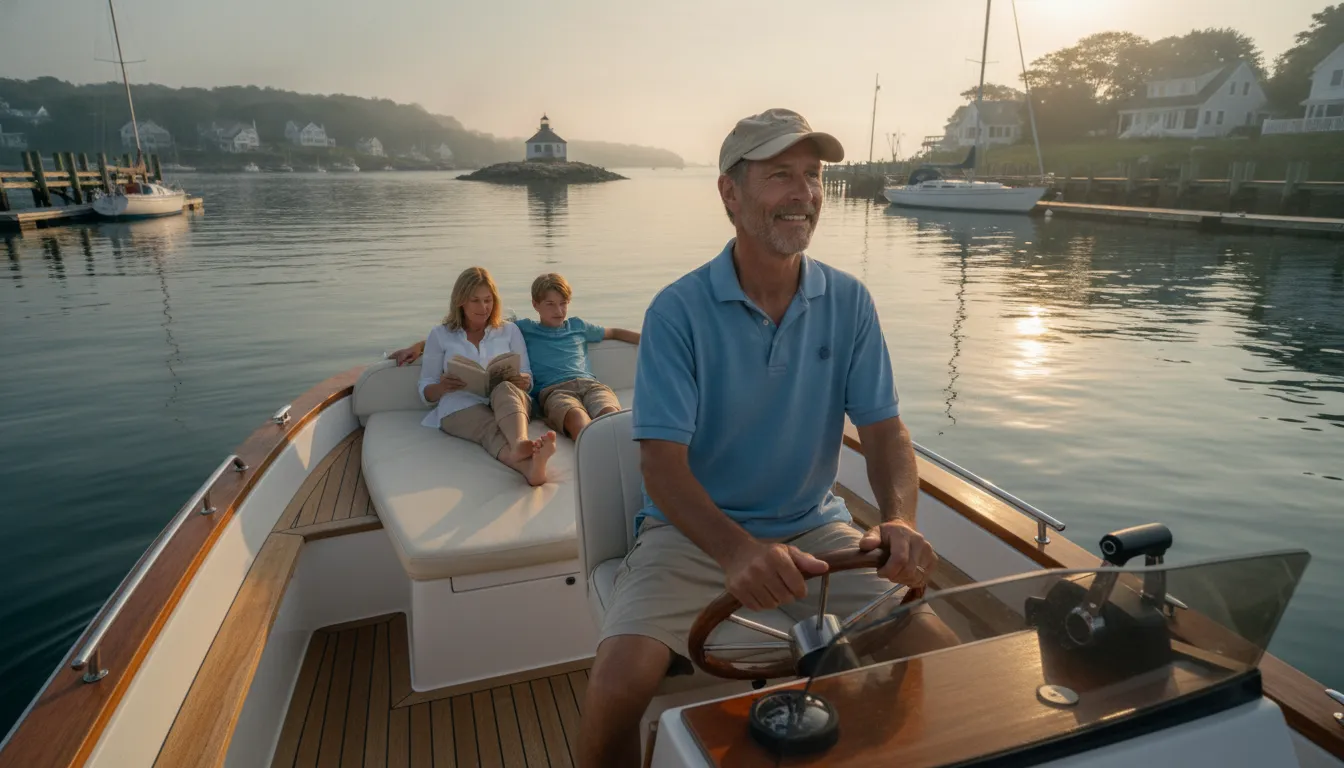
Cruising-oriented designs place more attention on seating, space, onboard amenities, navigation, and time spent aboard. Tender use adds another question: how will the boat be stored, launched, or towed, and how will it move people between a larger vessel and shore? Boston Whaler groups these use cases and layouts on its official types of boats guide, but current model details can change. Before choosing among Boston Whaler boats, compare the intended activity, available storage, passenger needs, and the water you plan to navigate.
How Do Boston Whaler Boats Differ by Model Family and Use?
Boston Whaler’s model families are organized around different boating priorities, so the most useful comparison is not simply which boat is larger. Ask how you expect to use the boat, how much open deck or cabin space you need, and whether your typical day involves fishing, watersports, entertaining, or longer trips. The manufacturer’s published ranges can change as models are updated, so verify current specifications before making a decision.
| Family | Layout | Published length range | Best buyer question |
|---|---|---|---|
| Super Sport | Side console | 13 to 17 feet | Do I want a compact, trailerable boat for simple day outings? |
| Montauk | Center console | 15 to 21 feet | Do I need a practical platform for fishing, watersports, and general use? |
| Dauntless | Center console | 22 to 28 feet | Will an active family use the boat for both inshore and offshore activities? |
| Vantage | Dual console | 24 to 33 feet | Would more seating and family-oriented comfort improve mixed-use trips? |
| Outrage | Center console | 23 to 42 feet | Are offshore fishing capability, livewells, and cockpit space central priorities? |
| Realm | Express cruiser | 35 to 38 feet | Do I want an open cockpit with more comfort for extended day trips? |
| Conquest | Cabin cruiser | 27 to 41 feet | Will a cabin and overnight accommodations change how far or how long I travel? |
The smaller Super Sport and Montauk families generally emphasize straightforward day use, easy handling, and flexible launch or storage options. Dauntless and Vantage move toward active-family versatility, but their layouts serve different priorities. A center console keeps circulation and open deck access central, while a dual console typically gives passengers more defined seating and weather protection.
Outrage is the more fishing-focused choice in this lineup, especially for buyers who value dedicated angling features and offshore capability. Realm and Conquest shift the question toward comfort beyond the cockpit. Realm blends an open layout with cruiser amenities, while Conquest adds a cabin-oriented approach for longer outings and overnighting. Review the official Boston Whaler model overview for current family descriptions, then compare the actual layout, equipment, and condition of any specific boat you are considering.
How Should You Compare Size, Layout, and Capacity?
Comparing Boston Whaler boats requires more than looking at length or counting seats. The right fit depends on how people will move around the boat, what equipment they will carry, where the boat will be stored, and the conditions in which it will operate. A compact fishing layout may be practical for a couple, while a family crew may need clearer passageways, protected seating, and room for coolers or safety gear.
What Does the Capacity Plate Tell You?
Start with the capacity plate, not an estimated passenger count. BoatUS explains that safe load depends on factors including hull volume, dimensions, engine weight, and how an outboard is mounted. Seat count is not a reliable measure of how many people a boat can safely carry. For covered boats, the plate identifies limits such as maximum persons by weight, combined weight for people, motor, and gear, and maximum horsepower. Capacity plates are generally found inside the transom or beside the helm, and they should never be removed, altered, or tampered with.
Those limits are not a target for every outing. BoatUS notes that capacity plate limits apply in good to moderate weather, while rough water calls for keeping the load well below the stated maximum. Think through your real passenger group, including children, coolers, fishing equipment, fuel, and emergency supplies. A layout that appears spacious at the dock can feel crowded once everyone is seated and gear is in use. BoatUS capacity guidance provides the technical context for this check.
Then compare the practical footprint. Measure the boat and trailer together if trailering is part of the plan. Confirm that the total length, width, height, and loaded weight work with your tow vehicle, driveway, storage space, launch ramp, or marina slip. Check turning room and overhead clearance rather than assuming a listed boat length tells the whole story. A center console, dual console, or walkaround layout can also change how much usable deck space remains after seating, helm equipment, and storage are accounted for.
If you are new to boat ownership, review this beginner boating guidance before choosing a layout. For a Massachusetts purchase, also keep the paperwork and registration process in view with these Massachusetts boat registration rules. The best model is the one whose capacity, handling space, storage needs, and transport requirements match the way you actually plan to use it.
What Should You Inspect Before Buying a Used Boston Whaler?
A careful inspection should confirm that the boat is correctly identified, legally transferable, mechanically sound, and suited to the way you plan to use it. Start before the sea trial by asking for the title or registration, maintenance records, repair invoices, manuals, and any documentation for replaced engines or major electrical work. Compare every document with the boat in front of you. Differences in the hull identification number, model description, or ownership history deserve an explanation before you proceed.
Which records and systems deserve the closest look?
Locate the hull identification number, usually called the HIN, and photograph it for your records. Check every character carefully because the US Coast Guard warns that entering even one character incorrectly can change the vessel identity. Confirm that the manufacturer identification code is valid. The Coast Guard lists Boston Whaler Inc. under the code BWC and shows the company as in business. Its guidance also identifies manufacturer contact or a physical inspection by a state official as possible ways to verify a HIN when questions remain. Review the USCG HIN guidance and compare the number against the registration and title.
Have an independent marine surveyor inspect the hull, transom, stringers, steering, fuel system, bilge, batteries, wiring, navigation equipment, pumps, and safety equipment. A survey can reveal moisture, corrosion, poorly supported modifications, or deferred maintenance that a clean exterior will not show. Ask the owner to demonstrate each major system rather than accepting that it works.
Research the HIN with the manufacturer and appropriate government records for service campaigns or recalls. The USCG database includes a Boston Whaler record involving overcurrent protection and the electrical system, listing 773 units. That record is a reason to verify whether a particular boat is affected and whether corrective work was completed. It is not evidence that every Boston Whaler boat has the same problem. Ask for supporting invoices or documentation, then have an electrician evaluate questionable wiring.
Finally, insist on a sea trial under ordinary operating conditions. Check cold starting, idle, acceleration, steering response, gauges, trim, shifting, vibration, bilge activity, and engine temperature. Match the engine hours and service history to the boat’s condition, and ask specifically when the impeller, fluids, filters, batteries, and belts were last serviced. If the owner will not permit a survey or sea trial, treat that refusal as a meaningful risk signal rather than skipping the inspection.
What Safety and Ownership Questions Belong in Your Plan?
Choosing among Boston Whaler boats is not only a question of layout or intended use. Before you commit to a model, map out how you will keep people safe, meet Massachusetts requirements, and handle the work that continues after purchase.
What will you need to manage before and after each trip?
Start with personal flotation devices. The U.S. Coast Guard says a recreational vessel must carry a properly sized, USCG-approved wearable PFD for each person aboard. PFDs should be in good, serviceable condition and readily accessible, not buried under gear. Check that children have the right size, inspect foam devices regularly, and maintain inflatable equipment according to its instructions. The Coast Guard’s life jacket guidance explains fit, accessibility, and care in more detail.
Registration is another early ownership task. Massachusetts law generally requires registration for a motor-powered boat or a boat operated on Massachusetts public waterways. The state lists exemptions, including non-motorized boats and vessels with documented U.S. Coast Guard registration, so confirm how the rule applies to your boat. Keep the registration, title, and required equipment records organized, and review the official Massachusetts boat registration rules before launching.
Then plan for the less visible responsibilities. Ask where the boat will be stored between trips, who will arrange winterization or seasonal preparation, and how often the engine, electrical system, steering, bilge, safety equipment, and hull will be inspected. Insurance requirements and coverage exclusions deserve a conversation with an insurance professional, especially if the boat will be trailered, stored remotely, or used by more than one operator.
Finally, be honest about training. A capable boat still requires operators who understand navigation, weather, docking, emergency procedures, and the local waterways. Build refresher training into your plan rather than treating it as a one-time task. These questions make model research more practical because they connect a boat’s features to the ownership routine you can realistically maintain.
Should You Buy a Boston Whaler or Explore Boating Without Owning?
Buying a boat can be a strong fit when you want control over the schedule, layout, equipment, and boating routine. It also means accepting the responsibilities that come with that control. Before choosing among Boston Whaler boats, ask whether you want to manage storage, maintenance, registration, insurance, cleaning, winter preparation, and day-to-day operation. Those obligations remain part of the ownership decision, regardless of which model best matches your plans.
Ownership may suit you if you expect to use one boat regularly, enjoy learning its systems, and have a realistic plan for where it will be kept. It can also make sense when a specific layout or capability matters enough to justify taking responsibility for the boat year-round. A careful review of your preferred activities, passenger needs, launch or marina arrangements, and available time will help clarify that choice.
For Massachusetts boaters who want access without selecting, storing, maintaining, and insuring one boat, boating without owning is a separate option to consider. Carefree Boat Club provides access, training, and local support through its membership model. Readers can review Massachusetts boat fleet options to understand the types of boats available through Carefree. This is not a Boston Whaler purchase, and Carefree does not sell, own, or operate a Boston Whaler. It is an alternative for people who value time on the water more than owning a particular hull.
Local access may also shape the decision. If your plans center on the city and nearby waterways, review Boston boating access alongside your ownership plan. Carefree members may also have reciprocal access at 150+ locations worldwide, which can be useful for people whose boating interests extend beyond one home area. Compare the responsibilities you are prepared to manage with the flexibility and support you want from your boating experience.
Explore Carefree boating options in Massachusetts.
Frequently Asked Questions
How much does a Boston Whaler boat cost?
There is no single answer because pricing varies by model, age, condition, equipment, engine, maintenance history, and the local market. For a used boat, compare the complete ownership picture rather than the asking price alone. Account for a survey, repairs, storage, insurance, registration, and safety equipment before deciding whether a particular boat fits your budget.
How do I choose the right Boston Whaler model?
Start with how you expect to use the boat most often. Fishing, family cruising, watersports, overnight trips, and tender duty can point toward different layouts and sizes. Then compare passenger needs, storage, weather exposure, launch and storage arrangements, and the waters you plan to navigate. Verify current specifications before making a decision because model details and equipment can change.
Does the number of seats show how many people the boat can safely carry?
No. Seat count is not a safe capacity indicator. Check the boat’s capacity plate for maximum persons, combined weight, and horsepower limits, and remember that engine and gear weight count toward the load. BoatUS notes that safe load also depends on hull volume, dimensions, engine weight, and outboard mounting. In rough water, stay well below the stated limit. Review BoatUS capacity guidance.
What should I verify before buying a used boat?
Match the hull identification number to the paperwork and inspect it carefully. The US Coast Guard recommends verifying the HIN and manufacturer code, and its records identify Boston Whaler Inc. with MIC BWC. Check recall history, service records, electrical and fuel systems, hull condition, and engine performance, then arrange an independent survey and sea trial before completing the purchase. Check USCG HIN guidance.
Ready to Explore Boating Without Owning?
If you like the idea of spending time on the water but want to consider an alternative to buying and managing a Boston Whaler. Carefree Boat Club can help you compare your options. You can learn more about the membership approach, ask questions, and decide whether it fits your boating plans.