
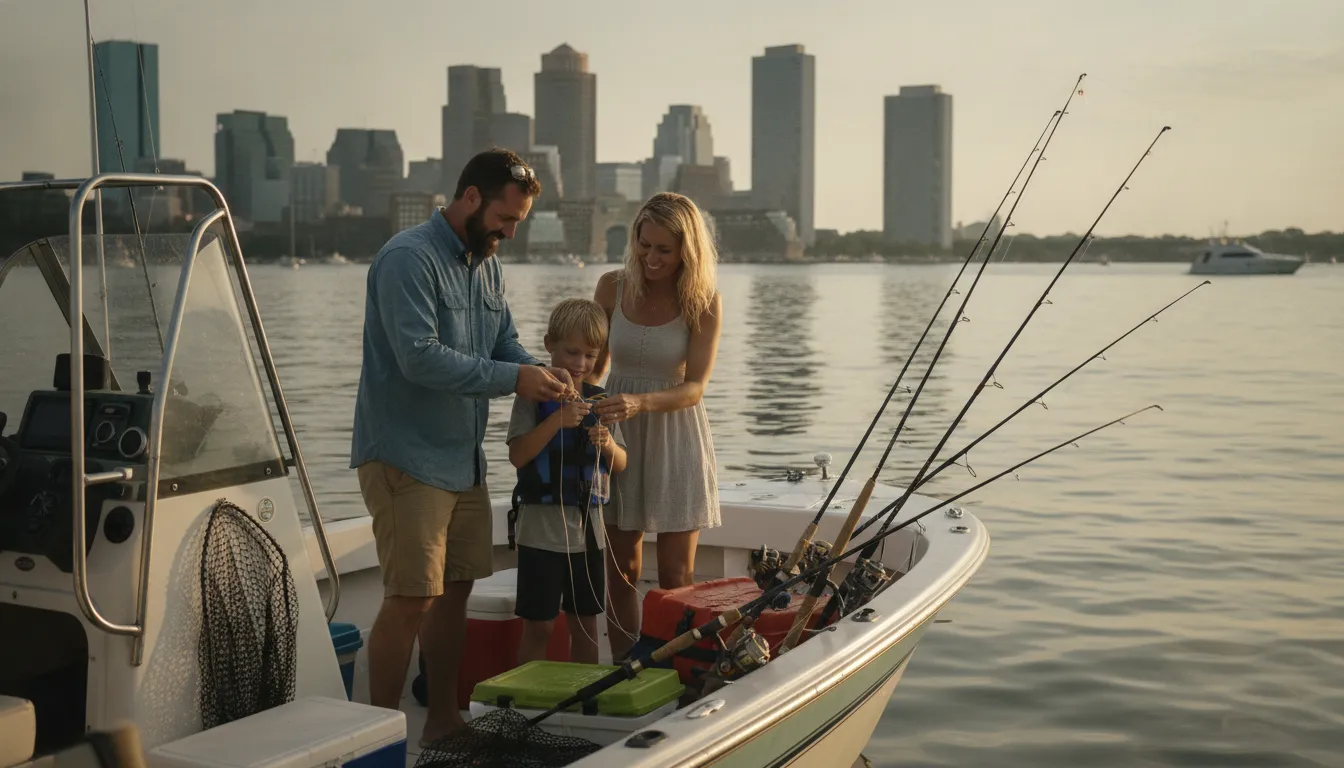
A productive day on the water starts before the boat leaves the dock. In Boston Harbor, changing weather, tidal conditions, busy channels, and varied structure can all affect how comfortably and safely you fish. A simple plan helps you spend less time reacting and more time enjoying the outing.
Schedule a Carefree Boat Club tour
For fishing boston harbor, check the marine forecast first. Confirm current Massachusetts size, season, and possession rules before keeping fish.
Choose gear for your conditions. Carry the safety equipment and communication tools you may need. Start with the official Boston/Norton forecast and the latest Massachusetts recreational saltwater regulations.
From selecting a realistic departure window to preparing for wind, visibility, and changing water conditions, the details matter. Start by looking at the forecast and the character of the harbor, then build a trip plan that matches your crew, boat, and experience level.
How Do You Plan a Fishing Boston Harbor Outing Around Conditions?
The best outings begin with a plan made at the dock. Boston Harbor includes a mix of river systems, flats, sandbars, river mouths, boulder fields, and island structure. So your plan should match the day’s conditions and the kind of water your crew can comfortably navigate. Treat the forecast as a planning tool, not a promise of what you will find below the surface.
Check the marine forecast before choosing your window
Begin with the National Weather Service Boston/Norton forecast office. Review the forecast, radar, and any watches, warnings, or advisories. Look beyond the temperature. Wind direction, wave conditions, visibility, thunderstorms, and the timing of changing weather can affect comfort, boat handling, and how far you should travel from your launch point.
Build a flexible plan with a primary area and a shorter alternative. If the harbor becomes uncomfortable, you should be able to return without rushing or forcing the trip. Leave enough time for the ride home, docking, and changing conditions. A calm forecast at departure does not guarantee the same conditions later in the day.
Match the trip to your crew and boat setup
Plan around the least experienced person aboard, especially when children or first-time anglers are joining you. Set expectations that the outing is about safe time on the water, not a guaranteed catch. Bring layers, water, food, sun protection, and motion-sickness supplies if anyone may need them. Decide who will handle navigation, who will assist with lines, and who will help younger anglers before you cast off.
Fishing spots and techniques should also fit the conditions and your equipment. A flexible approach lets you adjust your route, tackle, or schedule rather than stretching a plan that no longer makes sense. Keep rods and other gear secured while underway, and leave clear access to controls, communication equipment, and safety gear.
Check current Massachusetts fishing rules
Before keeping any fish, review the current Massachusetts recreational saltwater fishing regulations. The Division of Marine Fisheries publishes species-specific size limits, open seasons, and possession limits. Rules can change, so do not rely on an old chart, a remembered limit, or advice from a previous trip. Confirm the requirements for your target before departure and keep the official information available while you are on the water.
| Planning question | What to confirm |
|---|---|
| Is the trip comfortable? | Forecast, wind, visibility, waves, and a conservative turnaround time. |
| Can the crew fish safely? | PFDs, radio, clear deck space, secured tackle, and an attentive operator. |
| Can you keep a catch? | Current Massachusetts size, season, and possession rules for the species. |
What Gear Should You Bring for Fishing Boston Harbor?
A good Boston Harbor fishing setup is adaptable rather than oversized. Start with tackle that fits the kind of water and conditions you expect to encounter, then leave room for safety equipment, food, and extra layers. Harbor conditions can change quickly, and a comfortable angler is more attentive than one who is cold, wet, or scrambling for missing supplies.
Choose adaptable tackle
Bring a rod and reel combination suited to your planned technique. Add spare leaders, hooks, swivels, line, and pliers or a line cutter. A small selection of artificial lures gives you options near the surface or structure.
Depending on the season and local advice, anglers may also consider live bait such as eel or pogies. Treat those as possible tactics, not guarantees. Match your approach to the target, water depth, current, and what is working safely that day.
Pack a compact tackle bag instead of bringing every lure you own. Include a landing net, measuring tool, and a container for used line. If you plan to keep a fish, carry a cooler with ice and confirm current Massachusetts rules first. The Division of Marine Fisheries publishes species-specific size limits, open seasons, and possession limits, so check the current recreational saltwater fishing regulations before leaving.
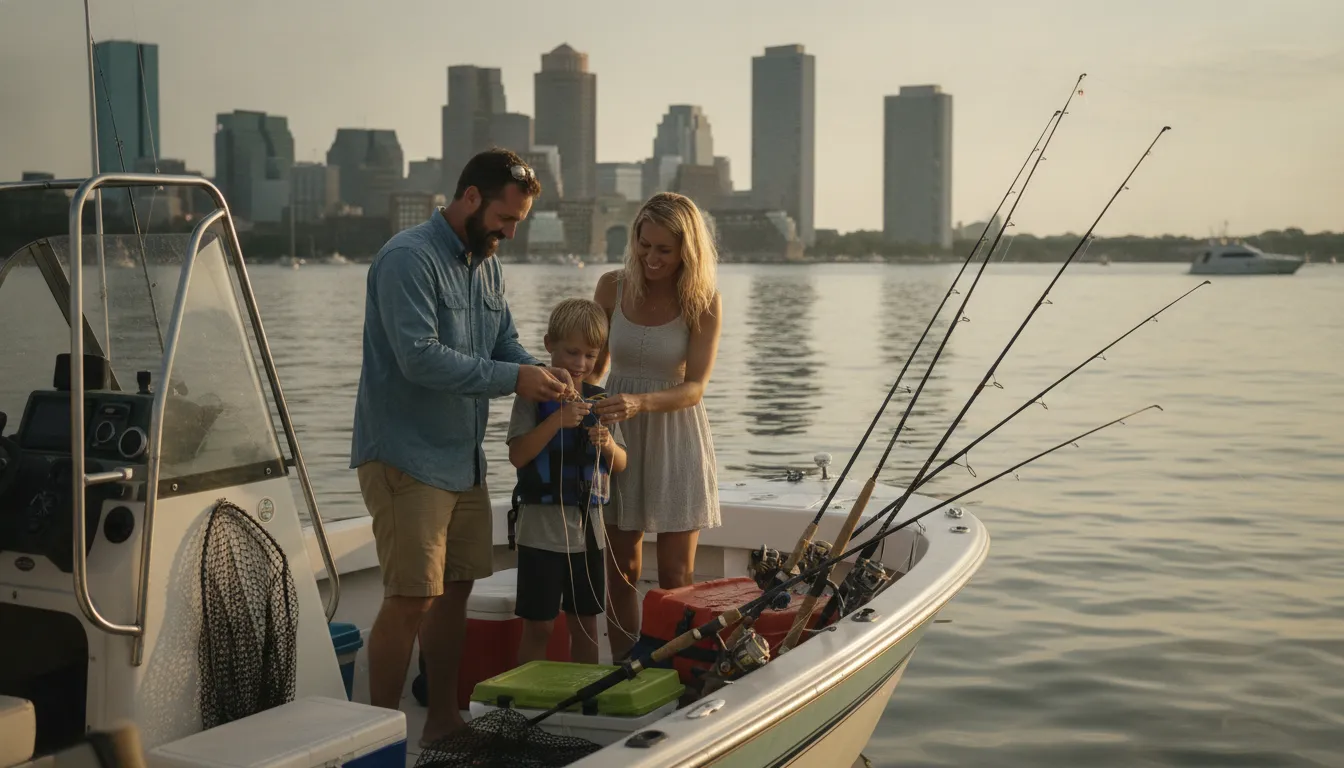
Pack for comfort and communication
Dress in layers, even on a warm forecast. A windproof outer layer, sun protection, non-slip footwear, sunglasses, and gloves can make a long ride and several hours of casting much easier. Bring more drinking water than you think the group will need, plus simple snacks and any required medications. Keep phones in waterproof cases, and make sure the boat’s required communication equipment is accessible and charged. A portable battery can be useful, but it should supplement, not replace, the vessel’s onboard safety equipment.
Make safety gear part of the checklist
Every person should have a properly fitting, readily accessible personal flotation device. Add a first-aid kit, flashlight, whistle, sunscreen, and a basic emergency supply kit. Before casting, secure loose tackle and confirm that hooks, knives, and pliers have a designated place. That small bit of organization helps protect passengers when the boat moves or someone needs to respond quickly.
How Can You Make Boston Harbor Fishing Safer?
A safe return starts with preparation before departure. Fishing can divide attention between the rod, the surroundings, and the boat. So decide in advance who is watching navigation, who is handling equipment, and what everyone should do if conditions change. A simple routine also helps newer boaters build confidence without treating confidence as a substitute for preparation.
- Complete a pre-departure check. Confirm the fuel level, engine operation, steering, bilge, navigation lights, communication equipment, and required safety gear before leaving the dock. Make sure tackle, coolers, and other loose items are secured so they cannot shift under way. Share a basic float plan with someone ashore, including the boat, intended area, and expected return time.
- Wear and check personal flotation devices. Select properly fitting PFDs for every person aboard, and make sure they are accessible and in usable condition. Children and anyone who is uncomfortable in the boat should wear theirs rather than leaving it stowed. Review where the throwable flotation device and emergency equipment are located before the trip begins.
- Test the radio and review communication procedures. Know how to use the boat’s radio before an incident occurs. Confirm that it powers on, understand how to communicate your position, and explain the procedure to the person who may need to call for help. Keep a charged phone in a protected location as a backup, but do not rely on a phone as your only communication method offshore.
- Assign an attentive operator. The person at the helm should remain focused on traffic, shoals, markers, rocks, changing water depth, and people in the water. When someone is casting or landing a fish, keep hooks, lines, and gaffs controlled. Slow down near congested areas and never let fishing activity distract the operator from navigation.
- Check weather and water conditions before departure and during the trip. Review the National Weather Service Boston/Norton forecast, watches, warnings, radar, and marine-relevant information. Set a turnaround point before leaving, and return early if wind, visibility, waves, or thunderstorms make the plan uncomfortable. Conditions can change even when the sky looks calm at the dock.
- Manage fatigue and keep an emergency plan ready. Rotate tasks when appropriate, drink water, protect yourself from sun and cold, and avoid operating when tired or impaired. Everyone aboard should know where the PFDs, radio, first-aid supplies, anchor, and emergency shutoff are located. If the boat or a person has a problem, stop fishing and address the safety issue first.
- Use club training as practical reinforcement. Carefree Boat Club training covers safety equipment, boat familiarization, radio procedures, navigation, motor operation, and emergency procedures. Members can review these skills through on-the-water boating training, with instruction tailored to experience. This hands-on support complements formal boating education and any required approved course; it does not replace those requirements. Before keeping fish, check the current Massachusetts recreational saltwater fishing regulations, including applicable seasons, size limits, and possession limits.
Good preparation keeps the focus where it belongs: enjoying time on Boston Harbor while making conservative decisions whenever conditions or experience call for them.
What Responsible Boating Practices Matter While Fishing?
Fishing in Boston Harbor means sharing a working waterway with recreational boaters, ferries, commercial vessels, paddlers, and waterfront traffic. Good etiquette protects everyone and helps you stay focused on the trip. Keep a proper lookout, maintain a safe speed, and avoid drifting into a marked channel while setting a line or changing tackle. If you need to pause, move to a safe area outside the main traffic route before tending to gear.
Commercial traffic has limited room to maneuver, so give large vessels plenty of space and never assume a captain can see a small fishing boat. Learn the harbor’s channel markers and navigation hazards before leaving the dock. Local knowledge matters because wind, current, ferry routes, and busy passages can change how much room you need around a promising fishing area. Carefree’s guidance includes local-waterway education, navigation-hazard awareness, local regulations, and New England boating etiquette.
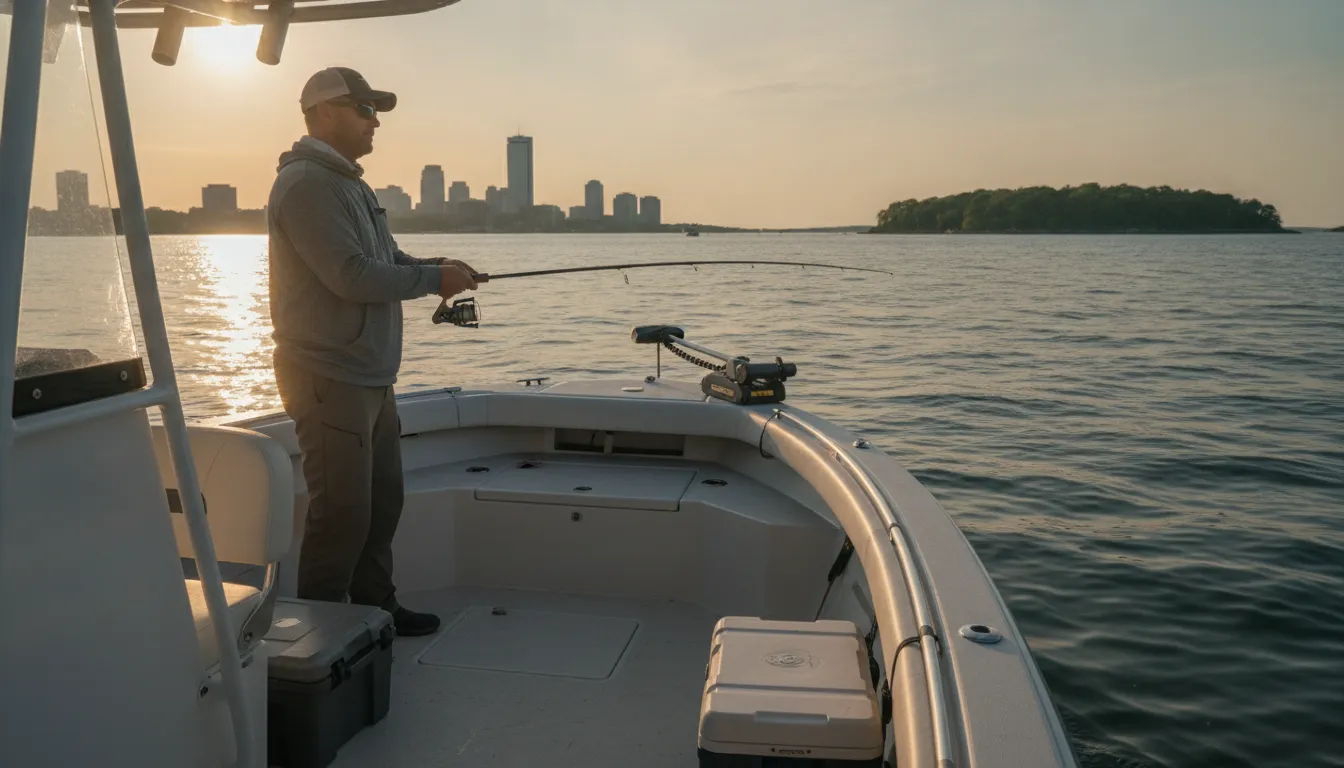
How Can You Protect the Water and Other Boaters?
Bring a container for wrappers, bait packaging, and line scraps. Never toss fishing line, hooks, or soft plastics overboard. A short piece of discarded line can entangle wildlife or damage a propeller, while a loose hook can create a hazard for people handling dock lines or cleaning a boat. Keep hooks secured when moving between spots, and collect cut line in a dedicated bag for disposal on shore.
Before keeping a fish, check the current Massachusetts recreational saltwater fishing rules. The Division of Marine Fisheries publishes species-specific size limits, open seasons, and possession limits, and those details can change. Regulations are current only when you verify them before the trip, rather than relying on memory or an old chart. If conditions, traffic, or visibility deteriorate, shorten the outing and return safely. Responsible fishing is not only about following rules. It is also about leaving the harbor cleaner, quieter, and safer for the next person.
How Does Carefree Training Support Fishing Boston Harbor Trips?
Fishing Boston Harbor is more enjoyable when you are comfortable with the boat, the route, and the decisions that keep everyone safe. Carefree Boat Club training is designed to build that practical confidence through instruction on and off the water. Members can receive as much training as they need, whether they are learning the basics or refreshing skills before taking the boat out with family and friends.
The instruction can be tailored to a novice or a seasoned skipper. On-water sessions with a certified instructor cover boat familiarization, general navigation, docking, and safety. That foundation matters on a fishing trip, where attention is divided between reading the water, managing gear, watching the weather, and keeping track of everyone aboard. You can learn more about the club’s on-the-water boating training before planning your next outing.
What practical skills help on a Boston Harbor trip?
Carefree’s training curriculum addresses the parts of boating that often make a fishing day feel easier and more predictable:
- Boat familiarization: Learn the controls, safety equipment, and operating features of the boat you are using.
- Navigation: Practice reading your surroundings, understanding the route, and recognizing hazards around local waterways.
- Radio procedures: Build familiarity with marine radio use so you can communicate more confidently when conditions or circumstances change.
- Motor operation and docking: Rehearse maneuvering in tight spaces and returning to the dock after a day on the water.
- Emergency procedures: Review how to respond calmly and methodically when an unexpected problem occurs.
For newer boaters, the club’s Boating 101 sequence also includes checking the weather, launching, on-water operation, navigation, safety, and docking. Those skills can help you make better choices before leaving the dock and stay focused once you reach your fishing area. Training also supports local-waterway education, navigation-hazard awareness, local regulation education, and New England boating etiquette.
Training is an important supplement, not a substitute for formal boating education. Carefree instruction complements any required approved course, certificate, or other Massachusetts boating requirement. Before keeping fish, check the current Massachusetts recreational saltwater fishing regulations for applicable size, season, and possession limits. Practical instruction and current regulations work together: one improves how you handle the boat, while the other helps you understand your responsibilities on the water.
What Can Boston-Area Boaters Expect From a Carefree Membership?
A Carefree membership is designed for people who want regular time on the water without taking on the full responsibility of boat ownership. Instead of arranging winter storage, routine maintenance, and every operational detail yourself, you can focus on planning an outing, preparing your passengers, and enjoying Boston Harbor. That can make fishing Boston Harbor more approachable for families and newer boaters, while still giving experienced skippers a practical way to get out more often.
The local network gives members several Massachusetts starting points. The Boston location provides access to Boston Harbor and the islands, making it a natural choice for harbor trips and city-side departures. Explore boating from Boston Harbor to learn more about that location. Danvers serves families and North Shore communities, while Gloucester provides direct ocean access. Each location offers a different starting point for choosing a day on the water based on your plans, experience, and preferred direction.
Local support is another part of the membership experience. Carefree’s training and orientation help members become comfortable with the boats, navigation, docking, safety equipment, and local boating considerations. Support can be especially useful when conditions change or when a skipper is moving beyond familiar waters. It is practical guidance for using the club responsibly, not a promise that every trip will have ideal weather or a guaranteed catch.
Membership also extends beyond one harbor. Carefree is locally owned and connected to a wider network of more than 150 locations, giving members opportunities to plan boating in other participating markets when available. That broader access adds flexibility without requiring you to own and transport a boat between destinations. Learn more about the Carefree membership experience and review the Carefree fleet to see the types of boats available for different outings.
The result is a boating model built around access, support, and time on the water. You still need to follow current Massachusetts regulations, make sound weather decisions, and operate safely. The difference is that the ownership burden does not have to stand between you and a day exploring Boston Harbor, the North Shore, or the coast from Gloucester.
Talk with Carefree Boat Club about your next Boston Harbor outing.
What Are the Most Frequently Asked Questions About Fishing Boston Harbor?
What should I check before fishing in Boston Harbor?
Check the marine forecast, wind, visibility, and small-craft advisories before leaving. The National Weather Service Boston/Norton office provides regional forecasts, watches, warnings, advisories, and radar. Confirm your route, fuel, communication plan, and return time, then adjust the outing if conditions are beyond your crew’s experience.
Do I need to check Massachusetts fishing regulations?
Yes. Before keeping any fish, review the current Massachusetts recreational saltwater fishing regulations. The Division of Marine Fisheries publishes species-specific size limits, open seasons, and possession limits, and the rules can change. Carry a measuring device and know whether your intended catch must be released.
What gear is useful for a Boston Harbor fishing trip?
Bring tackle suited to your target, weather, and boat setup, along with appropriate bait or artificial lures. Spare line, hooks, pliers, a measuring tool, water, sun protection, and warm layers. Keep safety equipment accessible, including properly fitted personal flotation devices, a charged phone in a waterproof case, and a marine radio when appropriate.
Can Carefree help me become more comfortable operating a boat?
Carefree provides on-water and off-water training tailored to both novice and seasoned skippers. Instruction can cover boat familiarization, navigation, docking, radio procedures, safety equipment, motor operation, and emergency procedures. This practical support complements formal boating education and does not replace any required approved safety course. See the Carefree training information for details.
Ready to Plan Your Boston Harbor Fishing Outing?
Good preparation can make a fishing day on Boston Harbor feel more manageable, whether you are building confidence or refining your routine. Carefree Boat Club can help you discuss local boating, training, reservations, and whether membership fits the way you want to spend time on the water.
Schedule a Carefree Boat Club tour to talk through your next step.
https://addlinks.pro/s4wFP
https://addlinks.pro/3rVcH