
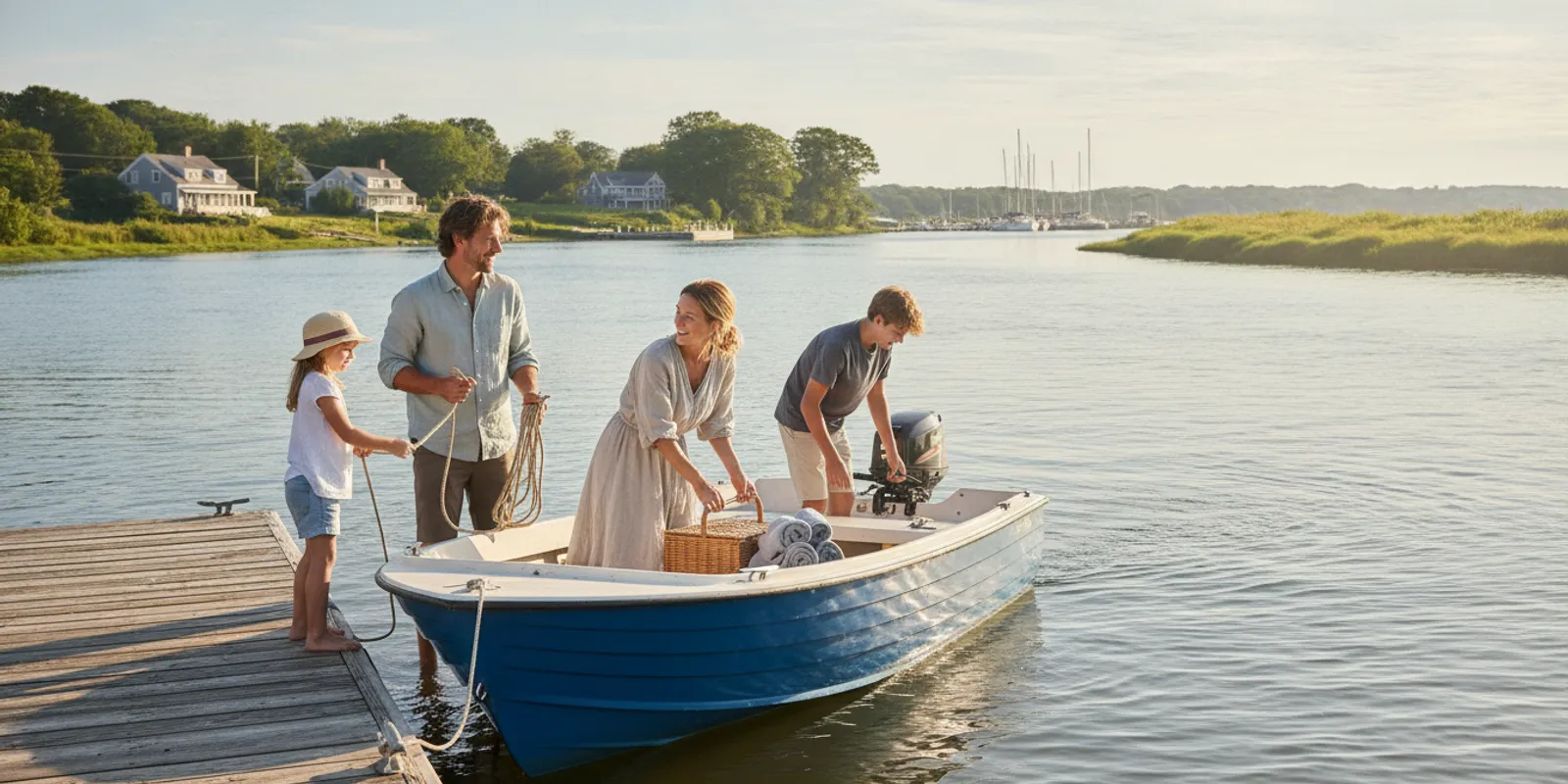
Danvers River boating is best enjoyed with a plan that fits the day, the boat, and the people aboard. Before you head out, confirm where you can legally launch or board, check current marine conditions, and decide whether your outing will stay on the river or continue toward more open water. A few simple checks can make a local trip feel far less complicated.
Schedule a tour and ask about boating from Danvers
The river can be part of a relaxed afternoon, a first outing for newer boaters, or a starting point for a longer North Shore day. The key is not to treat a familiar shoreline as a substitute for navigation. Water levels, wind, traffic, and access arrangements can change. Use current charts and local guidance for the specific date and vessel, then leave room in the plan to turn back or choose a shorter route.
What should you know before planning a Danvers River boating trip?
Start by distinguishing the trip you want from the route you can safely make. A quiet cruise close to a familiar departure point calls for different preparation than a plan that heads out of the river and into more exposed water. Think about the least experienced person aboard, the vessel’s handling, and how much time everyone wants to spend underway.
Danversport Marina is a local boating reference point: Carefree Boat Club’s Danvers location is at Danversport Marina. That does not mean every marina dock is a public launch or that access is available without permission. Confirm the arrangement for your boat and party before you arrive. The club’s Danvers location information can help prospective members understand the local membership option, while a separate call or written confirmation can resolve specific access questions.
Before choosing a route, write down a simple plan:
- Where will you board or launch, and who has confirmed permission?
- What is the intended route, and where is the safe point to turn around?
- How long will the trip take at a comfortable pace, including time at the destination?
- What conditions would make you shorten or cancel the outing?
- Who ashore knows your expected return time?
This is not a substitute for navigation training or current local information. It is a way to make decisions before people are aboard and excited to leave. For a broad overview of the kinds of boats available through the club, review the Massachusetts boat fleet; then match the craft and its operating guidance to your actual plans rather than assuming every boat suits every route.
How can you choose a route that fits the day?
Think in route segments, not just a destination name. First consider the area immediately around your departure point. Next, decide whether you will travel farther along the river. Only after checking the chart, conditions, and your boat’s capabilities should you consider a route toward open harbor waters. This staged approach gives the skipper a clear point to reassess instead of treating the original plan as a promise.
A short river outing
A shorter trip can be a sensible choice when you have children aboard, are building confidence, or have a limited weather window. Keep the route conservative, avoid crowding the day with a distant destination, and allow time to practice basic boat handling in appropriate conditions. Follow posted signs and local rules, give other traffic room, and do not assume a seemingly open stretch is free of navigational concerns.
A river-to-harbor outing
If your plan goes beyond the river, treat the transition as a meaningful change in conditions. Open water may bring more wind, wake, or vessel traffic than a sheltered stretch. Review the whole route on an up-to-date chart before departure, identify places where you can pause or turn back, and make sure the operator is comfortable with the boat and the conditions. If the forecast or your confidence changes, staying closer to the departure point is a good plan—not a failed outing.
Points of interest along the way
Rather than relying on an unverified list of attractions, use a current chart and local information to identify shoreline views, designated mooring or stopping options, and any marked areas that are open to boaters. Check that stopping is allowed and suitable for your vessel. Do not approach private docks, restricted areas, or sensitive shoreline simply because they look inviting from the water. A good route may be about the view and the time together, not a shore landing.
Keep destinations flexible. Mark one primary goal and one nearby alternative, and decide in advance what would make you skip either one. For more general ideas about boating days in the region, the Massachusetts summer boating guide offers broader seasonal planning context; use current local navigation information for route details.
How should you check access, tides, and weather?
Access is the first go-or-no-go check. Confirm the exact departure location, parking arrangements, hours, fees if applicable, and whether the facility permits your type of launch or boarding. Ask about any temporary closure or special instruction. A marina, dock, or waterfront property is not automatically a public boat launch, and online map pins may not explain who is allowed to use a facility.
Next, use current official marine forecasts and tide information for the date and area of your trip. Read more than the headline. Wind direction and strength, visibility, precipitation, and changing conditions can affect comfort and control. Tide stage and current may matter for depth and maneuvering, especially in unfamiliar or shallow areas. Do not rely on a general weather app alone for a boating decision, and do not treat yesterday’s conditions as a guide to today’s.
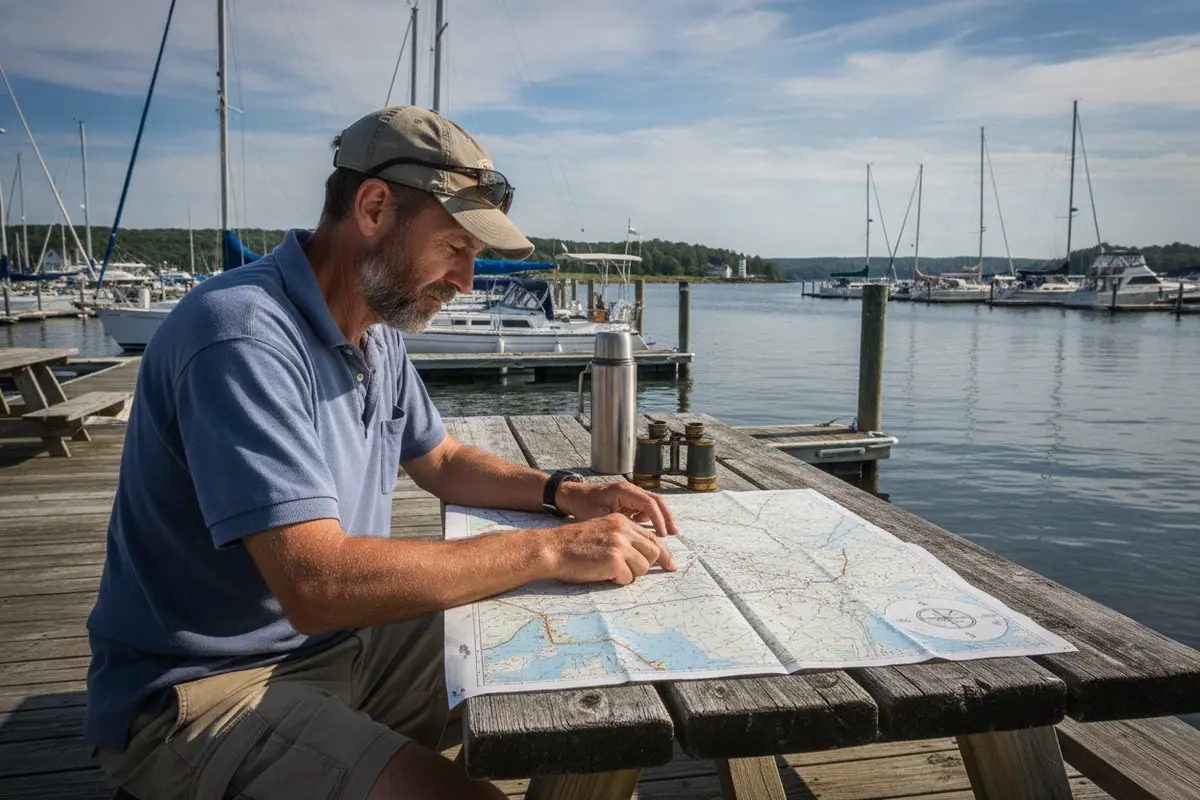
Use a chart appropriate for your route to check marked channels, depth information, obstructions, restricted areas, and navigational aids. Charts and local notices should be current. If a detail is unclear, ask a qualified local source before departure rather than guessing from shore. The boat navigation basics guide can help you get familiar with general chart-reading concepts, but it is not a replacement for the current chart for your trip.
Make a go/no-go decision that includes the least experienced person aboard. If someone is uneasy, conditions are beyond the skipper’s ability, or the route depends on a narrow timing window you cannot verify, choose a simpler outing or reschedule. A conservative decision is part of good seamanship.
What should you bring for a comfortable outing?
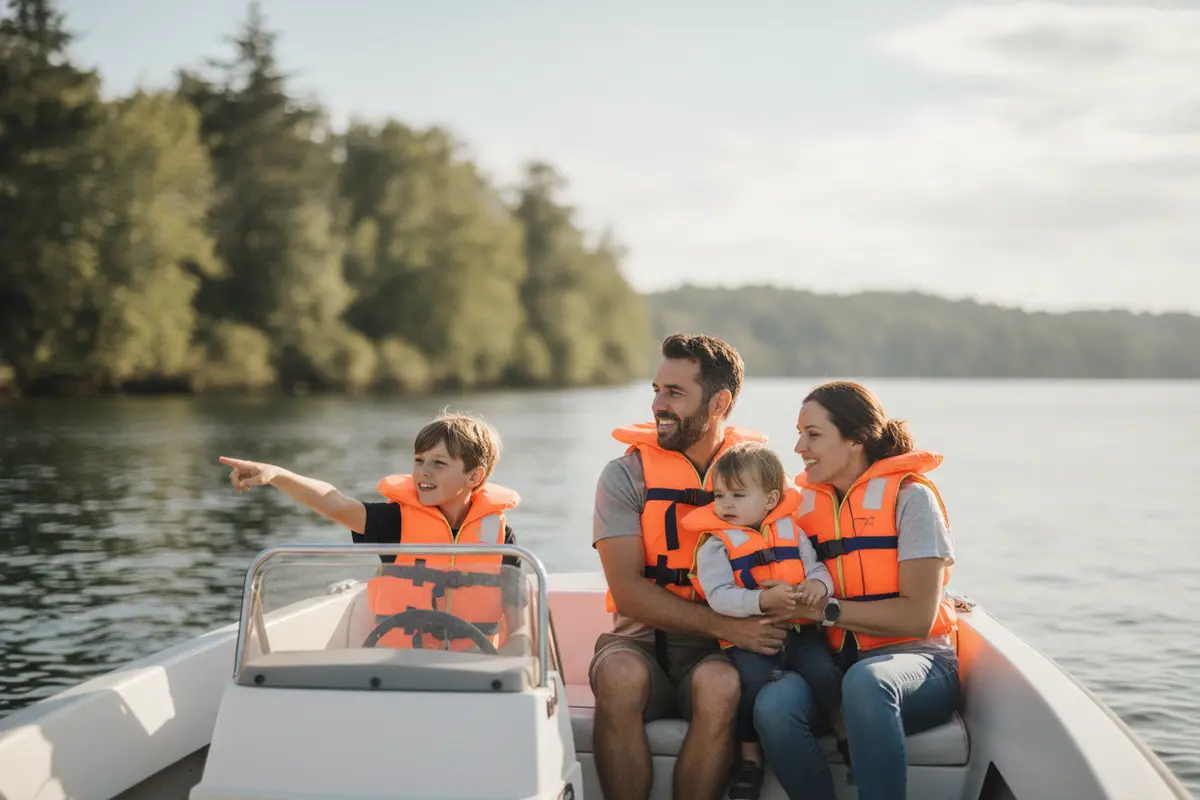
Pack for the time you will actually spend on the water, not just the weather at the dock. Bring required safety equipment for the vessel and passengers, and confirm that each person knows where it is and how to use it. Wear appropriate flotation equipment and follow applicable rules. Keep a charged phone in a protected place, but do not make it your only navigation or communication plan.
| Planning area | Before leaving | Why it matters |
|---|---|---|
| Access | Confirm departure permission, arrival instructions, and parking | Prevents an avoidable start-of-trip problem |
| Route | Review a current chart, intended route, and turn-back point | Helps the skipper make informed choices underway |
| Conditions | Check marine forecast, visibility, wind, and relevant tide information | Conditions affect comfort, timing, and boat handling |
| People | Explain the plan, safety gear, and what to do if plans change | Passengers can respond calmly and know what to expect |
| Supplies | Pack water, sun protection, suitable layers, and a charged phone | Supports comfort during a longer-than-expected outing |
Keep food and drink simple, secure loose items, and use sun protection even when the day feels mild. A light layer can be useful when the breeze picks up. If you are new to handling lines, practice basic knots in advance; the National Marine Manufacturers Association’s beginner boating resources include an introduction to basic boating knots. Treat the dock as a place to prepare calmly, not a place to rush through unfamiliar tasks.
Before departure, review basic boat controls and passenger roles. The club’s Boating 101 information is a useful place to explore general learning topics, and its on-the-water training page describes training support. Training does not remove the need to follow the vessel’s instructions and current rules.
How can newer boaters feel more prepared?
Confidence comes from knowing what to expect and having a plan that leaves room to learn. Before the outing, ask the operator to explain the controls, how to communicate with passengers, where safety equipment is stored, and what to do if the weather shifts. If a maneuver is new to you, ask for instruction in suitable conditions rather than trying it for the first time in a busy or exposed area.
For a first trip, keep the group small enough that everyone can hear instructions. Agree on a few straightforward expectations: stay seated when asked, keep hands inside the boat near docks, avoid distracting the operator, and speak up if someone feels uncomfortable. Assign one adult to help younger passengers, so the skipper can focus on operating the boat.
People considering club boating can ask how training, reservations, and local support work before deciding whether membership fits. Carefree Boat Club is family-owned and operated, and prospective members can speak with a real person about the local experience. The Massachusetts membership overview explains the membership model, and the frequently asked questions address common planning questions. Neither page should be taken as confirmation of access arrangements for a particular public launch or waterfront facility.
What local boating details should you confirm?
Local information is valuable, but it should be specific to the trip date and the boat. Confirm whether any posted speed limits, seasonal restrictions, temporary work, or navigation notices affect your intended route. Check whether the place where you hope to stop allows boats to remain there, and whether the approach is suitable at the current water level. When in doubt, choose a clearly permitted alternative.
Also consider how the river portion fits into the rest of your day. Set a departure time that gives you enough daylight and a comfortable return window. Leave time for boarding, a safety briefing, and slow maneuvering near docks. If you plan to meet others, choose a clear rendezvous point and have a backup communication plan in case phones lose signal or plans change.
Responsible boating includes being considerate of people on shore and on the water. Keep a safe distance from swimmers and other vessels, operate at a prudent speed, secure trash, and avoid unnecessary wake near shore or docked boats. Review the club’s New England boating etiquette guide for general reminders, and consult official state resources for rules that apply to your boat and activity.
For trip-specific questions, use current local information rather than assuming a general article covers every condition. You can also browse the club’s Massachusetts boating information and local boating gallery to get a feel for the boating experience, then confirm details directly before making plans.
What is a useful pre-departure checklist?
Use this short sequence before every trip, even when you know the area:
- Confirm access. Verify the exact location, permission, arrival instructions, and any facility updates.
- Check conditions. Review current marine weather and relevant tide information; set limits for postponing or shortening the outing.
- Review the route. Use a current chart, note hazards and restrictions, and pick a sensible turn-back point.
- Prepare people. Explain the plan and passenger expectations, and identify who is responsible for helping children or guests.
- Check the boat. Follow the vessel’s operating procedures, make sure required safety gear is aboard and accessible, and secure loose items.
- Share your plan. Tell someone ashore where you intend to go and when you expect to return.
Do not let a reservation, a special occasion, or a long drive to the water pressure you into going out when conditions or access do not work. A safe alternate plan—such as staying ashore or choosing a shorter trip—can protect the day for everyone.
Contact the Danvers team to discuss a tour
What questions do boaters ask about the Danvers River?
Is every Danvers River dock available for public use?
No. A dock or marina is not automatically a public launch or public boarding point. Confirm permission, parking, and any facility instructions with the operator or property before you go. Do not rely on a map listing alone to determine access.
Should a first-time boater plan to go beyond the river?
Not necessarily. Choose a route that suits the operator’s experience, the boat, and the day’s conditions. A shorter trip close to a familiar departure point can be a better first outing. Only extend the plan after reviewing a current chart and conditions, and make sure you have a clear turn-back option.
What should I check before deciding whether to go?
Confirm access, review current marine weather and relevant tide information, check a chart for your route, and make sure the boat and passengers are prepared. If any important detail is uncertain or conditions are beyond the operator’s comfort level, shorten the trip or postpone it.
Where can I ask about boating from the Danvers location?
Prospective members can contact the local team to ask about the Danvers location, membership, and a tour. For public launch or facility access, confirm directly with the location responsible for that access; membership information alone does not establish public access rights.
What should you remember about Danvers River boating?
A good Danvers River boating day starts with verified access, a route suited to the people and boat aboard, and current information about weather, tides, and navigation. Treat the river as a real boating environment rather than a guaranteed easy passage. Keep the itinerary flexible, ask questions before departure, and choose the conservative option whenever a detail is uncertain.
Whether you are planning your first outing or looking for a local membership experience, careful preparation leaves more room to enjoy the water. Confirm the details for your specific trip, keep safety at the center of the plan, and make the day fit the conditions you actually have.