
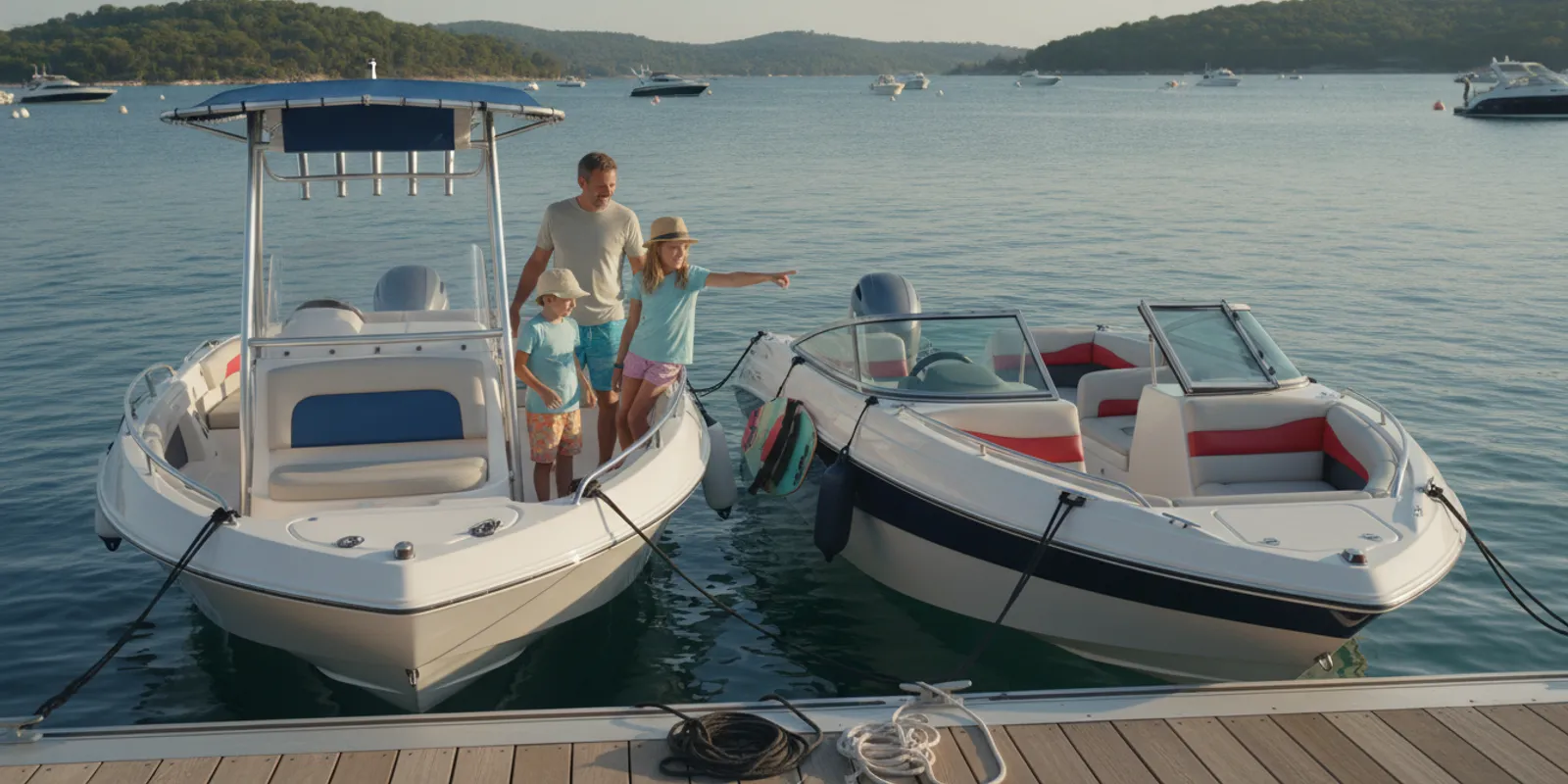
Choosing between a center console vs bowrider is less about picking a universally better boat and more about matching the layout to your plans. Fishing, passenger comfort, wind exposure, and how people move around the boat all change the experience. Here is a practical way to compare the two for a day on Massachusetts waters.
Schedule a tour and talk through your boating plans
What Is the Main Difference Between a Center Console and a Bowrider?
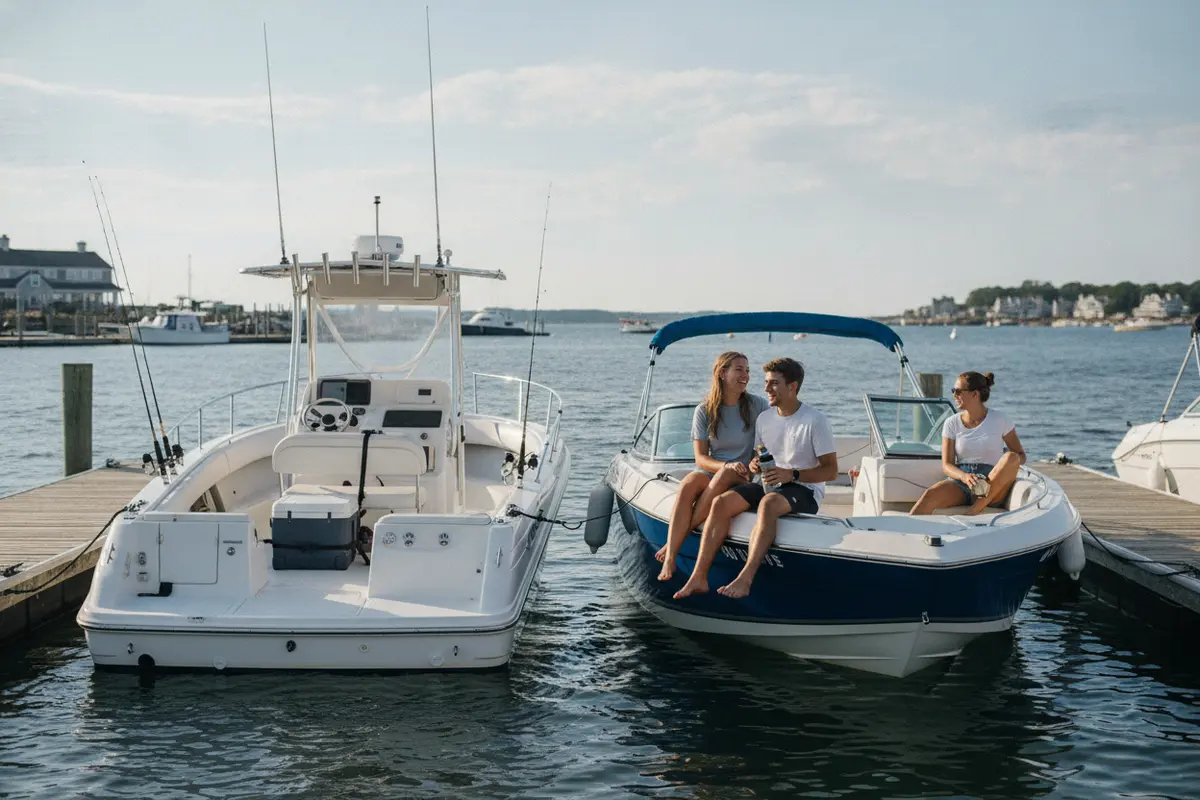
A center-console boat puts the helm and controls on a console near the middle of the boat. That arrangement leaves walking space around the console and, on many models, open deck at the bow and stern. A bowrider has a forward-facing passenger area in the bow, with seating ahead of the helm and cockpit. The open bow is built for people to sit and ride, rather than serving mainly as open working deck.
Those layouts lead to different strengths. An open deck and access around the console can make it easier to cast, handle lines, or move around while fishing. Bow seating gives passengers another place to sit together and enjoy the ride. In either style, actual space, seating, storage, and protection vary from one model to another, so the label is only a starting point.
Think about the people and activities that will use the boat most often. If the plan is to fish with a few people who want room to move, a center console may make more sense. If the priority is comfortable seating for a group on a sunny cruise, a bowrider may be a better match. The best decision comes from picturing a real outing, not comparing boat names in isolation.
How Does Each Layout Work for Fishing?
Center consoles are often chosen for fishing because the layout can leave open working space around the helm. Anglers may be able to move between the bow and stern while following a fish or tending lines. The relatively open deck can also make it easier to cast without working around rows of forward passenger seats.
That does not make every center console a fishing boat, or mean that a bowrider cannot be used to fish. Models differ. Look for features that fit the way you fish: usable deck space, rod storage, places to secure gear, seating that does not obstruct movement, and a layout that lets people remain comfortable while someone is casting. Consider how much equipment you bring. A boat that feels open before coolers and tackle are aboard may feel quite different on the water.
A bowrider can suit casual fishing with family or friends, particularly when the outing includes a mix of relaxing, swimming, and a little fishing. But its bow seating occupies space that could otherwise be open deck. Passengers may need to shift positions or keep clear while someone casts. If fishing is the central purpose of most trips, compare the practical working area instead of assuming that an attractive seating plan will meet your needs.
Try a simple test before deciding: describe a typical fishing day from departure to return. How many rods and bags come along? Will someone be casting while others sit? Will you move around the boat often? If your answer involves active fishing and frequent movement, give deck access more weight. If fishing is occasional and the group values a place to lounge between casts, weigh that comfort more heavily.
Which Boat Is More Comfortable for Passengers?
A bowrider’s defining passenger advantage is forward seating. It gives a group more places to sit and can create a sociable layout where people face one another or enjoy the view ahead. For a relaxed harbor cruise or a day with family, that arrangement may feel welcoming. Passengers who like being close to the action may enjoy the bow, provided conditions are suitable and they follow the operator’s instructions.
Center-console boats vary widely in their seating. Some have comfortable seats at the helm and bow, while others prioritize open deck and practical movement. The center console itself can divide the space, so consider whether passengers have a comfortable place to sit for the length of the trip. Look at shade, back support, handholds, and how easily people can move between seats. These details matter more than a generic label.
Group size changes the comparison. A boat may technically have enough seats yet feel cramped once bags, drinks, and personal gear are aboard. Think about the number of adults and children, whether anyone needs extra help getting around, and whether the group wants to sit together or spread out. A family with restless young passengers may value well-positioned seating and easy movement. A group focused on fishing may accept fewer lounge-style seats in exchange for open deck.
Also consider the whole outing, not just the ride. How will people board? Where can they keep belongings? Is there a comfortable spot to rest between activities? A boat club membership can provide a way to use boating access without having to commit to buying one particular layout, but availability and the right model for a given outing should be confirmed directly.
Pay attention to how passengers will use the boat while it is moving. A lively group may want to talk and sit together, while anglers may need clear access to several parts of the deck. A layout that works at the dock can feel less convenient once people are seated, gear is out, and the boat is underway. Ask where passengers should sit during operation and whether everyone can reach their seat without stepping through a busy work area.
Storage is another comfort issue. Personal bags, jackets, snacks, and fishing gear all compete for space. Bowrider seating can be inviting, but placing belongings on empty seats may reduce the room passengers actually have. Open deck on a center console can be useful, but gear left loose can block movement or create a tripping hazard. Look for dedicated storage and make a realistic estimate of what your group will bring.
How Much Weather Exposure Should You Expect?
Neither layout guarantees protection from wind, spray, sun, or changing conditions. An open center console may expose passengers to the elements, while a bowrider’s forward seating can also feel breezy and exposed. Wind direction, speed, temperature, the boat’s design, and where people sit all affect comfort. Some models offer a windshield or optional canvas, but equipment and coverage differ; ask about the specific boat rather than assuming every example has the same protection.
Before a trip, consider whether everyone in your group is comfortable being outside for several hours. Bring layers, sun protection, and gear suited to the forecast. A warm dockside afternoon can feel cooler once the boat is moving, and spray may reach seats or belongings. Secure loose items and keep walkways clear. If the weather is marginal, reconsider the plan rather than treating boat style as a substitute for good judgment.
Do not choose a bowrider solely because the bow looks sheltered in a photograph, or a center console solely because it appears more capable. Compare the actual windshield, seating, available cover, and operating conditions. Ask where passengers can sit if wind or spray makes one area uncomfortable. People who are sensitive to motion or cold may prefer a different seat or a shorter outing, regardless of boat type.
For trip preparation and safe operation, consult current official guidance and the boat’s own instructions. The U.S. Coast Guard’s boating safety resources are a starting point for reviewing boating safety information. Requirements and recommendations can depend on the vessel and situation, so verify what applies before leaving the dock.
What Should You Compare Before Choosing?
Compare the particular boats side by side when possible. Do not rely on category names or a single photograph. A compact center console and a larger, seating-focused center console can feel very different. The same is true of bowriders: some emphasize room to lounge, while others balance passenger space with practical storage and movement.
| What matters | Center console: what to look for | Bowrider: what to look for |
|---|---|---|
| Fishing | Open deck, clear casting space, movement around the helm, and gear storage | Whether bow seats leave enough room to fish comfortably and safely |
| Passenger comfort | Seat locations, back support, shade, and space around the console | Bow seating, cockpit arrangement, passenger capacity, and easy movement |
| Weather exposure | Windshield or cover options, seating positions, and exposure on deck | Wind and spray at the bow, windshield coverage, and usable sheltered seats |
| Getting around | Walkways around the console and clear access to bow and stern | Steps and transitions between bow seating and cockpit |
| Typical outing | Fishing, active movement, and practical use of open deck | Social cruising, passenger seating, and mixed leisure activities |
| Gear and belongings | Storage location and whether gear interferes with open working space | Storage capacity and whether bags take up passenger seating |
Use the table as a conversation guide, not a scorecard. Rank your top three needs, then ask which layout meets them without creating a problem elsewhere. If passenger comfort comes first, do not overlook access to seating and shade. If fishing comes first, check that open space is genuinely usable once equipment is aboard. If weather comfort is a concern, ask about real protection on the specific boat.
How Do Massachusetts Boating Plans Affect the Choice?
On the North Shore, your plans may include a harbor cruise, a fishing outing, time with family, or a mix of activities. The right fit depends on where you intend to go, how long you expect to be out, and who is coming along. A boat that works well for a short, social cruise may not be the one you would choose for a full day with fishing gear and frequent movement.
Think about the local departure point and the day’s route as well as the boat. If you are exploring from Boston, start with the club’s Boston boating information. For a Danvers departure, review its Danvers location details; if Gloucester is more convenient, see the Gloucester boating information. These pages help you understand local options, but they do not replace checking the conditions and planning a route appropriate to your experience.
Newer boaters may find it helpful to review Boating 101 and the club’s information about on-the-water training. Familiarity with the controls and basic procedures can make the layout easier to assess. If you have not driven a boat before, ask what instruction is available and what you will be expected to know before operating a particular model.
The club’s fleet information can help you see the general range of boat styles offered. Do not assume a specific boat type or model will be available for a particular date. Ask which boats can be reserved, what their seating and features are, and whether the layout fits your group and planned activities. A quick conversation can help replace assumptions with details.
Can a Boat Club Help If You Are Not Sure Which Layout You Prefer?
If you have not spent much time on different boats, it can be difficult to know whether open deck or forward seating matters more to you. A membership model may make it possible to enjoy boating without buying and maintaining one boat yourself. Depending on membership and availability, a club may provide access to different boating experiences. Ask directly which vessels are available and how reservations work; do not assume that every model is accessible on every date.
This can be useful for households whose plans change. One outing might be focused on fishing, while another is a relaxed ride with family. Instead of trying to make one boat do everything, consider which capabilities you need most often and which are occasional. The practical question is whether the available options and reservation process fit your real schedule.
Carefree Boat Club serves members from Boston, Danvers, and Gloucester, and emphasizes direct, personal communication. If you want to compare the layout to your plans, ask Karen or Eric what details to consider and what is available. Start with the club’s frequently asked questions, then ask any specifics about boat features, reservations, or training that are not answered there. Membership is a commitment, so get clear information before deciding.
How Should You Make the Final Decision?
Use a short, practical decision process:
- Name the main activity. Decide whether most outings will involve fishing, social cruising, swimming, or a blend.
- Count the people and their needs. Consider passenger comfort, mobility, children, and how long the group will be aboard.
- List the gear. Include fishing equipment, bags, food, and anything else that could occupy seating or deck space.
- Inspect seating and movement. Picture boarding, moving through the boat, reaching the bow, and finding a comfortable place to sit.
- Ask about exposure and cover. Get specifics on wind, spray, shade, and the equipment on the exact model.
- Match the boat to local plans. Consider your departure location, route, forecast, and time on the water.
- Confirm specifics before committing. Ask about availability, operating expectations, and training rather than relying on a general boat-type description.
Choose a center console if open deck, fishing access, and moving around the boat are central to your plans. Lean toward a bowrider if forward passenger seating and a social ride matter more. If both sets of benefits appeal to you, compare particular models and be honest about which compromises your group will tolerate. You do not need to settle the question based on the name alone.
When comparing options, the club’s guide to choosing a boat club in Massachusetts may also help you think through access and support beyond boat layout. And if you are still learning which style suits you, review the beginner’s guide to boating before asking questions about a specific outing.
Contact Karen and Eric to discuss your boating plans
Frequently Asked Questions
Is a center console always better for fishing?
No. Many center consoles offer open deck and access around the helm that can be useful for fishing, but the exact layout matters. Check casting space, gear storage, seating, and passenger movement on the particular model. A bowrider can work for casual fishing, especially when fishing is only one part of a mixed outing.
Is a bowrider more comfortable for a family?
It can be, because forward seating gives passengers another place to sit. But comfort depends on seat support, shade, space, storage, and how easily everyone can move around. A center console with suitable seating may also work well for a family. Compare the actual boat and the needs of the people who will be aboard.
Which boat is better in windy or cool weather?
Neither layout is automatically protected from wind or cold. Check the specific boat’s windshield, available cover, seating positions, and exposure to spray, then consider the forecast and trip length. Bring appropriate layers and reconsider the outing if conditions are uncomfortable or unsafe.
Can I decide based on a boat’s name or photos?
Photos and category names can help narrow the options, but they do not show every detail of space, seating, storage, or exposure. Ask about the actual model and inspect it when possible. If you are considering club access, confirm which boats are available and how reservations work before making a decision.
There is no universal winner in the center console vs bowrider comparison: the right layout is the one that supports the activities, comfort, and local boating plans that matter most to your group.