
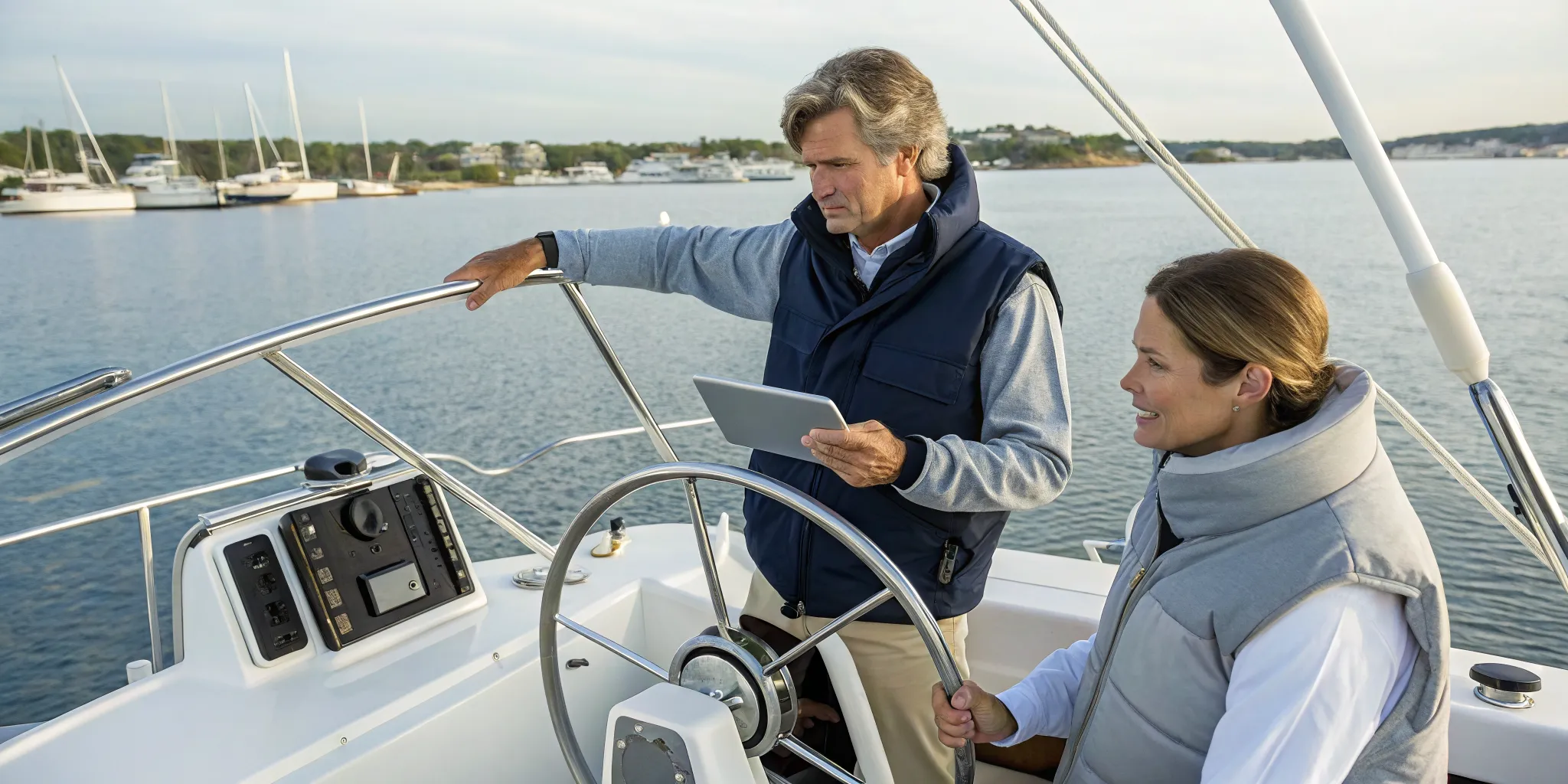
If you think a boating course is just about memorizing rules and regulations, you might be surprised by how much practical skill you’ll gain. This training is designed to be your toolkit for confident boating, teaching you everything from how to handle encounters with other vessels to what different buoys and markers mean. You’ll learn essential safety procedures, like what to do in an emergency and how to use safety equipment correctly. This knowledge isn’t just for passing a test; it’s for making every trip smoother and more enjoyable. When you’re prepared, you can spend less time worrying and more time soaking in the beautiful views from Boston Harbor to Cape Ann.
Key Takeaways
- Know the Massachusetts law: You need a Boating Safety Certificate, not a license, to operate a motorboat if you were born on or after January 1, 1989. This certificate is your official ticket to legally get on the water.
- Go beyond the rules to build confidence: A safety course is your foundation for becoming a skilled captain, teaching you how to handle your boat, prepare for emergencies, and understand the nautical rules of the road for true peace of mind.
- Choose a course that fits your life: Whether you prefer a flexible online class or a hands-on in-person course, getting certified is straightforward; just be sure to pick a course that is NASBLA-approved to guarantee it’s valid in Massachusetts.
What Is a Boating Safety Course?
Think of a boating safety course as your official introduction to life on the water. It’s a program designed to teach you how to operate a boat safely, confidently, and legally. Whether you’re a complete beginner or have been a passenger for years, this course is your first real step toward becoming the captain. It goes beyond just the basics of steering; it covers everything from understanding Massachusetts boating laws to properly maintaining a vessel so every trip is a smooth one.
Participating in a recreational boating safety course will teach you how to safely operate and maintain a boat. The goal isn’t just to help you pass a test. It’s about building a solid foundation of knowledge so you can handle different situations with skill and composure. Here at Carefree Boat Club, we believe that a well-trained boater is a happy boater, which is why comprehensive training is a core part of our membership. A safety certificate is your ticket to getting out on the water, but the real prize is the confidence you gain along the way.
What You’ll Learn in a Boating Course
A quality boating course is packed with practical information that you’ll use every time you leave the dock. You’ll learn the nautical “rules of the road,” like how to handle encounters with other boats and understand the meaning of different buoys and markers. The curriculum also covers essential safety procedures, including how to use safety equipment, what to do if someone falls overboard, and even how to handle onboard emergencies like a fire.
Many courses also teach you valuable survival skills, such as what to do if the boat capsizes and how to use a life raft. A free online course from a reputable provider can teach you everything you need to operate a boat safely and legally, giving you a complete picture of responsible boat operation from bow to stern.
Busting Common Myths About Boating Courses
There are a few common misconceptions about boating courses that can cause confusion. One of the biggest myths is that you don’t need a certificate if you’re over a certain age. While age requirements do exist, they can be complex, and assuming you’re exempt is a risky move. The safest and simplest approach is to get certified regardless of your age to ensure you’re always compliant.
Another dangerous myth revolves around drinking and boating. Some people think having a few drinks on the water is harmless, but the statistics tell a different story. The U.S. Coast Guard reports that alcohol is a leading factor in fatal boating accidents. It impairs your judgment, coordination, and reaction time, making it a serious risk. It’s always best to save the alcohol for when you’re safely back on shore.
Do You Need a Boating License in Massachusetts?
First things first, let’s clear up a common question. While people often call it a “boating license,” Massachusetts doesn’t issue a license in the same way the RMV does for cars. Instead, the state requires many boaters to have a Boating Safety Certificate. Think of it as your official ticket to fun and safe adventures on the water. This certificate proves you’ve completed a state-approved safety course, which is a fantastic way to build your confidence before you even leave the dock.
The rules for who needs this certificate are mostly based on your age and the type of boat you plan to operate. It’s a straightforward system designed to make sure everyone, from new boaters to seasoned sailors, shares the water responsibly. At Carefree Boat Club, we believe that a knowledgeable boater is a happy boater. While we handle all the maintenance, cleaning, and storage, knowing the rules of the road (or, in this case, the water) is a key part of the experience. Our comprehensive on-water training, included with your membership, covers all of this and more, ensuring you’re fully prepared for your time on the water from day one.
Understanding the Age Requirements
The main rule in Massachusetts is simple: if you were born on or after January 1, 1989, you need a valid Boating Safety Certificate to operate a motorboat. This applies to anyone 12 years of age and older who wants to be at the helm.
For younger boaters, there are specific guidelines. Kids between 12 and 15 years old can operate a motorboat, but only if they have their certificate and are directly supervised by an adult (18 or older) who also has a certificate. When it comes to personal watercraft (like a Jet Ski), the rules are a bit stricter. You must be at least 16 years old and have your safety certificate to operate one.
Massachusetts Rules and Exemptions
Once you have your Boating Safety Certificate, it’s yours for life; there are no renewal fees or expiration dates. The primary requirement is for anyone operating a motorboat, but there are a few exceptions. For example, the certificate isn’t required for operating canoes, kayaks, or other boats without a motor. There are also exemptions for certain licensed professionals, like commercial fishermen or U.S. Coast Guard licensed mariners.
The goal of the state’s boating laws and regulations is to ensure a safe environment for everyone. By requiring education for younger generations of boaters, Massachusetts helps protect its beautiful waterways in places like Boston Harbor and the coast off Gloucester. Completing a safety course is about more than just checking a box; it’s about becoming a capable and confident captain.
The Perks of a Boating Safety Course
Taking a boating safety course is about so much more than just checking a box. Think of it as your first real step toward becoming a skilled and self-assured captain. While the certificate is important, the real value comes from the knowledge you gain. It’s the kind of practical wisdom that transforms a good day on the water into a great one, giving you the peace of mind to relax and truly enjoy the moment. Whether you’re a complete beginner or have been a passenger on boats for years, a formal course provides a solid foundation for every trip you take.
Boat Legally and with Confidence
First things first, completing a safety course ensures you’re boating legally. In Massachusetts, specific age groups are required to have a safety certificate to operate a motorboat. Meeting these state requirements means you can head out from the dock without worrying about compliance. But this is about more than just following the rules. When you know the official regulations, the nautical “rules of the road,” and what different buoys and markers mean, you operate your boat with a sense of certainty. That confidence is contagious and helps your passengers feel more relaxed and secure, too.
Become a Safer, More Confident Captain
A safety course is designed to make you a better, more aware boater. You’ll learn how to properly operate and handle a vessel, from docking and anchoring to navigating in different weather conditions. This education introduces you to essential boating laws and resources that are critical for everyone’s safety. The skills you learn will help you anticipate situations before they become problems, making your time on the water smoother and more enjoyable. This foundational knowledge is the perfect starting point before you get hands-on training, allowing you to focus on refining your technique once you’re at the helm.
You Might Even Save on Insurance
For those who own a boat, here’s a practical perk you might not expect: a potential discount on your boat insurance. Many insurance providers recognize a safety certificate as proof that you’re a responsible operator who is less likely to have an accident. By completing an online boating safety course, you may qualify for lower premiums. It’s a smart financial move that rewards you for investing in your own safety education. This shows that the industry values safe practices, and it’s a simple way to make boat ownership a little more affordable.
Know What to Do in an Emergency
No one wants to think about things going wrong, but being prepared is a key part of responsible boating. A comprehensive safety course equips you with the knowledge to handle unexpected situations calmly and effectively. You’ll learn valuable skills for dealing with onboard fires, taking on water, and what to do if someone falls overboard. Understanding these emergency procedures ensures you can protect yourself and your passengers if the unexpected happens. This preparation doesn’t make you fearful; it makes you capable, giving you the ultimate confidence to manage any situation on the water.
Online vs. In-Person: Which Course Is Right for You?
Once you decide to get your boating safety certificate, the next question is how you want to learn. You’ll find two main paths: online courses and in-person classes. There’s no single “best” way; the right choice really comes down to your learning style, your schedule, and what you hope to get out of the experience.
Think about how you learn most effectively. Do you thrive on self-directed study, fitting lessons in whenever you have a spare moment? Or do you prefer a structured classroom where you can ask questions and interact with an instructor and fellow students? Online courses offer incredible flexibility, while in-person classes provide a hands-on, collaborative environment. Many people even find that a combination of both gives them the perfect balance of knowledge and practical skill. Let’s break down the pros of each so you can figure out which path, or combination of paths, will help you become the confident captain you want to be.
The Case for Online Courses
If your schedule is packed, an online course is a fantastic option. The biggest advantage is flexibility. You can learn at your own pace from the comfort of your home, completing modules during your lunch break or after the kids are in bed. Many courses, like the free one offered by the BoatUS Foundation, are designed to be engaging with interactive lessons, videos, and quizzes. This format allows you to absorb key topics like navigation rules and safety equipment on your own time. Once you complete the material and pass the final exam, you’ll receive your state-approved boating safety certificate. It’s a convenient and often very affordable way to get certified.
The Case for In-Person Classes
For those who learn best by doing and asking questions, an in-person class is tough to beat. There’s a unique value in having a seasoned instructor right in front of you, ready to clarify a tricky concept or share a real-world story that makes a lesson stick. You also get to learn alongside other aspiring boaters, which creates a supportive and engaging atmosphere. These classes go beyond the screen to teach you about safe boat operation and maintenance, often with a focus on local Massachusetts boating laws. This hands-on approach is something we value deeply, which is why our membership includes comprehensive on-water training to build on this foundational knowledge.
Finding a Mix of Both
You don’t have to commit to just one learning style. In fact, a hybrid approach can give you the best of both worlds. You could start with a convenient online course to cover all the essential rules and theories required for your certificate. Then, you can seek out practical, on-water training to apply what you’ve learned. Even seasoned boaters take advanced courses to sharpen their skills. After all, a certificate proves you know the rules, but hands-on experience is what builds true confidence at the helm. This is the perfect way to prepare yourself to handle a whole fleet of different boats and conditions with skill and ease.
Finding a State-Approved Course in Massachusetts
Okay, so you’re ready to get your boating safety certificate. That’s great! The good news is that finding a state-approved course in Massachusetts is pretty straightforward. The most important thing is to make sure the course you choose is officially recognized by the state, so your certificate is valid. Whether you prefer to learn from your couch or in a classroom, there’s an option that fits your style and budget. Let’s walk through how to find the right course, what to look for, and what comes after you pass the final exam.
Free vs. Paid Courses: Which to Choose?
When you start looking, you’ll see both free and paid courses. So, what’s the difference? Honestly, not as much as you might think. Both types of courses will cover all the essential safety topics required to get you certified in Massachusetts. Paid courses, which typically range from about $20 to $80, might offer a more polished user experience with extra videos or interactive graphics.
On the other hand, some organizations offer excellent free online courses that meet all state requirements. A free course is a fantastic, no-cost way to earn your certificate. The choice really comes down to your personal preference and budget. Either way, you’ll learn what you need to know to be a safe and responsible boater.
Where to Find Your Course
Most people find that online courses are the most convenient way to get certified. You can learn at your own pace, fitting lessons in whenever you have free time. These courses are designed to be engaging, with a mix of reading, interactive lessons, and videos to help you absorb the material.
At the end of the course, you’ll need to pass a final exam to earn your state-approved boating safety certificate. The Massachusetts Environmental Police provides a list of approved course providers on their website, making it easy to find a legitimate option. Just pick one that works for you, sign up, and you can start learning right away.
Making Sure Your Certificate Is Valid in MA
This is the most important part of your search: ensuring the course is officially accepted in Massachusetts. To do this, look for a course that is approved by the National Association of State Boating Law Administrators, or NASBLA. This approval means the course meets high national standards for boating education and is recognized by the U.S. Coast Guard.
Before you register and pay for any course, double-check the provider’s website for the NASBLA logo or a statement confirming its approval. This simple step guarantees that the certificate you earn will be valid in Massachusetts and many other states. It’s the official seal of approval that separates a recognized course from one that won’t count.
From the Classroom to the Water: Your Next Step
Once you pass your final exam, you’ll receive your official Massachusetts Boating Safety Certificate. Congratulations! This certificate is your ticket to legally operating a boat, but it’s just the beginning of your journey. True confidence on the water comes from applying that classroom knowledge with hands-on experience.
This is where practice becomes essential. At Carefree Boat Club, we believe in building confident captains. That’s why all our members receive comprehensive on-water training with our expert staff. We help you take what you learned in your safety course and apply it to real-world situations, from docking in a busy harbor to handling our diverse fleet of boats. Your certificate gets you started, and we help you with the rest.
Frequently Asked Questions
I’ve been around boats my whole life but was born after 1989. Do I really need to get a certificate? I completely understand where you’re coming from. While your hands-on experience is incredibly valuable, the Boating Safety Certificate is a legal requirement in Massachusetts based on your age. Think of it less as a test of your existing knowledge and more as a formal process to ensure you are officially compliant with state law. It also ensures you’re up to date on the specific “rules of the road” and regulations for our local waterways.
How long is the Boating Safety Certificate valid for? Do I need to renew it? This is one of the best parts about getting it done: your Massachusetts Boating Safety Certificate is good for life. Once you successfully complete a state-approved course and receive your certificate, you never have to worry about renewing it or paying fees to keep it active. You can simply focus on enjoying your time on the water.
Will my Massachusetts certificate be accepted if I want to boat in another state? Yes, in most cases it will. Courses approved by the National Association of State Boating Law Administrators (NASBLA) are recognized by many states through reciprocity agreements. This means the certificate you earn here in Massachusetts is often valid when you travel. However, it’s always a smart idea to quickly check the specific requirements for the state you plan to visit, just to be certain.
Is an online course enough, or do I also need in-person training? An approved online course is all you need to satisfy the legal requirement and get your certificate. These courses are great for learning the rules, safety protocols, and navigation basics at your own pace. That said, a certificate proves you know the theory, while hands-on training is what builds true confidence at the helm. We find the best captains use their certificate as a foundation and then seek out practical experience to apply what they’ve learned.
I’m older and not required to have a certificate. Is there any reason for me to take a course? Even if you aren’t legally required to have a certificate, taking a safety course is a great idea. For one, many boat insurance companies offer discounts to boat owners who have completed one, which is a nice financial perk. More importantly, it’s a fantastic way to refresh your knowledge of safety procedures and emergency preparedness, ensuring you’re as capable and confident as possible for your passengers.
https://shorturl.fm/MneGC
https://shorturl.fm/y2ruo
https://shorturl.fm/7eYM3
https://shorturl.fm/vMVyu