
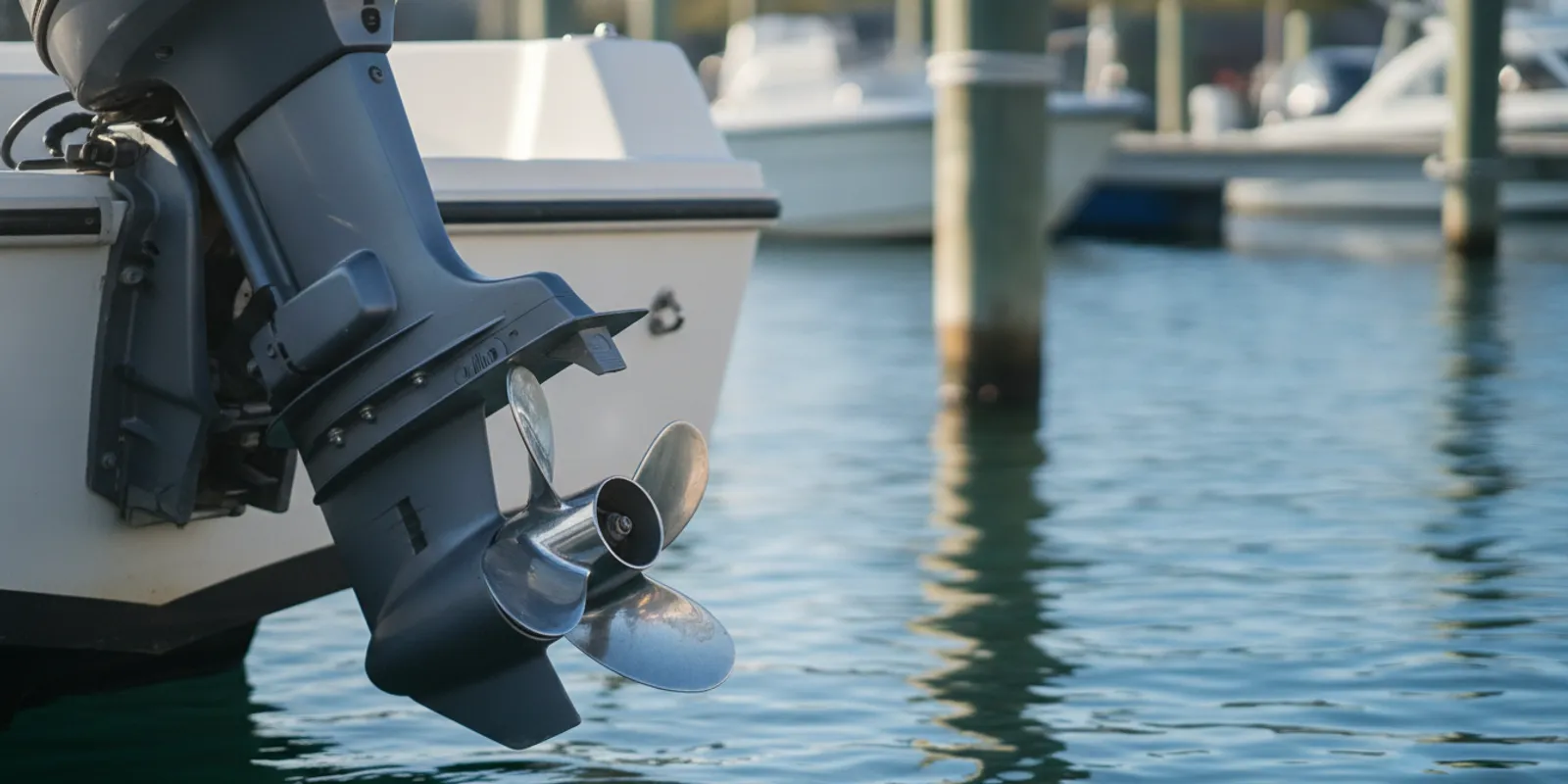
A boat propeller guide can help you understand why two propellers that look similar may produce different results on the same boat. Diameter, pitch, blade design, material, and engine limits all matter. The right choice starts with your engine and boat specifications, not a guess based on appearance.
Schedule a tour and talk with Karen or Eric
What Does a Boat Propeller Do?
A propeller turns engine power into thrust. As it rotates, its blades push water backward and the boat moves forward. The propeller also affects how the boat accelerates, how the engine reaches its operating range, and how the boat feels under different loads.
Think of the propeller as part of a system. The engine, gear ratio, hull, boat weight, and the way you use the boat all influence the result. A propeller that suits one boat may not suit another, even if both boats have similar-looking outboards. That is why the engine maker’s specifications and the boat’s existing setup are the starting point.
If you are learning the parts of a boat and how they work together, the club’s Boating 101 overview is a useful companion to this guide. Knowing the propeller’s role also helps you describe a concern more clearly. For example, “the engine seems to struggle when the boat is loaded” gives a technician a different starting point than “I want a faster prop.” A propeller change should answer a specific question about the setup, rather than serve as a guess at a cure for every performance issue.
What Do Diameter and Pitch Mean?
Two numbers commonly used to describe a propeller are diameter and pitch. They are usually stamped or printed on the propeller, though the marking can be difficult to see when it is installed.
- Diameter is the width of the circle traced by the blade tips as the propeller rotates.
- Pitch describes the theoretical distance the propeller would move forward in one revolution through a solid medium. In water, the actual distance is less because water moves and the propeller experiences slip.
As a general relationship, a higher-pitch propeller tends to load the engine more and can reduce engine speed at a given throttle setting. A lower-pitch propeller tends to let the engine turn faster. The actual result depends on the complete setup, so this relationship is a guide for understanding—not a substitute for testing within the engine maker’s limits.
Diameter and pitch should not be changed casually. The permitted range depends on the engine and boat combination. Check the operator’s manual, the engine manufacturer’s specifications, and the boat builder’s guidance before changing propeller dimensions. The stamped numbers are useful identification details, but they do not by themselves confirm compatibility. Two propellers with the same pitch may differ in hub, blade shape, diameter, or other design details.
It is also easy to read pitch as a direct speed promise. It is not. A propeller’s theoretical advance is not the same as the boat’s actual movement through water, and an engine that cannot operate in its specified range is not a sound trade for a hoped-for speed gain. Treat dimensions as specifications to verify for the whole boat-and-engine combination.
How Can the Propeller Affect Your Boat’s Performance?
The propeller influences several things a driver can notice. A setup that is not well matched may make acceleration feel sluggish, keep the engine from reaching its recommended operating range, or cause the engine to turn beyond that range. Handling and efficiency can also vary with loading and conditions.
Passenger and gear weight matter. A boat carrying several people, supplies, or equipment may behave differently from the same boat with a light load. Water conditions and the boat’s intended use matter too. A propeller should not be selected from a single performance goal, such as faster acceleration, without considering engine limits and the full range of use.
Use the engine maker’s specified wide-open-throttle operating range as a key reference when a qualified person evaluates a propeller. Do not assume that the highest possible engine speed or the fastest possible run is the right target. Follow the manufacturer’s instructions and have a marine technician assess an unfamiliar or changed setup.
When describing performance, separate what you observed from what you think caused it. Note whether the issue happens while accelerating, carrying a typical load, or operating in a particular condition. Record engine behavior as described in the manual, but do not exceed safe operating limits or repeat a concerning maneuver just to collect more information. This gives a professional useful context without turning a troubleshooting question into an unsafe experiment.
How Should You Compare Propeller Materials?
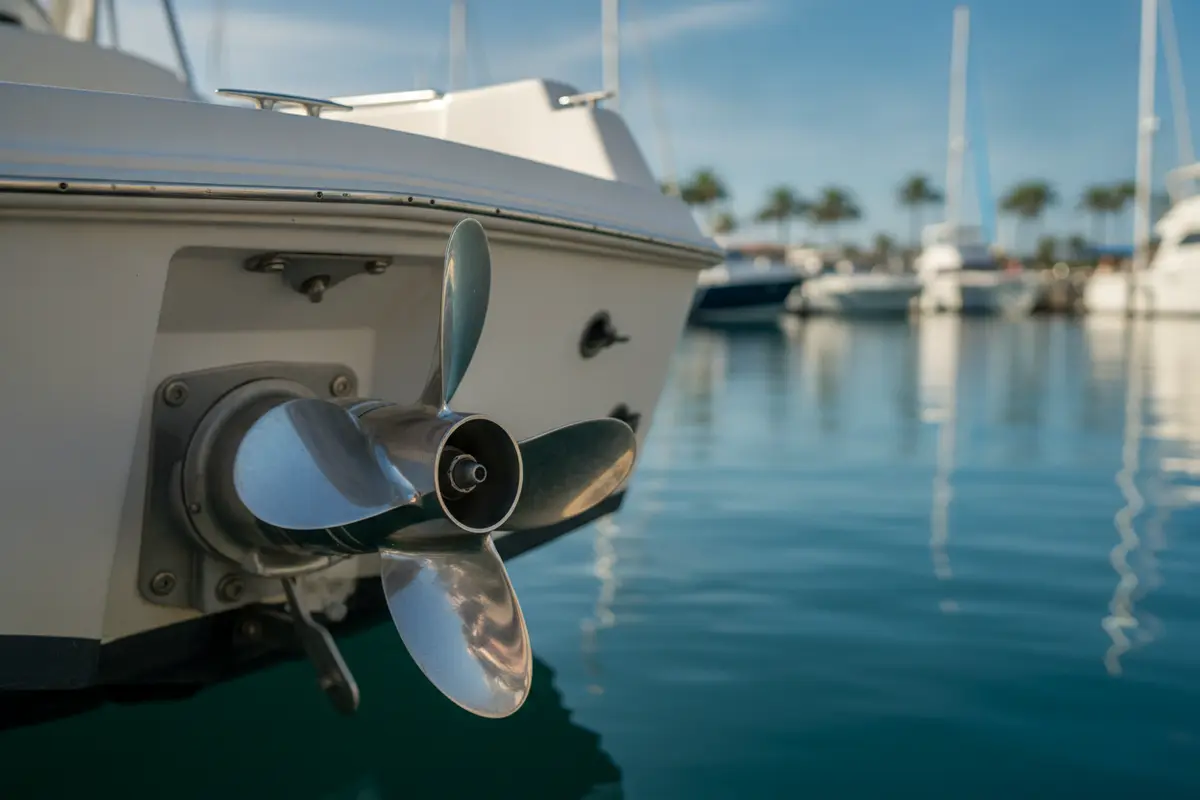
Recreational propellers are commonly made from aluminum or stainless steel. Material is one factor in the choice, but it cannot determine the right propeller by itself. Confirm the correct fit and specifications for your engine before comparing materials.
| Consideration | Aluminum | Stainless steel |
|---|---|---|
| Typical purchase consideration | Often a lower initial-cost option | Often a higher initial-cost option |
| Construction and shape | Generally more flexible in design and commonly used on recreational boats | Can support thinner blade designs and is often chosen where that construction suits the setup |
| What to confirm | Correct diameter, pitch, hub, and engine compatibility | Correct diameter, pitch, hub, clearance, and engine compatibility |
| Best next step | Compare the manufacturer’s approved options for your specific boat and engine, then consider use, load, and service advice. | |
These are broad tendencies, not a promise that one material will perform better in every situation. Propeller construction, the particular design, and the rest of the boat’s setup affect performance. Ask a marine professional to explain the tradeoffs for the exact application.
Material is only one part of the decision. A replacement also needs to match the engine’s approved fit and the boat’s requirements. Check the hub arrangement and any required clearance, and ask whether the proposed propeller is approved for the specific engine model. A material preference cannot make an incompatible propeller suitable.
Does Blade Count Change the Right Choice?
Propellers are available with different blade counts and blade shapes. More blades do not automatically mean more speed, a smoother ride, or a better match. Blade count is one part of a design that must work with the engine, hull, and intended use.
When comparing options, ask what problem the change is meant to address. Is the goal to improve acceleration, support a particular load, or suit a specific operating condition? Ask how the proposed change affects engine speed across the approved operating range. A qualified technician can help interpret those tradeoffs without relying on a rule of thumb that may not fit your boat.
It can help to compare complete propeller specifications rather than focusing on one feature. Ask the professional to explain why the blade shape and count fit the boat, what change is expected, and how the engine’s operating range will be confirmed. If the proposed option involves a tradeoff, such as one operating characteristic changing while another may not, understand that before authorizing work.
For an overview of the boats available through the Massachusetts club, see the fleet page. The specific propeller and engine setup is a question for the relevant manufacturer or marine professional.
How Do You Identify the Propeller You Have?
Before shopping or asking for advice, record what is already installed. The markings may be on the propeller hub or another visible surface. If you cannot read them safely, do not put your hands near a propeller that could move; ask a qualified person to inspect it.
- Identify the engine. Record its make, model, and other identifying details from the label or documentation.
- Find the propeller markings. Note the stamped diameter and pitch if visible, along with any model or part number.
- Check the boat documentation. Look for the builder’s specifications and any propeller guidance for the installed engine.
- Describe how the boat is used. Note typical passenger and gear loads, usual conditions, and any handling or performance concern.
- Ask a qualified marine technician or the manufacturer. Provide the details and ask what approved options fit the complete setup.
Do not rely only on a propeller listing that says it fits a broad engine family. The hub, dimensions, clearances, and manufacturer’s operating requirements must also match. Keep the current propeller information for future servicing and comparison.
For a useful first conversation, gather the engine documentation, boat model or builder information, current propeller markings, and a short description of how the boat is typically loaded and used. If you have prior service records or a previous propeller recommendation, include those too. Be clear about what is known and what is uncertain; a faded marking or an estimate should not be presented as a confirmed specification.
A photo can help identify visible markings, but it does not replace a proper fit check. Do not remove a propeller or reach around the hub unless you are qualified and following the manufacturer’s safety instructions. If a part number is unclear, the engine maker or marine technician may be able to help identify it from the available information.
What Should You Check Before Changing a Propeller?
Start with the owner’s manual and the engine maker’s guidance. Confirm approved propeller dimensions and the specified engine operating range. Then consider the boat’s present condition and how it is normally loaded. If performance has recently changed, ask whether another issue needs attention instead of assuming the propeller is the cause.
It can help to write down a clear baseline before asking for advice. Record the current propeller markings, engine details, and the conditions under which you notice a concern. Include whether the boat was lightly or heavily loaded and whether the issue appears during acceleration, cruising, or another part of operation. These observations give a technician more context than a general description such as “it feels slow.” Do not try to reproduce a problem in an unsafe way or exceed the boat’s operating limits to gather data.
Also check whether the propeller is visibly damaged or fouled, but do so only with the engine secured and in accordance with the manual. A change in performance can have more than one cause, and a propeller swap may not solve it. Ask the service professional to explain what evidence supports a recommended change, how the proposed option fits the engine specifications, and what operating range should be checked afterward. Keep the written recommendation with the boat’s maintenance records.
Before approving a change, ask what parts and specifications are included in the recommendation and whether any additional inspection is appropriate. After installation, follow the manufacturer’s instructions for checks and operation. If anything feels or sounds different than expected, stop and ask for help rather than trying repeated adjustments yourself. Keeping a note of the date, the propeller details, and the reason for the change makes future troubleshooting clearer.
A change in engine sound, vibration, handling, or performance deserves careful attention. Stop using the boat if you suspect damage or an unsafe condition, and seek qualified help. A propeller should be installed and inspected according to the manufacturer’s instructions. Never work around a propeller unless the engine is fully secured against starting and the relevant safety directions are followed.
For broader recreational boating information, consult the U.S. Coast Guard. This general resource does not replace the manuals and specifications for your particular boat and engine.

How Does Propeller Research Fit Into Learning to Boat?
Understanding propeller basics can help you ask better questions, but it is only one part of safe boat operation. A driver also needs to understand the boat’s controls, local conditions, navigation, and safety procedures. New boaters can explore the club’s on-the-water training information and review the frequently asked questions for membership details.
Members use boats maintained for club use, so a member does not need to select and purchase a personal propeller for each outing. Questions about a boat’s setup or operation should be raised with the staff before departure. Learn more about local options in Boston, Danvers, and Gloucester. The club’s membership information can help readers understand the general model of boating access, while the boat’s own operating guidance remains the authority for equipment questions.
For a boater who is still learning, the practical takeaway is straightforward: understand what the propeller does, learn which details identify the installed model, and ask staff or a marine professional when something is unclear. You do not need to make an equipment decision on the dock or rely on a generic rule that may not suit that boat.
Contact Karen or Eric to schedule a tour
What Are Common Questions About Boat Propellers?
Can I choose a propeller by boat length alone?
No. Boat length alone does not establish the correct propeller. The engine, gear ratio, hull, approved dimensions, loading, and intended use all matter. Use the engine and boat manufacturer’s guidance and get qualified advice.
Will a higher-pitch propeller always make my boat faster?
No. A higher pitch changes how the propeller loads the engine, and it can keep the engine from reaching its specified operating range if it is not appropriate for the setup. Speed depends on the entire boat-and-engine combination, not pitch alone.
Should I replace a propeller that has a small ding?
Do not assume a ding is harmless or attempt a repair without qualified advice. Damage can affect performance or indicate a condition that needs inspection. Ask a marine technician to assess the propeller and follow the manufacturer’s recommendations.
Where can I find the size stamped on my propeller?
Markings are often stamped on the propeller hub or another surface, but their location varies. Check the manual and inspect only when the engine is secured against starting. If the marking is hidden or difficult to read, have a qualified person identify it.
What Should You Remember When Choosing a Boat Propeller?
Begin with the specifications for the exact boat and engine, then compare diameter, pitch, material, and blade design in light of how the boat is used. Treat general rules as a starting point, verify the manufacturer’s operating limits, and seek qualified help before changing a propeller. That process is more reliable than choosing by appearance or one number alone.