
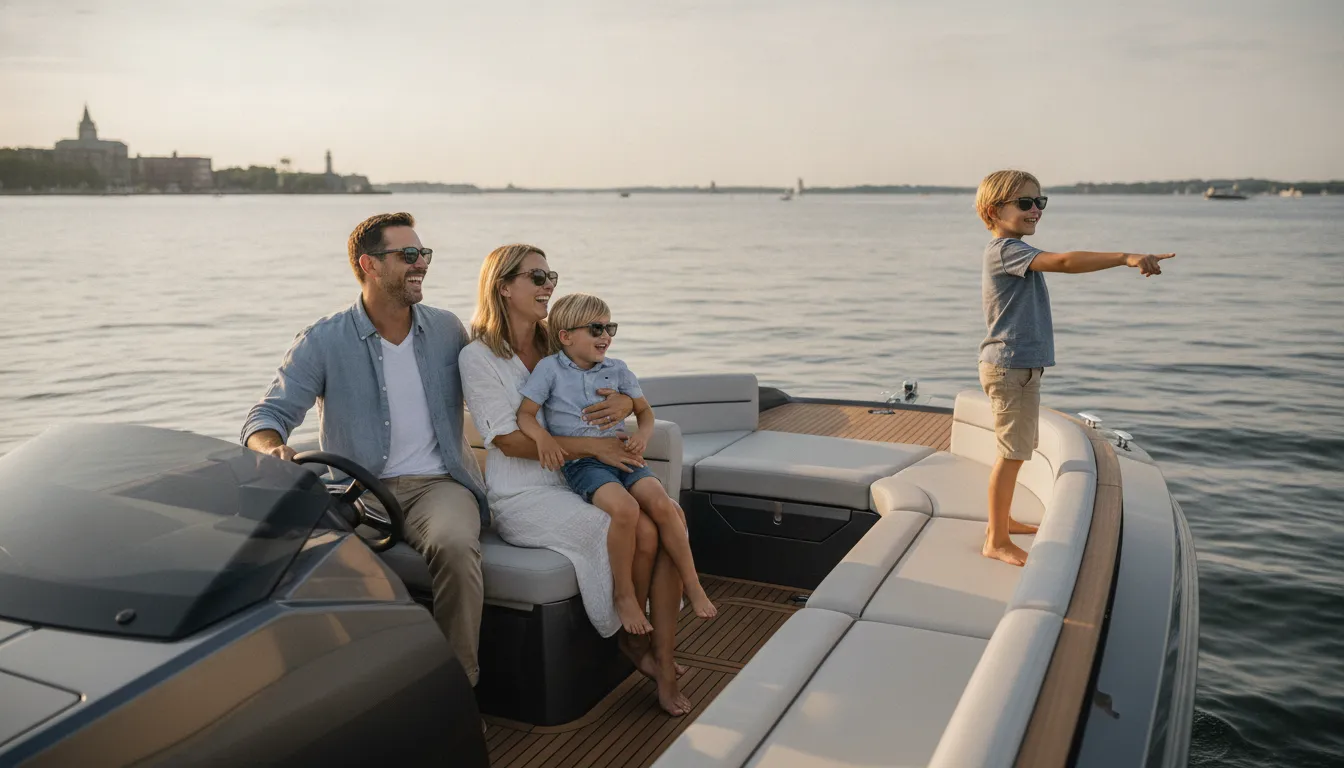
Boat Club Membership for Families: Is It Right?
For many Massachusetts families, the hardest part of boating is not choosing a destination. It is finding time for the maintenance, storage, cleaning, and planning that happen before anyone reaches the dock. A family boating decision should therefore start with how you want to spend weekends, not simply whether you want to own a boat.
Book a Carefree Boat Club family tour
Boat club membership for families can be a strong fit when parents want more time together on the water. Professional instruction, and managed access without taking on the everyday responsibilities of ownership. Families should still consider how much control they want over one boat, its schedule, and customization.
Carefree Boat Club serves Boston, Danvers, and Gloucester, giving local families a practical starting point for exploring Massachusetts waterways. Members also receive reciprocal access at 150+ Carefree locations nationwide. The right fit becomes clearer when you look at how a typical weekend unfolds, from reserving a boat to getting everyone safely and comfortably underway.
How Can Boat Club Membership for Families Make Weekends Easier?
Boat club membership for families can make weekends easier by shifting the focus from managing a boat to enjoying time together on the water. Instead of handling storage, cleaning, maintenance, and insurance, adults can plan an outing, prepare the family, and spend more of the day boating. That convenience is the heart of Boating Without Owning.
For a Massachusetts family, the benefit is practical. A Saturday on the water does not have to begin with a list of ownership tasks. Carefree Boat Club is family-owned and operated, with locations serving Boston, Danvers, and Gloucester. Members can use their local club as a starting point for family outings, whether that means a relaxed cruise, a fishing trip, or time exploring the coastline together.
The model can also make family time easier to share across generations. Parents, grandparents, and other participating adults can enjoy an activity together without asking one person to manage every detail of the boat. Children can become familiar with boating gradually, with adults setting expectations for staying aboard, listening to the operator, and respecting the water. The experience is about building shared routines and memories, not simply accessing a vessel.
Variety is another consideration. Families may want different experiences on different weekends, such as cruising, fishing, or watersports. A membership model can provide access to different boat types without requiring one household to purchase, store, and maintain multiple boats. Families can review the current Carefree fleet to understand the types of boating available, without treating a changing fleet as a fixed promise.
Membership can also support flexibility beyond Massachusetts. Carefree members receive reciprocal access at 150+ locations worldwide, creating opportunities to plan boating into travel when participating locations and reservations fit the trip. That benefit is different from simply renting a boat for a single occasion, and families can learn more about Carefree Boat Club membership options before deciding whether the model matches their schedule.
There are honest tradeoffs. Membership is a better fit for families who value managed access, shared experiences, and less household responsibility. Someone who wants complete control over a specific boat, customized equipment, or spontaneous use without reservation planning may prefer ownership. Reviewing the boat ownership challenges guide can help families compare those responsibilities with the experience they actually want.
How Does Training Make Boat Club Membership for Families More Approachable?
Training turns a first family outing into a supported learning experience rather than a test of confidence. Carefree Boat Club provides unlimited on-the-water training from certified instructors, so adults can practice handling, docking, navigation, and safety skills repeatedly. Children can participate in age-appropriate ways while adults remain responsible for operating the boat.
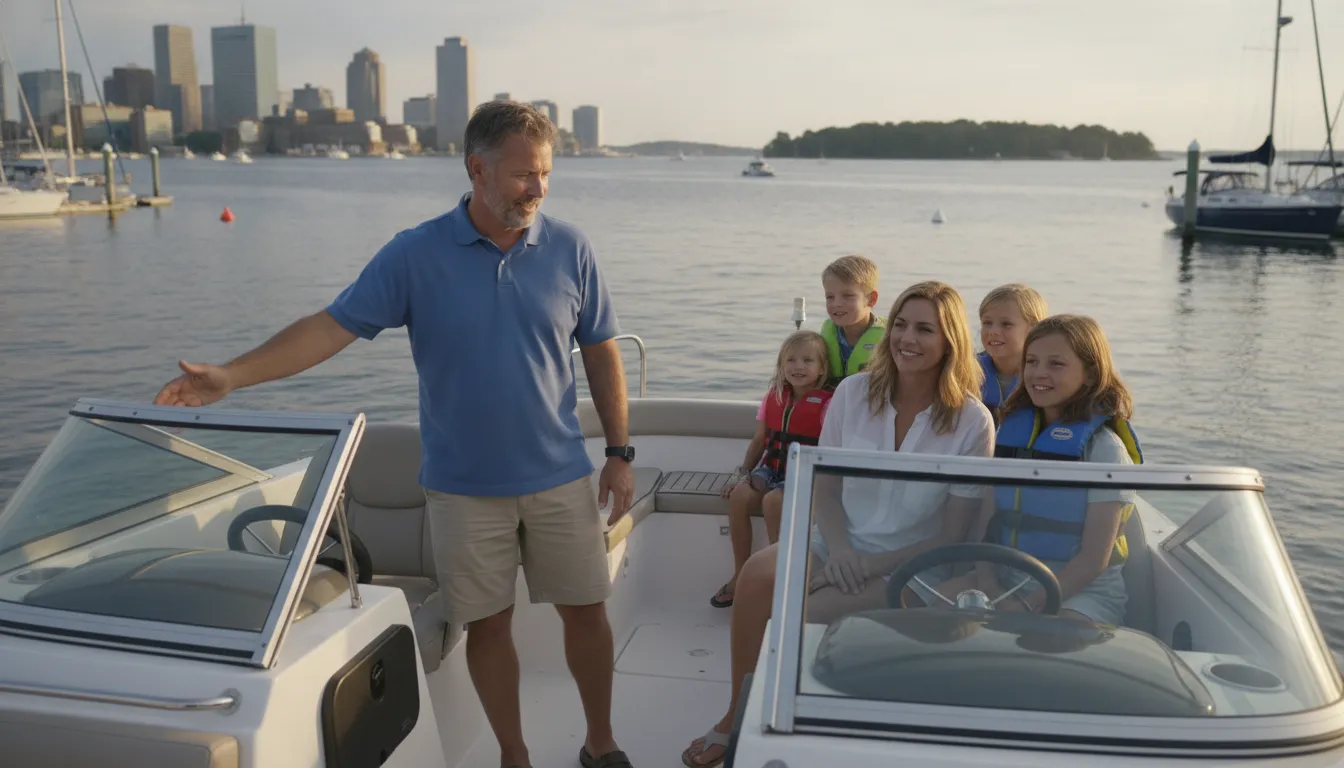
That repeat practice matters. One adult may want to refresh docking before bringing grandparents aboard, while another needs more time with throttle control or a familiar route. Instructors help members become comfortable with the selected vessel and local waterways around Boston, Danvers, or Gloucester.
Families can also pair club instruction with a structured U.S. Coast Guard boating safety course. A course builds foundational knowledge, while on-the-water instruction helps adults apply that knowledge in a real setting. The beginner boating guide is another useful starting point for families who want to understand basic terminology and expectations before their first trip.
- Identify the adults who will operate the boat. Have each participating adult schedule enough instruction to build individual comfort. Shared responsibility works best when every operator understands the controls, communication plan, and emergency procedures.
- Choose a realistic first outing. Start with a route and duration that match the family’s experience, passenger comfort, and the day’s weather. A shorter local trip creates room to practice without making the schedule feel rushed.
- Ask the instructor to cover the selected vessel. Request a walk-through of the boat’s controls, safety equipment, boarding process, docking approach, and maneuvering characteristics. Familiarity with one vessel can make the first family day feel much calmer.
- Give children a simple safety role. Depending on age, children can learn where to sit, how to move safely aboard, how to communicate with an adult, and why personal flotation devices matter. They should not be treated as substitute operators or left to supervise one another.
- Plan a follow-up practice session. Use the unlimited training benefit when a skill still feels unfamiliar or seasonal conditions change. Repetition before a longer trip can reinforce good habits and help the whole family enjoy the outing.
Book a family tour to explore boat club membership for families
The goal is not to make every family member an expert overnight. It is to build adult confidence, let children learn safely at their own level, and make time on Massachusetts waterways approachable.
What Safety Practices Matter Most for Families on the Water?
Family boating is safest when preparation is shared, supervision is intentional, and every passenger knows what to do before leaving the dock. Properly fitted life jackets, a clear adult watch plan, child-friendly orientation, weather awareness. And a careful operator check create practical layers of protection without promising that boating is risk-free.
Start with life jackets. Each person aboard should have an appropriately fitted, U.S. Coast Guard-approved wearable life jacket available. Children need jackets sized for their current weight and body fit, not a jacket they may grow into. Let children practice putting them on before departure, and make sure adults model the behavior. The U.S. Coast Guard’s life jacket guidance explains why fit and proper wear matter.
How should adults supervise children?
Assign an active adult supervisor before the boat gets underway. That person should remain focused on the children and the surrounding water, rather than assuming another passenger is watching. Rotate the responsibility only through a clear handoff. The CDC recommends close, constant supervision around water, especially for young children; its drowning prevention guidance is a useful resource for families planning any water activity.
A short child orientation can make the plan easier to follow. Show children where to sit, how to hold on, which areas are off-limits while underway, and how to alert an adult if they feel uncomfortable. Explain that they should never climb onto the gunwale or swim without an adult’s direct permission. Keep the briefing calm and age-appropriate. The goal is confidence and good habits, not fear.
What should families check before leaving the dock?
First, review the forecast, wind, visibility, daylight, and expected conditions for the route. A family outing should match the operator’s experience and the passengers’ comfort. Then confirm that the boat is suitable for the planned activity, passengers are seated safely, communication devices are available, and the operator knows the route and return plan. Recheck conditions during the day, since a comfortable morning can change quickly.
Carefree operational guidance also describes weekly 50-point safety inspections by trained dock staff. That is an additional maintenance and readiness measure, not a substitute for the operator’s own pre-departure check or judgment. Members should still ask questions, report anything unusual, and follow the club’s instructions. Carefree Boat Club’s on-the-water training can help participating adults build sound habits for handling, docking. Navigation, and local conditions, but no training removes the need for attentive decisions on every trip.
Where Can Families Start Massachusetts Boating Days?
Families can choose a Massachusetts boating day by matching the departure location to the group’s comfort, the desired route, and the day’s conditions. Boston opens the harbor and Harbor Islands, Danvers provides access to the North Shore, and Gloucester offers a Cape Ann gateway. Shorter routes, favorable weather, and realistic daylight usually create the most comfortable first outings.
Boston: Harbor Views and Harbor Islands
Boston is a natural starting point when your family wants variety without committing to a long run. A harbor outing can include skyline views, open-water practice, or a visit near the Harbor Islands, depending on conditions and the operator’s experience. Before leaving, discuss the route, turning points, and a return time. Passenger comfort matters, especially for younger children or relatives who are new to boating. A shorter loop with calm water can be more enjoyable than an ambitious itinerary that leaves everyone tired.
Danvers: A Practical North Shore Departure
Danvers can work well for families who live north of Boston or want a flexible North Shore starting point. The Danvers River and Salem Sound offer different kinds of scenery and route planning considerations. Keep the first trip focused: allow time for boarding, a safety orientation, and getting comfortable underway rather than trying to cover every nearby destination. As confidence grows, families can plan longer days while continuing to consider wind, current, passenger needs, and the return trip.
Gloucester and Cape Ann: Plan for a Full Day
Gloucester provides a historic maritime setting and a convenient gateway to Cape Ann. The area can support a memorable family day, but route length should match the least experienced or least comfortable passenger. Pack layers, water, snacks, sunscreen, and any needed motion-sickness supplies. Leave room in the schedule for changing weather and slower travel. A flexible plan helps the family enjoy the shoreline without turning the outing into a race against the clock.
Seasonal planning is just as important as choosing a marina. Review the Massachusetts boating season guide before setting expectations for temperature, wind, and daylight. Check the forecast close to departure, and remember that conditions can change after launch. Families exploring boat club membership can also ask how local orientation and route guidance support outings from Boston, Danvers, and Gloucester.
How Do Families Compare Club Membership With Boat Ownership?
For many families, Carefree Boat Club membership trades the ongoing work of owning a boat for managed access, instruction, and time together on the water. Ownership can be the better fit for families who want complete control, customization, and frequent access to one specific vessel. The right choice depends on how your household wants to spend its boating time.
| Consideration | Carefree Boat Club membership | Boat ownership |
|---|---|---|
| Time | More time can go toward family outings because maintenance, cleaning, and routine preparation are managed through the club. | Owners control the schedule, but they also handle preparation, upkeep, and post-trip care. |
| Maintenance | The membership model is designed to reduce the maintenance, storage, insurance, and cleaning burdens associated with ownership. | The household remains responsible for maintenance decisions, repairs, cleaning, and service coordination. |
| Storage and towing | Members do not need to arrange a private storage solution or tow the club’s boats between home and the water. | Owners must plan storage, launch logistics, towing equipment, and transportation when applicable. |
| Variety | Members can choose among available boat types suited to different outings, such as cruising, fishing, or watersports. | One boat provides consistency, but its layout and capabilities may limit the kinds of trips it suits. |
| Learning | Certified instructors provide unlimited on-the-water training, giving adults opportunities to build confidence through practice. | Owners choose how to learn, arrange instruction independently, and remain responsible for developing operating skills. |
| Travel | Reciprocal access at 150+ Carefree locations can make boating part of trips beyond Massachusetts, subject to location and reservation terms. | The family typically travels with its own boat or arranges a separate boat experience at the destination. |
The practical question is not simply whether a family wants a boat. It is whether the family wants to manage a boat between outings. A club model places more emphasis on scheduling and shared access, while ownership places more emphasis on personal control and household responsibility. Both can create memorable days together when the arrangement matches the family’s habits.
The membership option is especially practical when parents want boating to feel like a ready-to-enjoy family activity rather than another household project. It can also support multi-generational outings, since participating adults can continue learning without one person carrying every boating responsibility. Review the Carefree Boat Club membership options to understand how the model is structured.
Ownership still has genuine advantages. A family that wants to customize every detail, keep a boat at its own property. Work on vessels as a hobby, or use one specific boat whenever it chooses may value that control. Before deciding, families should also review this boat ownership challenges guide and consider the time they realistically have for upkeep, storage, and trip preparation.
What Should Families Ask Before Choosing a Boat Club Membership?
The best choice depends on more than boat access. Families should compare the quality of training, safety expectations, local marina options, reservation process, boat variety, and member responsibilities. Ask whether the club supports confident participation by adults and children, offers useful access beyond Massachusetts, and explains its current terms clearly before you join.
- How does training work? Ask whether instruction is included, who provides it, and whether adults can practice more than once. Carefree Boat Club provides unlimited on-the-water training from certified instructors. Training should cover handling, docking, navigation, safety equipment, local waterways, and the specific boat your family will use. Families new to boating can also review this beginner boating guide before a tour.
- What safety habits does the club expect? A responsible club should explain life-jacket requirements, supervision around children, weather decisions, and operator responsibilities. Ask how boats are checked and maintained, while remembering that club inspections do not replace the operator’s own pre-departure checks. Every person aboard should have an appropriately fitted, U.S. Coast Guard-approved wearable life jacket available.
- Which location fits your family? Consider the drive to Boston, Danvers, or Gloucester, the waterways you hope to explore, and how practical each marina is for a weekday evening or weekend outing. A nearby starting point can make boating feel like a repeatable family activity rather than an occasional project.
- How are reservations handled? Ask how far ahead members reserve, how changes or weather cancellations work, and whether the process is easy for the adults who will actually plan trips. Clarify the current availability rules instead of relying on general promises about convenience.
- Are the boats suited to your family? Look at the current fleet and ask which boats fit fishing, cruising, or watersports. Discuss passenger comfort, storage, boarding, and the experience level needed for each type. The right variety should support how your family spends time together, not simply look impressive.
- What responsibilities remain with members? Ask about fueling, cleanup, guest policies, reservation etiquette, required certifications, and any limits on use. Then ask about reciprocal access. Carefree members can use more than 150 locations worldwide, which may add value for families who travel, but current access terms should be confirmed directly.
Finally, compare the answers with your family’s real routine. Read the Carefree Boat Club membership options, bring questions to a tour, and choose the model that gives your household confidence, flexibility, and more time together.
Book a Carefree Boat Club family tour
Frequently Asked Questions
Are boat club memberships family-friendly?
They can be a strong fit for families that want shared time on the water without taking on every ownership task. Adults can participate in outings, children can learn age-appropriate boating habits, and the household can focus on planning a comfortable day together. The right fit still depends on location, scheduling needs, and how often your family expects to boat.
Do boat club memberships provide safety training for families?
Carefree Boat Club provides unlimited on-the-water training from certified instructors. Training can cover boat handling, docking, navigation, local waterways, safety equipment, and the selected vessel. Adults should build their own operating confidence, while children should receive clear safety expectations and close supervision. A U.S. Coast Guard boating safety course can provide helpful supplemental education.
What are the benefits compared with owning a boat?
Membership offers managed access while reducing routine responsibilities such as maintenance, storage, insurance, and cleaning. Ownership may be preferable for families that want complete control, customization, or a boat kept at home. A club can be more appealing when your priority is time together and access to boating experiences rather than managing an asset.
What safety steps should families take before leaving the dock?
Every person aboard should have an appropriately fitted, U.S. Coast Guard-approved wearable life jacket available. Assign an adult to actively supervise young children, review where safety equipment is located, and check weather, wind, daylight, and passenger comfort before departure. Operator checks remain important even when dock staff perform routine inspections.
How should families choose the right boat club?
Compare training, safety practices, local locations, reservation procedures, available boat types, member responsibilities, and current terms. Ask how the club supports newer operators and whether reciprocal access is useful for your travel plans. Carefree members receive access to 150+ participating locations, which can add flexibility beyond Massachusetts boating days.
Ready to Explore Family Boating Without Owning?
A family tour can help you see how training, safety guidance, local Massachusetts boating, reservations, and reciprocal access fit your family’s plans. It is also a practical way to discuss whether Carefree Boat Club membership matches the way your household wants to spend time on the water. The tour can clarify what responsibilities remain with your family.
https://addlinks.pro/axhyl