
Planning your first trip on Massachusetts water can feel like a lot to remember. These boating safety tips for beginners massachusetts readers can use are designed to turn that uncertainty into a simple routine. Learn the boat, check the required gear, share a float plan, read the marine forecast, and know when to stay at the dock. Massachusetts offers remarkable variety, from Boston Harbor and the Harbor Islands to the North Shore and Cape Ann, but every trip deserves the same thoughtful preparation. For the complete overview of Massachusetts rules, licensing, and training, start with the club’s Massachusetts Boating Safety, Licensing, and Training: The Authority Guide.
Book Your Carefree Boat Club Tour Today
You do not need to know everything on day one. A safety course can help with legal and education requirements, while a practical first-trip checklist helps you make sound decisions before the engine starts. For the certification side of preparation, review the club’s boater education requirements. Then use the steps below to prepare for the conditions, passengers, and waterways you may encounter locally.
What Boating Safety Tips for Beginners Massachusetts Should Cover Before a First Trip?
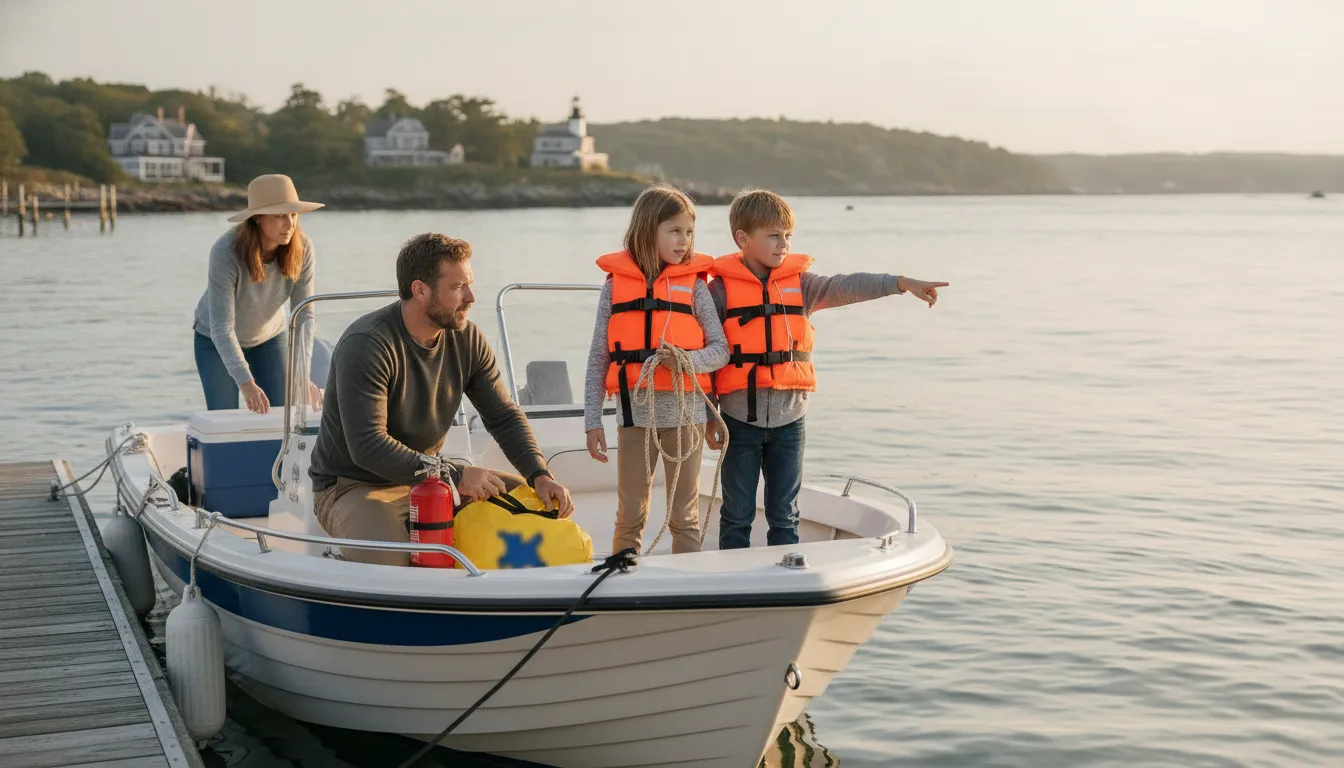
A calm first trip begins before the lines come off the dock. Start by identifying the operator and giving every passenger a short briefing. Show everyone where the properly fitted life jackets are stored, how to put them on, and who to alert if someone falls overboard. Children need child-sized flotation devices; an adult life jacket may not provide the right fit. A foam life jacket should fit snugly and should not ride above the wearer’s chin or ears.
Next, orient yourself to the boat. Locate the engine controls, steering, throttle, navigation lights, bilge pump, anchor and line, first-aid supplies, and emergency signaling equipment. Ask what each control does before starting the engine. If the boat has a marine VHF radio, learn how to turn it on and how to communicate clearly. VHF means very high frequency, and it is used for marine communication. Confirm how to call for help and who is responsible for the radio while the operator manages the boat.
Make the route familiar before departure. Review the chart or GPS, identify the channel, note no-wake areas, and discuss the planned destination and return route. Local waters change quickly from one setting to another. A trip from Boston Harbor toward the Harbor Islands is different from navigating the Danvers River and Salem Sound or leaving Gloucester Harbor for the Atlantic. You do not need to memorize every feature. Know where you are going, what landmarks to expect, and where you can turn back.
Massachusetts boater education requirements can change. Check the current guidance before operating a motorboat or personal watercraft, including the phased certificate requirements that began April 1, 2026. The state also offers the free, classroom-based Boat Massachusetts course, and family participation is encouraged. Review the current boater education requirements rather than relying on an old checklist. The club’s Massachusetts Boating Safety, Licensing, and Training: The Authority Guide brings the related requirements and training considerations together in one place.
Finally, agree on a go/no-go decision before anyone is excited about leaving. Check the latest forecast and consider the experience level of the least-confident passenger. Postpone the trip if conditions or visibility exceed your comfort level.
Carefree Boat Club’s training includes boat familiarization, navigation, docking, safety, and emergency procedures. Ask for hands-on help when a control, route, or situation is unfamiliar. A first trip is successful when everyone returns with better judgment and more confidence, not when the boat travels the farthest.
What Safety Equipment Should Be on a Beginner’s Boat in Massachusetts?
Before leaving a Massachusetts dock, walk through the boat as if you may need to solve a problem quickly. Start with personal flotation devices (PFDs). There should be a U.S. Coast Guard-approved wearable PFD for every person aboard, and the best one is one the wearer will actually keep on.
| Area | Check |
|---|---|
| Flotation. | Approved PFD for each person. |
| Stability. | Anchor, line, and connections. |
| Visibility. | Lights and sound device. |
| Emergency. | First aid, extinguisher, bilge pump. |
| Navigation. | VHF, GPS, compass, depth finder. |
Check each label for the intended user and activity. Use a correctly sized jacket for each child. Adult-sized jackets may not protect a child properly. Make sure each foam PFD fits snugly and does not ride above the wearer’s chin or ears. Replace any PFD that is waterlogged, faded, or damaged. Check foam PFDs for wear and buoyancy at least annually.
Next, confirm that the boat can stop, stay put, and be found. Check the anchor, its line, and the connection points for damage. Make sure navigation lights work before dusk or in reduced visibility, and know where the boat’s sound-producing device is located. Carry appropriate visual distress signals, and check that approved signals are within their marked service life. Keep a first-aid kit accessible rather than buried beneath loose gear.
Look at the boat’s fire and flooding equipment. Where the boat’s configuration requires it, verify that a Coast Guard-approved portable fire extinguisher is charged, accessible, and suited to the vessel. Know how to use it before an emergency. Check the bilge pump and its switch, then look for obvious water, fuel, or electrical problems.
Certain gasoline-powered boats also require ventilation equipment, including ducts or an operable power blower. These details depend on the boat, its engine, and applicable rules, so do not treat a general checklist as a substitute for an inspection.
For communication and navigation, turn on the marine VHF radio and confirm that the battery or power supply is ready. VHF means very high frequency, and it is the boat’s primary marine radio for contacting other vessels or emergency services. Check the GPS, chartplotter, compass, and depth finder. Identify the paper chart or local navigation reference you will use if electronics fail. A phone in a waterproof case is useful as a backup, but it should not be your only communication plan.
This is a practical pre-departure walkthrough, not a complete statement of Massachusetts or federal law. Equipment requirements can vary by boat type, length, propulsion, location, and activity. Review the current boater education requirements and official guidance before operating. Carefree Boat Club’s inspection process covers safety equipment, extinguishers, flares, life vests, first aid, signaling devices, anchors and lines, bilge pumps, GPS, radios, lights, and depth finders.
How Do You File a Float Plan Before Leaving the Dock?
A float plan is a simple record of your trip that gives a trusted person useful information if you do not return as expected. It is not reserved for offshore voyages or large boats. The U.S. Coast Guard says a float plan can be just as useful for a 10-foot kayak or flat-bottom skiff as it is for a much larger vessel. Kayakers, anglers, family day cruisers, canoeists, and power boaters can all use one.
The boat operator typically prepares the plan, then gives it to someone who is staying ashore and will notice if the check-in does not happen. Everyone aboard should understand where the boat is going and when it is expected back. Choose a person who can keep the information available and knows what action you have agreed to take if the trip runs late.
- Write down the route. Note the departure location, intended destination, planned stops, and the general waters you expect to travel. For a Massachusetts trip, be specific about whether you are leaving from Boston Harbor, Danvers, or Gloucester and whether your route includes a harbor, river, or open-water stretch. If conditions or plans change, update the person holding the plan.
- List the passengers. Include the names of everyone aboard, including children and guests. This helps the person ashore provide rescuers with a clearer picture of who may need assistance.
- Describe the boat. Record the boat’s identifying details, including its type, color, registration information if available, and other features that would help someone recognize it. The Coast Guard recommends including a recent photo of the vessel with the float plan. A clear photo can be especially useful when several similar boats use the same marina.
- Set an expected return time. Give a realistic time for returning to the dock, not merely the time you hope to be back. Include a check-in time or message plan so the person ashore knows when to expect an update.
- Agree on the overdue response. Explain what should happen if you miss the check-in or return time. The person ashore should first use the agreed contact method and the information in the plan. If there is concern that the boat or passengers may be in danger, the plan gives rescue personnel the detailed information they need to begin locating you.
Keep the plan with the shore contact before departure. And make sure that person knows when the trip is complete so they do not mistake a delayed update for an emergency. This small habit supports better communication without adding much preparation time, and it belongs in any set of boating safety tips for beginners in Massachusetts.
How Can Massachusetts Beginners Read Weather and Water Conditions?
A marine forecast is more than a green light to leave the dock. Before departure, check the latest forecast and warnings through the National Weather Service marine page or NOAA Weather Radio. Look for wind speed and direction, wave height and period, near-shore water conditions, and significant weather.
Forecast ranges describe broad areas and average conditions over a period. The water may be calmer or rougher than predicted. Plan for conditions above and below the range, then decide whether the trip still suits the least experienced person aboard.
Pay attention to the wording of alerts. A Small Craft Advisory, Gale Warning, or Storm Warning signals high winds or waves occurring now or expected within the next 24 hours. A Special Marine Warning can flag a sudden wind increase above 35 knots, a waterspout, or large hail.
Marine weather statements may highlight rapidly changing winds, thunderstorms, dense fog, snow squalls, or strong showers. If a warning appears, postpone, shorten the trip, or head toward a suitable harbor. Do not wait for the sky to look threatening before changing plans.
How Should Beginners Handle Wind, Waves, Fog, and Lightning?
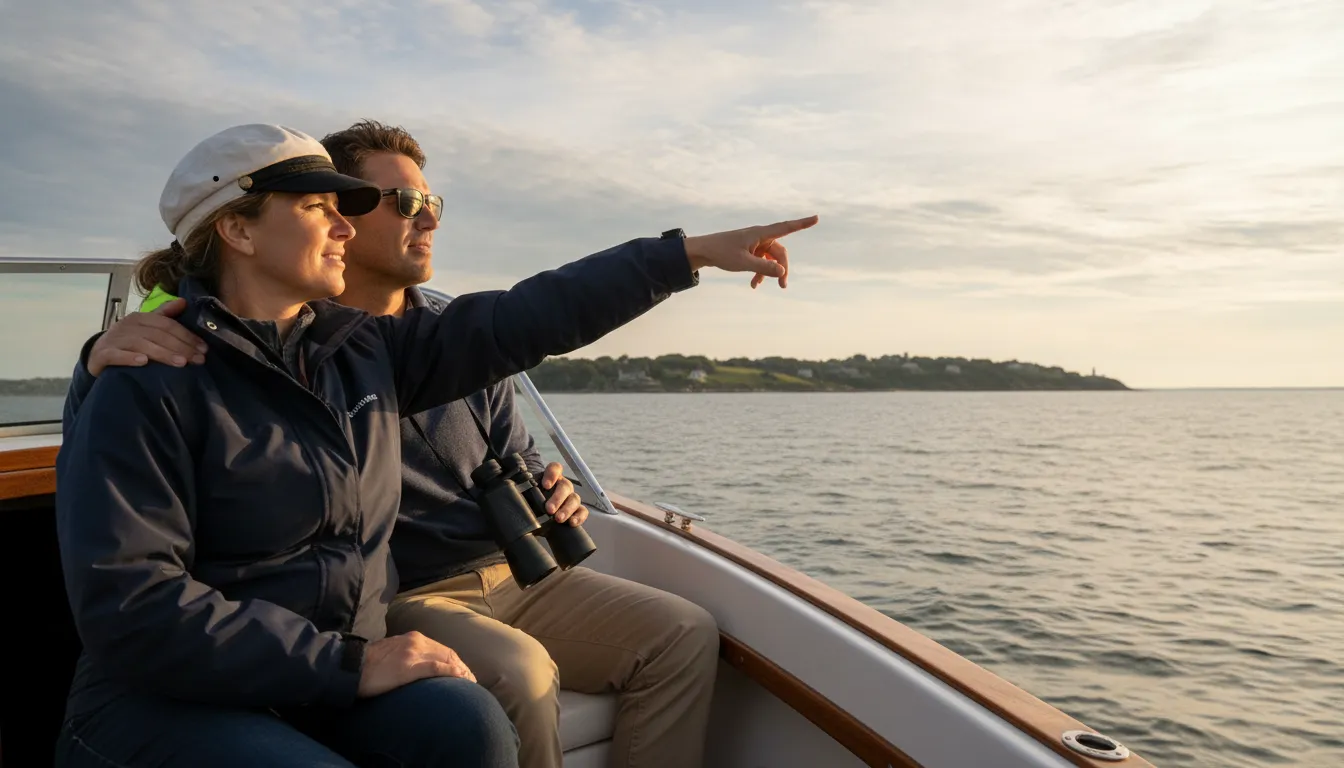
Wind direction matters as much as wind speed. Wind against tide can create steeper, more uncomfortable waves, while a forecast that looks manageable offshore may feel different inside a narrow channel or open harbor.
Recheck conditions during the trip, especially when the wind shifts or visibility falls. Fog is a reason to slow down, improve lookout procedures, use navigation lights as required, and consider turning back if you cannot confidently identify traffic, markers, or shoreline.
Lightning and thunderstorms call for conservative decisions. Leave exposed water early and identify possible safe harbors before conditions deteriorate. Carefree’s weather protocols address real-time monitoring, go or no-go decisions, lightning, fog, storm avoidance, and safe-harbor identification.
Local access does not remove the need for judgment. A trip starting in Boston may involve Boston Harbor, the Harbor Islands, or the Atlantic Ocean. From Danvers, conditions can change between the Danvers River, Salem Sound, and areas toward Marblehead. Gloucester provides access to Gloucester Harbor and the Atlantic Ocean. These are planning references, not promises that any route or day will be safe.
Why Does Cold Water Change the Decision?
Warm air can disguise dangerously cold water, particularly during a Massachusetts spring. Cold shock can cause sudden changes in breathing, heart rate, and blood pressure. The first two or three minutes may involve involuntary gasping or rapid breathing.
Cold shock can impair clear thinking, while physical incapacitation may affect the arms, legs, hands, and feet within seconds. Wear a properly fitted life jacket, dress for immersion rather than the air temperature, and keep children and weaker swimmers under close supervision.
If someone falls in, focus first on keeping them afloat and getting help rather than assuming they can swim back to the boat. For beginners, the best weather habit is simple: check, interpret, reassess, and be willing to cancel.
How Does Hands-On Training Build Beginner Confidence on Massachusetts Water?
Confidence on the water comes from practicing decisions and boat-handling skills before a busy moment demands them. Carefree Boat Club provides training both on and off the water, with instruction tailored to each member’s experience. That makes the first outing less about memorizing a checklist and more about learning how to prepare, communicate, maneuver, and respond thoughtfully.
The beginner-focused Boating 101 sequence starts with choosing an appropriate boat, checking the weather, reviewing safety priorities, and learning essential navigation. It continues through launching, on-water operation, boating etiquette, and docking. Members can review the club process on land, then apply each skill with an instructor aboard. Explore the club’s on-the-water training for beginners to see how the sequence supports new boaters.
What happens during practical boat familiarization?
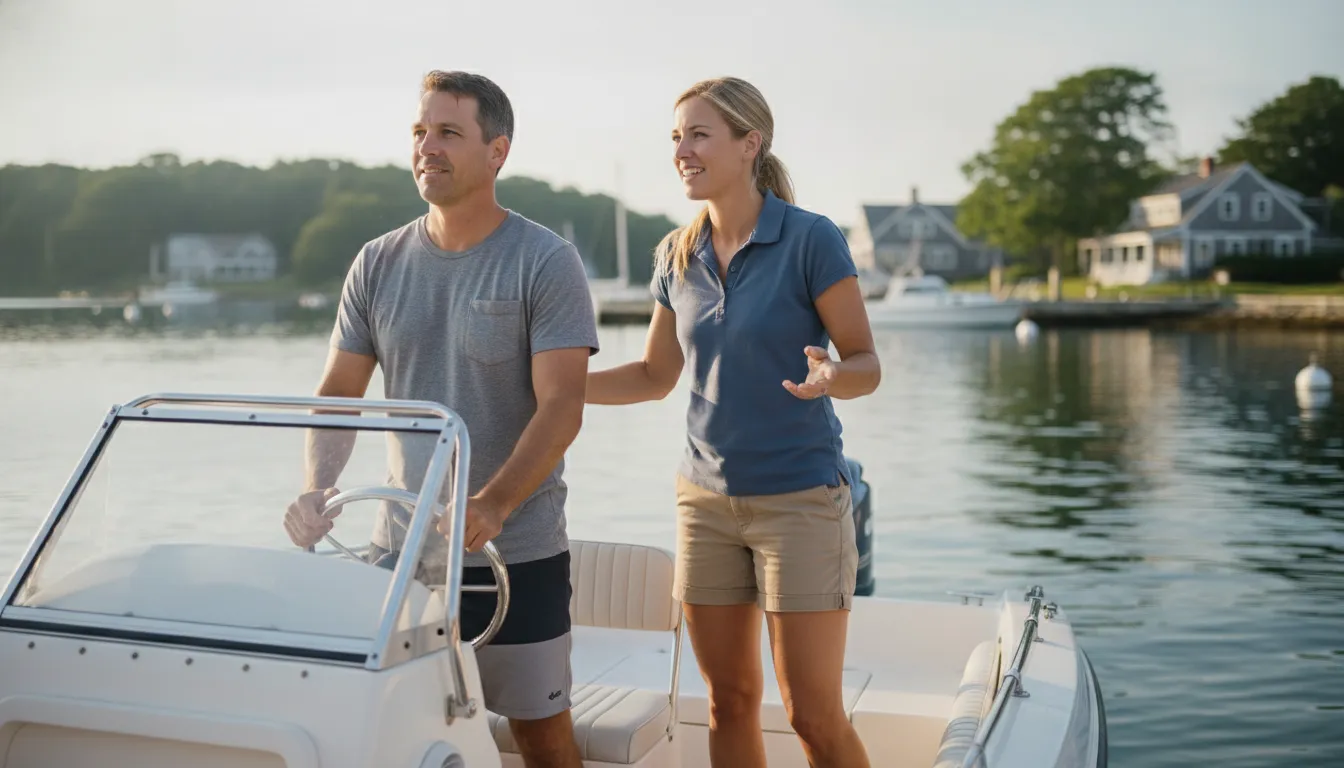
Instruction can cover safety-equipment identification, motor operation, launching, and the controls specific to the boat being used. A VHF radio is a marine communication tool, and training introduces proper radio procedures. GPS instruction helps a beginner read the boat’s position and plan a route, while local-water practice adds context that a generic lesson cannot provide.
That local context matters around Boston Harbor, the Harbor Islands, and the North Shore. Training can address channels, local hazards, no-wake zones, and mooring balls, which are floating or fixed points used to secure a boat. Members interested in Boston Harbor boating can connect these skills to the waters they plan to explore. The goal is not to promise that every trip will be easy. It is to help the operator recognize conditions, slow down, ask questions, and make a sound go-or-no-go decision.
How does training prepare boaters for changing conditions?
Carefree’s safety instruction includes weather awareness, fog navigation, lightning safety, storm avoidance, and identifying safer harbors when conditions change. Emergency practice covers man-overboard response, fire suppression, taking on water, medical emergencies, and abandoning ship. Rehearsing these steps can make communication more orderly if a problem occurs, while ongoing practice helps skills stay familiar.
Boat readiness supports that learning. Carefree reports weekly dock-staff inspections using a 50-point checklist that covers safety equipment, hull condition, electronics, and general mechanical items. Inspection topics include life vests, fire extinguishers, first aid supplies, signaling devices, anchors and lines, steering, bilge pumps, GPS, radios, navigation lights, and depth finders.
For families and first-time operators, this combination of instruction, local knowledge, and ongoing support offers a practical alternative to learning alone. Carefree members also receive reciprocal access at more than 150 participating locations, a benefit for exploring beyond Massachusetts while continuing to use the habits learned locally. Learn more about a Massachusetts boat club and how its training approach can support your next step.
Book Your Carefree Boat Club Tour Today.
Frequently Asked Questions About Beginner Boating Safety in Massachusetts
Do I need a boating safety certificate for a first trip in Massachusetts?
Massachusetts is phasing in boater safety certificate requirements for motorboat and personal watercraft operators beginning April 1, 2026. Requirements can depend on the vessel and operator, so check the current guidance from the Massachusetts Environmental Police before departure. A certificate is not a substitute for learning the boat, route, equipment, and emergency procedures.
What should every beginner do before leaving the dock?
Make sure every passenger has a properly fitted, U.S. Coast Guard-approved wearable life jacket. Review the route, weather, communication plan, and basic onboard rules. Share a float plan with a trusted person, including the boat description, passengers, route, expected return, and check-in plan. The U.S. Coast Guard says float plans are useful for small craft as well as larger vessels.
How should beginners decide whether the weather is suitable?
Check the marine forecast immediately before departure for wind, waves, visibility, advisories, and significant weather. Treat the forecast as a planning range, not a guarantee, because conditions can be higher or lower than predicted. If wind, waves, fog, lightning, or a developing storm exceeds your comfort or experience, postpone the trip or return early.
Where can a new boater get hands-on practice?
Carefree Boat Club provides tailored instruction on and off the water. Training covers boat familiarization, navigation, VHF radio procedures, docking, local hazards, and emergency response. Beginners can ask about on-the-water training for beginners before planning a first trip from Boston, Danvers, or Gloucester.
Ready to Prepare for Your First Massachusetts Trip?
A thoughtful introduction can help you feel more comfortable with the boat, local waters, and the decisions that support a careful day on the water. Carefree Boat Club can explain how its Massachusetts locations and hands-on training fit into your boating goals.