
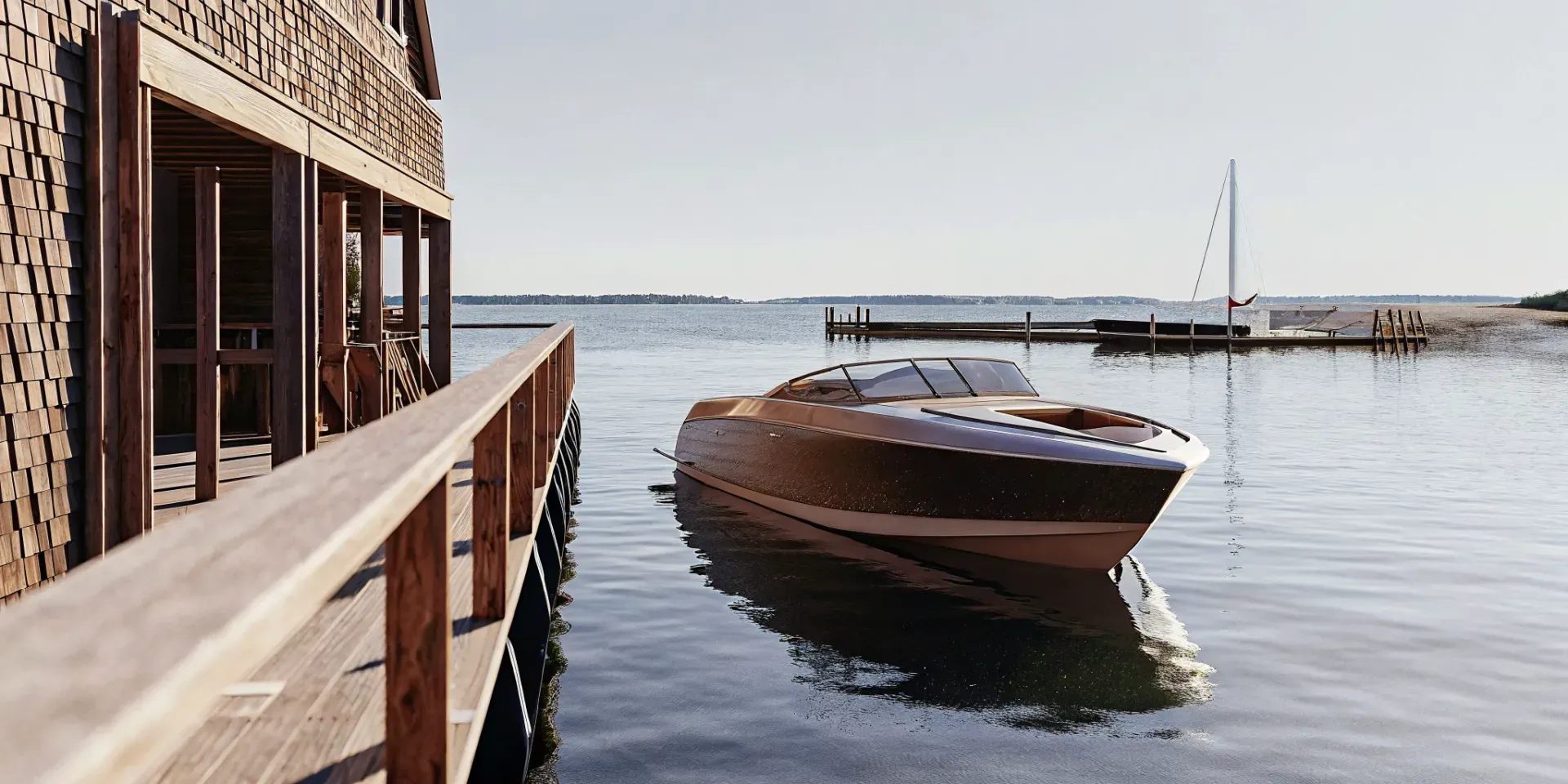
The sticker price on a speed boat is just the first number in a long equation. It’s the most visible cost, but it’s often the smallest part of the total financial commitment. The true cost of ownership is found in the recurring expenses that come long after the initial purchase. We’re talking about the surprisingly high fuel bills, the annual insurance premiums, the constant maintenance needed to fight saltwater corrosion, and the hefty fees for off-season storage. Before you fall completely in love with a boat, it’s essential to understand the full financial picture. This guide breaks down the real costs, so you can make a clear-eyed decision about what it truly takes to own a speed boat.
Key Takeaways
- Speed boats are more than just racers: The term includes a whole family of boats, like versatile bowriders and rugged center consoles, each built for different activities. Their shared features are a planing hull and a powerful engine, which create that signature high-performance experience.
- Ownership costs go far beyond the sticker price: Before buying, you need to account for significant ongoing expenses. These include frequent fueling, annual insurance premiums, constant maintenance to prevent corrosion, and necessary winterization and storage fees.
- You can get the thrill without the hassle: A boat club membership is a smart alternative to ownership. It gives you access to a variety of professionally maintained boats, but you don’t have to deal with the cleaning, repairs, insurance, or off-season storage.
What Is a Speed Boat?
A speedboat is exactly what its name implies: a powerboat built for speed. What sets them apart is a combination of a powerful engine and a specific hull design that helps the boat lift out of the water and glide across its surface, a process known as “planing.” This is what creates that thrilling, wind-in-your-hair experience that speedboat enthusiasts love. When you picture a speedboat, you might imagine a sleek, low-profile racing machine, and you wouldn’t be wrong. However, the term is broader than you might think, covering a whole family of fast boats, each with its own purpose and style.
From family-friendly bowriders perfect for a day trip to powerful offshore vessels designed for the open ocean, the common thread is their ability to deliver an exciting, high-performance ride. Our diverse fleet includes several types of speed boats, giving you a chance to find the perfect match for your ideal day on the water. Whether you’re planning to cruise out of Boston or explore the beautiful coastline near our Gloucester location, there’s a speedboat ready for your adventure. Understanding what makes a boat a “speedboat” is the first step in deciding which kind of experience you want to have.
How They Differ from Other Watercraft
The main difference between a speedboat and other motorboats comes down to priorities. Speedboats are engineered for performance above all else. Their design focuses on achieving high speeds and agile handling, making them feel more like sports cars on the water. In contrast, other watercraft like pontoon boats or cruisers prioritize things like maximum seating capacity, leisurely comfort, and a smoother, slower ride. While you can certainly relax on a speedboat, its primary function is to move quickly and provide an exhilarating experience, which sets it apart from more comfort-focused models.
What Are Speed Boats Used For?
While speed is their main feature, these boats are surprisingly versatile. Their power and agility make them perfect for a wide range of activities, so you’ll see them used for much more than just going fast. Some of the most common uses include:
- Water Sports: Their quick acceleration and ability to create a wake make them ideal for water-skiing, wakeboarding, and tubing.
- Leisure and Fun: Many speedboats are designed for fun in the sun. Larger models often have comfortable seating, sun pads, and even small bathrooms, making them great for day trips and exploring coastlines.
- Transportation: In areas with many islands or waterfront destinations, a speedboat is an efficient way to get from point A to point B quickly.
- Patrol and Rescue: Because of their speed, law enforcement and coast guard agencies often use these boats for patrolling waterways and responding to emergencies.
Exploring the Types of Speed Boats
“Speed boat” isn’t a one-size-fits-all term; it covers a whole family of boats, each with its own personality and purpose. Choosing the right one depends entirely on what your perfect day on the water looks like. Are you planning relaxed family cruises around Boston Harbor? Or are you dreaming of cutting through the waves off the coast of Gloucester? Maybe you’re all about waterskiing with friends on the Danvers River. Each of these activities points to a different type of boat, designed with specific features to make that experience better.
Understanding the main categories helps you figure out what you’re looking for. From the family-friendly bowrider to the angler’s favorite center console, each design offers a unique experience on the water. This is one of the best parts of exploring boating through a club membership; you can try different types of boats to see what you truly enjoy without the massive financial commitment of buying one. Our diverse fleet includes a variety of styles, so you can find the perfect match for any adventure, whether it’s a quiet morning of fishing or an exciting afternoon of tubing. Let’s walk through some of the most popular types of speed boats you’ll see out on the waters of Massachusetts.
Bowriders
If you picture a classic, versatile family boat, you’re probably thinking of a bowrider. These boats get their name from the open seating area in the bow (the front), which creates a fun, social space for passengers to enjoy the ride. Ranging from about 17 to 35 feet, they have plenty of room for friends and family. Their V-shaped hull is a key feature, allowing them to handle turns with agility and cut through the water smoothly. This design, combined with strong powertrain options, makes them fantastic all-rounders, perfect for everything from a leisurely cruise to an exciting afternoon of water sports.
Runabouts
Runabouts are the compact and zippy cousins in the speed boat family. Typically between 14 and 25 feet, they are designed for pure and simple fun on the water. Their smaller size makes them incredibly easy to handle, which is great for new and experienced boaters alike. Think of them as the perfect vessel for day cruising, casual fishing, or pulling a tube. Because they are so versatile and straightforward, many people consider the runabout boat to be an ideal entry point into the world of powerboating. Their manageable size also means they are generally easier to trailer and store, though that’s something our members never have to worry about.
Jet Boats
What makes a jet boat special is what you can’t see: its engine. Instead of a traditional propeller, a jet boat pulls water in and then shoots it out at high velocity to move forward. This jet propulsion system gives them incredible acceleration and allows them to make sharp, thrilling turns. It also means they have a very shallow draft, so they can operate in waters that are too shallow for other boats. This makes them a fantastic choice for exploring coves and getting close to the beach. The lack of an external propeller is also a great safety feature for swimming and watersports.
Offshore and Go-Fast Boats
For the true thrill-seeker, offshore and go-fast boats are built for one thing: performance. These boats are engineered to handle the open ocean and slice through rough waters at high speeds. They get their stability from a deep-V hull design, which provides a smoother ride when conditions get choppy. Paired with incredibly powerful engines, these boats are popular for long-distance cruising and performance events. While they are the epitome of power on the water, their specialized design often means sacrificing some of the passenger space you’d find on a more family-oriented boat.
Center Console Boats
You can spot a center console boat from a mile away. The helm and controls are mounted in a console in the middle of the boat, creating an open layout with 360-degree access to the water. This design is a dream for fishing enthusiasts, as it allows you to cast your line from anywhere on the boat without obstruction. They are built to be rugged and practical, with plenty of space for gear and passengers. Equipped with powerful engines, center consoles are true workhorses, equally at home on a fishing trip off the coast of Gloucester or on a family outing in the bay.
Key Features to Look for in a Speed Boat
When you picture a speed boat, you might just think “fast.” But so many details contribute to a boat’s performance, feel, and function. Understanding these key features will help you figure out what kind of boat truly fits your vision for a perfect day on the water. From the shape of its body to the power of its engine, each element plays a crucial role. Looking at a diverse fleet of boats is a great way to see these differences firsthand. Whether you’re planning to buy or just want to be a more knowledgeable boater, here are the core components to pay attention to.
Hull Design
The secret to a speed boat’s thrilling ride starts with its hull, which is the main body of the boat. Most speed boats have what’s called a “planing hull.” Instead of plowing through the water, this design allows the boat to lift up and skim across the surface as it gains speed. This reduces friction and allows the boat to move much faster and more efficiently. It’s this planing action that creates that feeling of flying across the water, making for an exhilarating experience whether you’re cruising near Boston or exploring the coastline.
Engine Type and Power
A speed boat’s heart is its engine. These powerful machines are what give the boat its incredible acceleration and high top speeds, often reaching between 69 and 115 miles per hour. Of course, all that power requires a good amount of fuel, which is an important factor to consider. The boat’s ultimate speed isn’t just about the engine, though. It’s a combination of horsepower, the hull’s shape, the boat’s total weight, and even the water conditions on any given day. A powerful engine ensures you can handle different situations with confidence.
Weight and Materials
To achieve high speeds, boats need to be both strong and lightweight. That’s why most modern speed boats are constructed from materials like fiberglass or aluminum. Fiberglass is popular because it can be molded into complex, hydrodynamic shapes that cut through the water with ease. Aluminum is another excellent choice, known for its durability and light weight. These materials help the boat get up on a plane quickly and stay nimble, but they also require specific care to keep them in top condition for years of enjoyment.
Propulsion System
The propulsion system is what turns engine power into forward motion. Speed boats typically use one of two systems: a propeller or a jet drive. A traditional propeller uses blades to push water backward, propelling the boat forward. A jet drive works a bit differently; it pulls water into the unit and then shoots it out in a high-velocity stream to create thrust. Each system offers a unique feel and handling characteristics. Exploring boats with different propulsion systems, like those in a varied club fleet, can help you discover which one you prefer.
Size and Seating Capacity
Speed boats come in a wide range of sizes, from smaller 13-foot models perfect for a quick spin to larger vessels over 39 feet long designed for bigger groups and longer trips. Before you get attached to a specific boat, think about how you plan to use it. Will it be for solo adventures, romantic sunset cruises, or fun-filled days with family and friends? The right size and seating capacity ensure everyone is comfortable and safe. This is where a flexible membership can be a game-changer, allowing you to pick the perfect-sized boat for each outing.
The Real Cost of a Speed Boat
Falling in love with a sleek speed boat is easy, but before you sign on the dotted line, it’s smart to look beyond the sticker price. The total cost of ownership involves a lot more than the initial purchase. From fuel to insurance and those surprise repairs, the expenses can add up quickly. Let’s break down the real costs you should budget for so you can make an informed decision.
The Purchase Price
Let’s talk numbers. The initial purchase is the biggest line item, and the price range is wide. For example, popular Yamaha sport boats can start around $40,000 for a 19-foot model and climb to nearly $200,000 for larger, more luxurious versions. The final price depends on the boat’s size, engine power, and extra features. Whether you’re buying new or used, this initial investment is just the beginning of your financial commitment. It’s the ticket to entry, but the ride has ongoing costs.
Fuel Costs
A powerful engine is part of the fun of a speed boat, but it comes with a powerful thirst for fuel. Unlike filling up your car, topping off a boat’s gas tank can make a serious dent in your wallet, and you’ll be doing it often. Fuel consumption isn’t a fixed number; it changes based on your engine size, how fast you’re going, the weight on board (think friends and gear), and even the water conditions. Planning a day on the water means you also have to plan and budget for the fuel you’ll use, which can quickly become one of your most significant recurring expenses.
Insurance Premiums
Just like with a car, you can’t skip out on insurance. Protecting your investment and yourself is non-negotiable. The cost of boat insurance varies quite a bit, with annual premiums for speed boats typically running anywhere from a few hundred to a couple of thousand dollars. According to estimates, you could be looking at a range of $409 to $1,879 per year. What you’ll actually pay depends on factors like the boat’s value, its horsepower, where you’ll be boating in Massachusetts, and your own boating experience. It’s a necessary expense that adds another layer to your annual budget.
Maintenance and Storage Fees
Here’s where the hidden costs of boat ownership really start to surface. Boats, especially those used in saltwater, require constant upkeep to stay in prime condition. The marine environment is tough on equipment, making electrical failures and corrosion common issues that need regular attention. Then there’s winter. In Massachusetts, you can’t just leave your boat in the water year-round. You’ll need to pay for winterization services and storage, which can add thousands to your annual costs. When you add it all up, these responsibilities are why many people explore a club membership as a simpler way to get on the water.
Your Pre-Purchase Inspection Checklist
Walking through a pre-purchase inspection is one of the most important steps you’ll take before buying a speedboat. It’s your chance to spot potential issues that could lead to expensive repairs and unsafe conditions down the road. Think of it as your final exam before making a major investment. A thorough check can save you from a lot of future headaches and ensure the boat you’re considering is seaworthy and sound. While our club fleet is always professionally maintained and ready to go, a private purchase requires you to be the expert. Get ready to look closely at every detail, from the engine block to the electrical wiring.
This checklist is your guide, but don’t hesitate to bring in a professional marine surveyor for a second opinion. Their trained eye can catch things an amateur might miss, and their report can be a powerful negotiating tool or the red flag that saves you from a bad purchase. Approach this inspection methodically and don’t let excitement cloud your judgment. A beautiful boat with a hidden fatal flaw is still a flawed boat. Take your time, ask questions, and be prepared to walk away if things don’t add up. This diligence is what separates a happy boat owner from one who’s stuck with a money pit.
Engine and Mechanicals
The engine is the heart of any speedboat, so give it your full attention. Start by asking for service records to see how well it’s been maintained. On visual inspection, look for any signs of leaks, corrosion, or cracked hoses. Engine problems like overheating are common, often because the cooling system gets blocked. Since boat engines use water to stay cool, even a small blockage in the intake can cause major trouble. If possible, get a sea trial to see how the engine performs under load. Listen for any strange noises, watch the temperature gauge, and feel for excessive vibration. Don’t be shy about hiring a marine mechanic to do a professional assessment; it’s money well spent.
Hull and Gelcoat Condition
The condition of the hull directly impacts the boat’s performance and safety. Start by looking at the boat out of the water. Carefully inspect the entire surface for blisters, deep scratches, and cracks in the gelcoat, especially around fittings like cleats and railings. Run your hand along the bottom to feel for any uneven spots that might indicate a past repair. Hull and gelcoat damage isn’t just a cosmetic flaw; it can compromise the structural integrity of the boat. Pay close attention to the transom (the back wall of the boat) where the engine is mounted, checking for any signs of stress or flexing.
Electrical System
A boat’s electrical system lives in a harsh, wet environment, making it prone to issues. In fact, electrical failures are one of the most frequent problems boat owners face. Begin your check at the battery. Look for clean, tight connections and no signs of corrosion. From there, test every single electrical component on the boat. Flip every switch, check all the navigation and cabin lights, test the horn, and power on the GPS and radio. Look at the wiring under the console. It should be neat and well-organized, not a tangled mess of wires, which can be a fire hazard and a nightmare to troubleshoot.
Onboard Safety Gear
Finally, confirm the boat has all the legally required safety equipment. This isn’t just about being prepared; it’s about complying with Coast Guard regulations. Check for a marine-rated fire extinguisher that is not expired and is easily accessible. The boat must have enough properly-sized personal flotation devices (PFDs) for its maximum passenger capacity. You should also find a full set of visual distress signals, like flares or an electronic light, and a sound-producing device such as a horn or whistle. Having the right safety equipment on board from day one is non-negotiable for safe boating.
Common Speed Boat Myths, Busted
When you think of a speed boat, what comes to mind? Is it a high-octane race across the water or a massive fuel bill? Speed boats are surrounded by a lot of assumptions, and it’s easy to get the wrong idea. Before you get too far into the buying process, let’s clear up a few common myths. Understanding the reality behind these boats can help you decide if owning one is the right move for you, or if a different approach to boating might fit your lifestyle better. Let’s separate fact from fiction.
Myth: They’re Only for Racing
Many people picture speed boats as sleek racing machines built for nothing but pure velocity. While some are definitely designed for competition, most speed boats are incredibly versatile. Think of them as the multi-purpose tool of the water. A bowrider, for example, is perfect for a relaxed family cruise around the harbor or for towing a water skier. Many of the boats in our diverse fleet are ideal for everything from a quiet afternoon of fishing to an exciting day of water sports with friends. They offer a great balance of performance and comfort, making them suitable for all kinds of recreational fun, not just breaking speed records.
Myth: You Don’t Need a License to Drive One
This is a big one, and believing it can get you into trouble. While rules vary by state, you can’t just hop into a powerful boat and take off without the proper credentials. In Massachusetts, for instance, anyone between the ages of 12 and 15 must complete a boating safety course to operate a motorboat without adult supervision. For those 16 and older operating a personal watercraft (like a Jet Ski), a safety certificate is also required. It’s always your responsibility to know and follow the local boating laws. This is one area where a club membership simplifies things, as we provide all the on-water training you need to feel confident and safe at the helm.
Myth: They Can’t Handle Rough Water
The idea that speed boats are only suited for glassy, calm lakes is another common misconception. The truth is, it all depends on the boat’s design. A smaller runabout might be best for protected bays, but many speed boats, especially offshore and center console models, are built to perform beautifully in choppy seas. These boats have deep-V hulls designed to cut through waves, providing a smoother, more stable ride. If you plan on boating in open water, like the ocean off our Gloucester location, you need a vessel designed for those conditions. This is where owning a single boat can be limiting, as it might not be right for every adventure you want to take.
Myth: They’re All Gas Guzzlers
It’s true that a powerful engine can drink a lot of fuel, but it’s not a given that every speed boat will drain your wallet at the pump. Fuel consumption depends on many factors: the engine’s size and efficiency, how fast you’re going, the weight of passengers and gear, and even the water conditions. Modern marine engines are becoming more fuel-efficient, and by operating the boat smoothly, you can manage your fuel usage. Still, fuel is a significant and unpredictable expense of boat ownership. With a club membership, you don’t have to worry about fluctuating gas prices or the hassle of refueling after every trip, as it’s all handled for you.
Essential Speed Boat Maintenance
Owning a speed boat means becoming a part-time mechanic, cleaner, and inspector. These powerful boats require consistent attention to stay safe and reliable. Unlike a car you can park and forget, a boat is in a constant battle with the elements, especially in a marine environment. Getting ahead of maintenance is the only way to protect your investment and ensure your time on the water is fun, not frustrating. From the engine to the hull, every part of your boat needs a regular check-up. This isn’t just about keeping it looking good; it’s about preventing small issues from turning into costly, trip-ruining disasters. The reality is that the work continues long after you’ve docked, and being prepared for these tasks is a non-negotiable part of ownership.
Cleaning and Preventing Corrosion
The beautiful saltwater off the coast of Massachusetts is incredibly corrosive. After every single trip, you need to rinse your boat, trailer, and engine with fresh water to wash away salt deposits that can eat away at metal, fiberglass, and electrical components. Moisture is a boat’s biggest enemy, leading to corroded wires and failed connections, which are some of the most common and frustrating issues to fix. Take the time to regularly check electrical systems, clean battery terminals, and use a marine-grade anti-corrosion spray on metal parts to keep everything in working order. This simple habit is one of the most effective things you can do to extend your boat’s life.
Engine, Battery, and Fuel System Care
Your boat’s engine is its heart, and it needs careful monitoring. Unlike a car, a boat engine uses the surrounding water for cooling. If the intake gets clogged with seaweed or the rubber impeller fails, your engine can overheat in minutes, causing serious damage. You also need to stay on top of the battery. A dead battery can leave you stranded, so regularly check its charge and keep it on a tender during long periods of inactivity. To avoid fuel system problems, which can clog your engine, use a fuel stabilizer if the boat will sit for a while and always inspect fuel lines and filters as part of your routine.
How to Store Your Boat Properly
When the boating season ends, the work doesn’t stop. Properly storing your boat is crucial for its long-term health, especially during a New England winter. You can’t just leave it with a full tank of gas; this can lead to fuel degradation and system clogs. Instead, you should add a fuel stabilizer and run the engine to circulate it. The battery also needs special care and should be removed and stored in a cool, dry place where you can keep it charged. This is all in addition to winterizing the engine itself, which involves flushing the cooling system and changing the oil. It’s a lot of work, but it’s the only way to ensure your boat is ready for next season.
Speed Boat Safety 101
Zipping across the water is an incredible feeling, and a little preparation goes a long way in keeping your day fun and stress-free. Safety isn’t about a list of rules that get in the way; it’s about being prepared so you can handle any situation with confidence. Before you head out from the dock, you’ll want to have the right gear and a basic understanding of the local rules of the water. It’s the key to making sure every trip is a great memory for you and your passengers.
Must-Have Safety Gear and PFDs
Think of this as your on-the-water toolkit. Equipping your boat with the right gear is non-negotiable for every trip. The U.S. Coast Guard has a list of essential safety equipment that every boater should have, and it’s a great place to start. At a minimum, this includes enough personal flotation devices (PFDs), or life jackets, for every single person on board. You’ll also need a throwable flotation device, a fire extinguisher, visual distress signals like flares, and a sound-producing device such as a horn or whistle. Before you leave the dock, do a quick check to make sure everything is on board and easily accessible.
Massachusetts Boating Laws to Know
Beyond having the right gear, you need to know the local rules. Every state has its own boating laws, and Massachusetts is no exception. One of the most important rules is about life jackets: children under 12 must wear a PFD at all times, and there must be a properly fitting one available for every other person on your boat. Another key law involves fire extinguishers. If your speed boat has an inboard engine, a closed fuel compartment, or a permanently installed fuel tank, you are required to have a fire extinguisher on board. Knowing these rules helps you stay safe and avoid fines. The specific safety equipment required on your boat can vary by boat size, so it’s always a good idea to double-check.
Is Owning a Speed Boat Right for You?
This is the big question, isn’t it? Owning a speed boat can be an incredible experience, opening up a world of freedom and fun on the water. But it’s a lifestyle, not just a hobby. Before you take the plunge, it’s worth thinking about what you truly want from your boating experience. Are you excited by the idea of being a captain in every sense of the word, including the hands-on work? Or are you chasing the pure, unedited joy of being on the water without the extra responsibilities? There’s no wrong answer, but being honest with yourself is key. The answer depends on how you feel about the work that happens when the boat is tied to the dock. From off-season storage and winterization to unexpected repairs, the commitment goes far beyond your time on the water. Let’s look at what boat ownership really involves and explore another way to get your boating fix.
The Hidden Work of Boat Ownership
The dream of boat ownership often features sunny days and open water, but it rarely includes the off-season chores. The reality is that a boat requires constant attention to stay in top shape. Many of the most common boat maintenance issues happen behind the scenes. You’ll need to check the battery’s charge, use fuel stabilizers for storage, and inspect electrical systems for corrosion, which happens quickly in a marine environment. These aren’t one-time fixes; they are ongoing responsibilities. This hidden work is a significant part of the ownership experience, demanding your time, money, and energy long after you’ve docked for the day.
A Simpler Way to Boat: The Club Alternative
If your goal is to spend more time boating and less time on upkeep, there’s a much simpler path. A boat club membership offers all the thrill of having a speed boat at your disposal without any of the hassles of ownership. Imagine this: you reserve a boat, head to the dock, and it’s clean, fueled, and ready to go. When you return, you just hand over the keys. All the maintenance, cleaning, insurance, and storage are handled for you. You get access to a whole fleet of different boats, so you can choose the perfect one for your day’s adventure. It’s the ideal way to enjoy the water if you’d rather focus on making memories than on maintenance checklists.
Frequently Asked Questions
Is a speed boat a good choice for a beginner? Some speed boats are excellent for beginners, especially smaller runabouts or bowriders that are known for their easy handling. The key is not the boat itself, but the training you get with it. Learning how to dock, handle different water conditions, and understand the rules of the water is what builds confidence. This is why proper training is so important, as it gives you the skills to feel comfortable and in control at the helm, no matter your experience level.
Are speed boats safe for families with children? Yes, many speed boats are designed with families in mind. Models like bowriders offer deep, secure seating and plenty of space for everyone to spread out. The most important factors for family safety are choosing the right boat for the conditions, having properly fitting life jackets for everyone (especially children under 12, who must wear one at all times in Massachusetts), and operating the boat responsibly. A day on the water can be a fantastic family activity when you’re well-prepared.
How do I choose the right type of speed boat for me? The best way to choose is to think about what you want to do on the water. If you dream of pulling friends on a wakeboard or tube, a bowrider or jet boat has the power and design for watersports. If your perfect day involves casting a line and looking for the best fishing spots, a center console with its 360-degree access is your best bet. If you just want to cruise with a few people and explore the coastline, a classic runabout is a perfect fit. Your activity dictates the ideal boat.
Besides fuel, what’s the most overlooked cost of boat ownership? The most overlooked costs are almost always seasonal maintenance and storage. In a place like Massachusetts, you can’t leave a boat in the water year-round. This means you have to pay for it to be professionally winterized, hauled out of the water, and stored, which can cost thousands of dollars each year. Then there are the surprise repairs, like fixing a corroded electrical connection or replacing a worn-out part, that add up over time.
What’s the biggest difference between owning a boat and joining a boat club? The simplest answer is responsibility. When you own a boat, you are responsible for everything: the purchase price, insurance, cleaning, fuel, surprise repairs, winter storage, and all the hands-on maintenance. With a boat club membership, your only responsibility is to show up and have a great time. The club handles all the work of ownership, so you can focus purely on the enjoyment of being on the water.
https://shorturl.fm/HTE14
https://shorturl.fm/J5ahq
https://shorturl.fm/9DzZC
https://shorturl.fm/Pfp9r
https://shorturl.fm/y3STl
https://shorturl.fm/I9l6L
https://shorturl.fm/gwDdO
https://shorturl.fm/lzvjQ
https://shorturl.fm/Hy1h3
https://shorturl.fm/gLJJI
https://shorturl.fm/UbdiL
https://shorturl.fm/Abzs6
https://shorturl.fm/7oiZv
https://shorturl.fm/67hXx
https://shorturl.fm/oZFtA
https://shorturl.fm/0onQ2
https://shorturl.fm/cZJEQ
https://shorturl.fm/iRR4X
https://shorturl.fm/u2Fi0
https://shorturl.fm/quaih
https://shorturl.fm/Z01bx
https://shorturl.fm/36Gkl
https://shorturl.fm/RZPPz
https://shorturl.fm/gXHF8
https://shorturl.fm/8VffH
https://shorturl.fm/Ft2YB