
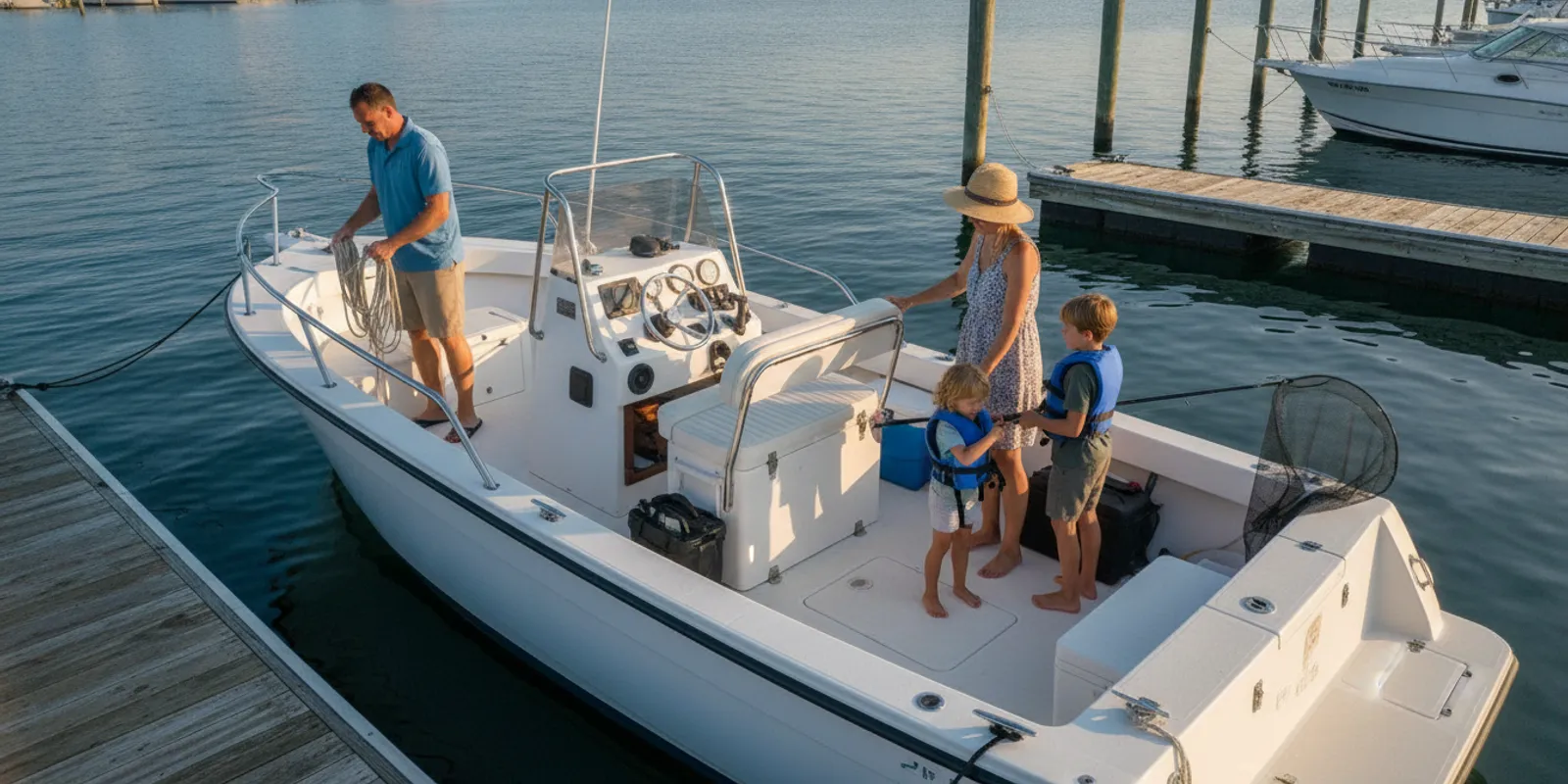
A center console boat puts the steering position near the middle of the deck, with open areas around it. That arrangement can suit fishing, harbor cruising, and mixed-use days, but the boat name alone does not tell you how comfortable or practical a particular vessel will feel. Massachusetts prospects should compare the actual layout with their crew, route, and plans for the day.
Schedule a tour and discuss your boating plans
What defines a center console boat?
The helm is the defining feature: steering, controls, and often the operator’s seat are arranged on a console around the centerline. The design leaves walkable deck space on one or both sides and usually toward the bow and stern. The width of those routes, the location of seats, and the amount of storage depend on the model and configuration.
This is a layout description, not a promise about equipment. Two center consoles can differ in passenger seating, shade, wind protection, storage, and facilities. Before choosing one, treat every advertised or assumed feature as a question to confirm for the specific boat. The Massachusetts fleet information is a useful starting point for understanding the available boat types, but a particular vessel’s details should be confirmed directly.
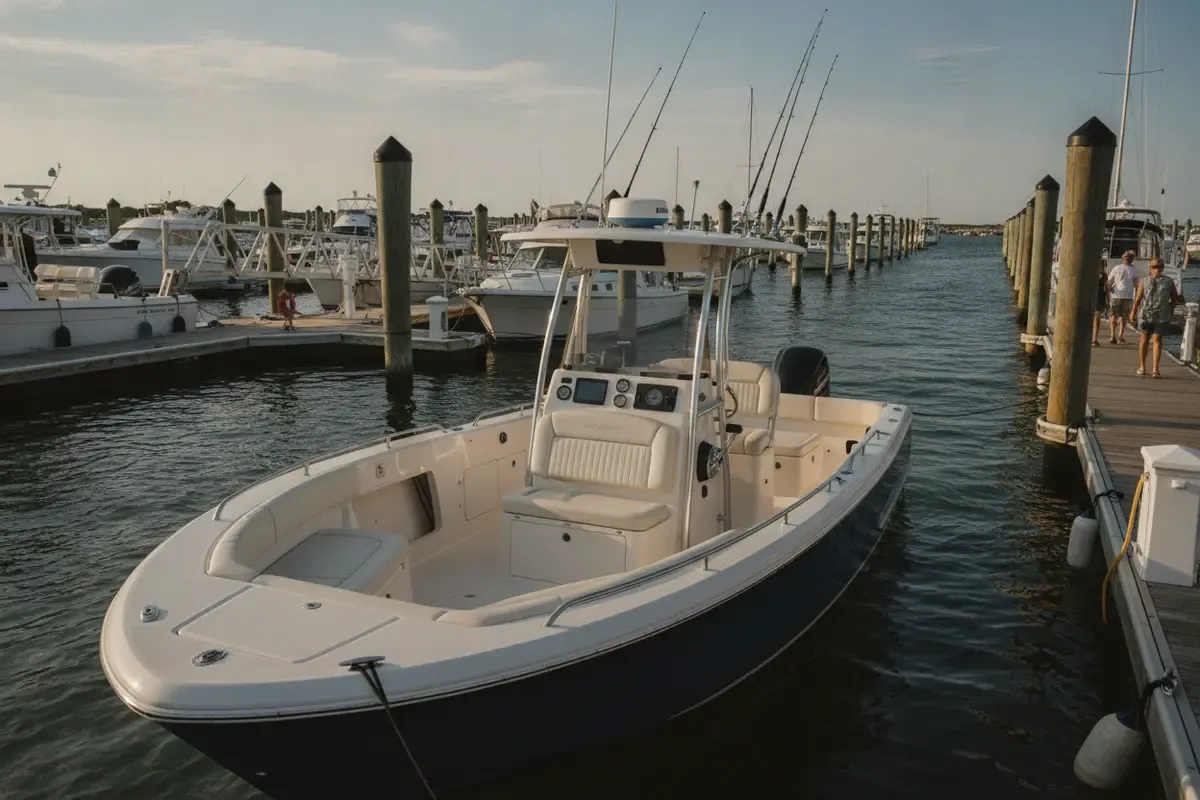
How can the open layout affect a day aboard?
Open deck space can make it easier to move between areas when the operator says it is safe to do so. An angler may value access to more than one working area, while a group on a short cruise may appreciate an airy view and a helm that feels connected to the passengers. The same open quality can also mean more exposure to sun, breeze, and rain than an enclosed design.
- Fishing plans: Ask where rods and tackle can be stored, whether gear will obstruct walkways, and whether passengers can sit out of the way while someone is working.
- Casual cruising: Count usable seats rather than simply estimating deck space. Consider whether everyone has a comfortable place to sit when the boat is underway.
- Mixed activities: Decide which activity is the priority. A layout that leaves lots of open deck may offer less seating, while additional seating can reduce clear working space.
- Helm and visibility: A central operator position can provide a broad view, but it does not eliminate blind spots or replace maintaining a proper lookout.
Try to picture the whole sequence, not just the time underway. Where will passengers board? Where will bags go? Can someone reach a seat without squeezing past the helm? Is there a clear place for safety equipment? Those practical questions help turn a general preference for an open boat into a decision based on how your group will actually use it.
What comfort tradeoffs deserve attention?
An open boat can be enjoyable on a bright, mild day, but weather reaches passengers directly. Shade may be limited or configuration-dependent, and a windscreen does not create an enclosed cabin. If your group includes someone who tires easily, gets cold quickly, or needs a sheltered place to rest, discuss that need before settling on a boat type.
Seat count is only one part of comfort. Look at where each seat faces, whether passengers can hold on while moving, and whether there is a sensible place for food, bags, and personal items. Ask whether storage is protected from spray and whether the boat has the facilities your outing requires. Never infer toilets, sinks, or other facilities from the phrase “center console”; confirm the exact vessel.
Plan for conditions with ordinary practical care. Bring sun protection, drinking water, and layers suited to the forecast. Keep loose items secured and walkways clear. Ask the operator when passengers should remain seated and whether anyone should move while underway. A trip that begins comfortably can feel different if wind rises or clouds move in, so comfort planning should include a simple response plan, not just what to pack at the dock.
How does a center console compare with other day-boat layouts?
Compare designs against the intended outing rather than treating one category as universally better. A center console emphasizes a centrally placed helm and access around it. A dual console separates helm and passenger zones with a second console. A pontoon generally uses a broad deck arranged around seating. These are broad descriptions; the actual boat and its features matter more than the label.
General arrangement
Center console: Central helm and open routes around it, depending on model
Dual console: Distinct helm and passenger-side console zones
Pontoon: Broad deck with seating as a central feature
What to check: Can your group board, move, and settle comfortably?
Possible priority
Center console: Flexible open deck use
Dual console: Balance between helm access and passenger seating
Pontoon: Social seating and open-air gathering
What to check: Which activity matters most on this trip?
Weather exposure
Center console: Open; shade and protection vary
Dual console: Open; protection varies by configuration
Pontoon: Open; cover varies by configuration
What to check: What cover is actually aboard?
Storage and facilities
Center console: Specific to the boat
Dual console: Specific to the boat
Pontoon: Specific to the boat
What to check: Where do bags go, and what facilities are available?
Best inspection
Center console: Walk the routes around the helm
Dual console: Compare both passenger and operator areas
Pontoon: Try the seats and access routes
What to check: Can you inspect the exact layout?
The table is a way to organize questions, not a ranking. Imagine a family outing with two adults, children, a cooler, and fishing gear. The central console might make access around the deck useful, but the family still needs enough seating and a safe place for the gear. For a primarily social outing, a seating-centered layout may deserve a closer look. The right answer depends on the people aboard, their comfort needs, and the planned activity.
How can Massachusetts prospects evaluate a specific boat?
Start with the crew and work outward. Write down the number of passengers, the ages and experience of the least confident people, and any mobility or comfort needs. Then describe the outing in a sentence: for example, “a relaxed afternoon cruise with four people” or “a fishing day where open working space matters.” This makes it easier to compare real features instead of getting distracted by a boat’s name or appearance.
- Check capacity and seats. Ask how many people the specific vessel can carry and where they can sit. Think about whether people can sit together and whether anyone will be left with an unsuitable position for the duration.
- Walk the boarding route. Notice how passengers get aboard and where they can steady themselves. If a child or older guest needs help, ask what assistance is appropriate.
- Trace the movement paths. Walk from the boarding point toward the bow, helm, and stern while the boat is docked. Identify narrow spots and places where gear could create a trip hazard.
- Review storage. Make a short list of what your group will bring, such as bags, food, fishing gear, and extra layers. Ask where each item can go without blocking routes or access to safety equipment.
- Confirm shelter and facilities. Ask specifically about shade, wind protection, seating, and onboard facilities on the vessel planned for use. Do not rely on generic descriptions of the boat class.
- Discuss operation and instructions. Ask what passengers should know before leaving the dock, when it is safe to move, and how the operator wants the group to respond if conditions change.
- Reassess against your main activity. If fishing is the priority, check gear handling and workable deck space. If cruising is the priority, revisit seating, shade, and passenger comfort. For a mixed day, identify the compromise you are willing to accept.
A useful test is to rehearse a few moments aloud: “Where does the cooler go?” “Where does a passenger sit while another person moves forward?” “What happens if the wind picks up?” Questions like these are concrete and reveal more than asking whether a boat is comfortable in general. You can compare the Boston location information, Danvers location information, and Gloucester location information while considering which departure area fits your plans; confirm current options with the club.
What should you prepare before leaving the dock?
Preparation starts with the operator’s briefing. Ask where passengers should sit during departure and docking, how to move about, and where safety equipment is kept. Make sure every passenger hears the instructions, including children and first-time guests. If any part is unclear, ask for it to be explained again before departure.
- Secure bags and loose gear; keep pathways and equipment access clear.
- Choose clothing for the forecast, including layers for changing wind or temperature.
- Bring water and sun protection appropriate to the length and conditions of the outing.
- Know where required safety equipment is stored and follow the operator’s directions about its use.
- Agree that the operator’s judgment takes priority if the plan needs to change because of conditions.
For example, if a group plans a warm afternoon cruise but the forecast suggests a breezy return, pack layers and avoid placing bags where they need to be moved later. If children are aboard, explain in simple terms where they should sit and that they must listen to the operator before moving. These small preparations make the open layout easier to use without treating it as risk-free.
Consult current forecasts and local advisories before departure. The U.S. Coast Guard’s recreational boating safety resources provide general preparation guidance. This source is not a substitute for local requirements, boat-specific instructions, or an operator’s assessment of current conditions.
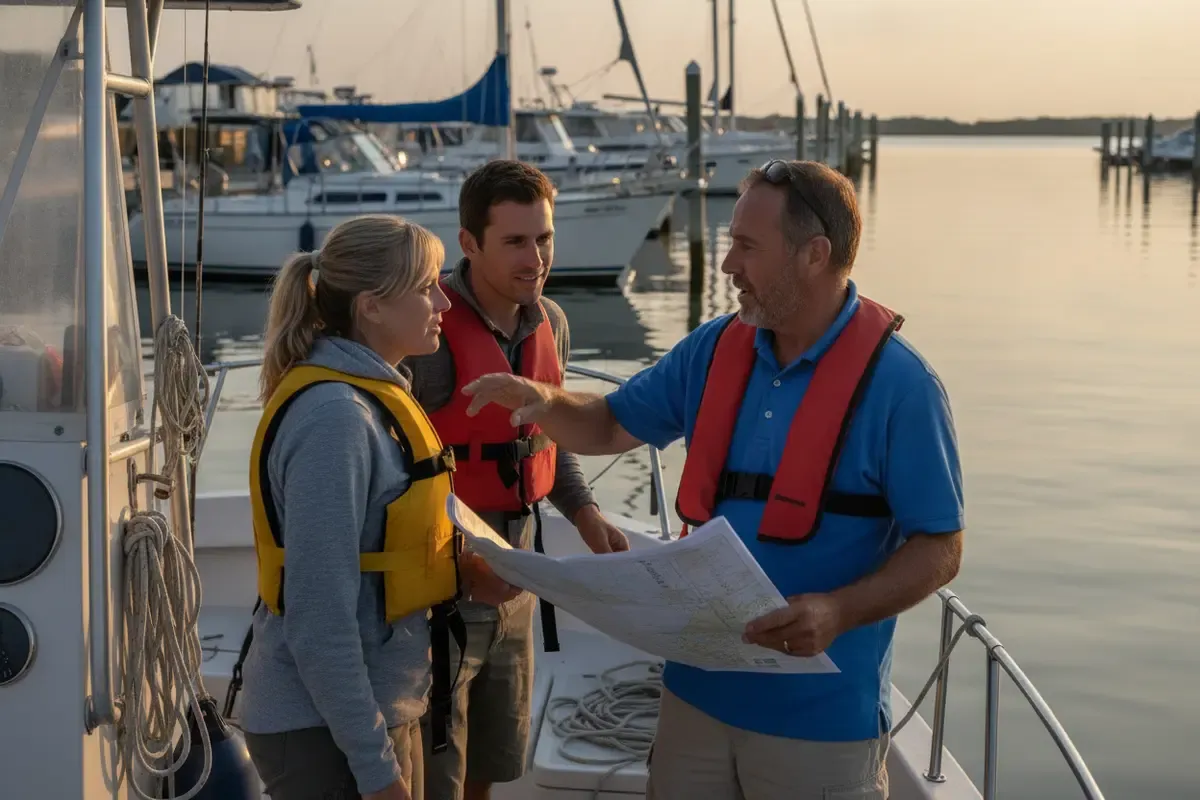
How can membership help you compare boat types?
Boat ownership is one route to getting on the water, but a membership is another way to consider boating access without taking on ownership responsibilities. Carefree Boat Club is a family-owned Massachusetts membership business with locations in Boston, Danvers, and Gloucester. Its fleet includes center consoles, dual consoles, and pontoons. The exact boat, equipment, and availability should be confirmed for a planned outing rather than assumed from the category.
A useful conversation begins with your intended use. Explain how many people usually join you, whether you fish or cruise, and what features matter most. Ask which boat types may fit those plans at the location you expect to use, how reservations work, and what training or support is relevant to your experience. Review the membership information and ask direct questions about the membership terms and access before deciding.
New boaters can also review the club’s Boating 101 resource and ask what instruction is suitable for them. Membership does not make every vessel identical, and a boat’s layout does not replace safe judgment. A family-owned business can offer a direct conversation with a real person; ask Karen or Eric about your actual plans and the questions you have, rather than relying on assumptions about any membership or boat.
Use the conversation to compare scenarios. If the boat you have in mind is set up for open deck work, ask what seating is available for the rest of your group. If your main concern is passenger comfort, ask what shade and facilities are present on the relevant vessel. For a family that expects to alternate between fishing and cruising, ask how to decide which layout best fits each outing and whether more than one boat type is available to consider.
Talk with the team and arrange a tour
What questions do prospective boaters ask?
Is a center console boat suitable for a family?
It may be, when the specific boat has suitable seating, usable routes, and features for the people aboard. Consider children’s ages, exposure to weather, and whether everyone can follow the operator’s instructions. Review the actual layout and ask about any needs that could affect comfort or safe movement.
Are center console boats only used for fishing?
No. The open arrangement may also suit cruising and other day outings. The balance of seating, storage, shade, and open space differs, so judge the specific boat against the activity rather than relying on a broad label.
Does every center console have the same facilities?
No. Facilities, equipment, shade, seating, and storage vary by boat. Confirm the details for the vessel you expect to use; the name of the layout is not an equipment list.
Can a beginner use a center console?
A beginner should get appropriate instruction and follow the operator’s expectations. Ask what training or support is appropriate for your experience, and choose conditions and plans that match your abilities. An open layout does not replace boating knowledge or careful judgment.
What should I prioritize when comparing models?
Start with passenger capacity, seating, clear movement routes, storage, shade, and facilities. Then compare those details with the outing you expect to take most often. If two boats seem equally suitable, ask to review their layouts and consider which one best accommodates the least comfortable or least experienced person in your group.
What should you remember when choosing a center console boat?
A center console boat can offer open access around a central helm and flexibility for different day plans, but comfort and equipment depend on the specific vessel. Match the layout to your crew and activity, ask detailed questions about facilities and support, prepare for conditions, and make the choice around the day you want to have on Massachusetts waters.
Really enjoyed reading this. You’ve made the topic easy to follow while still giving readers plenty to think about.