
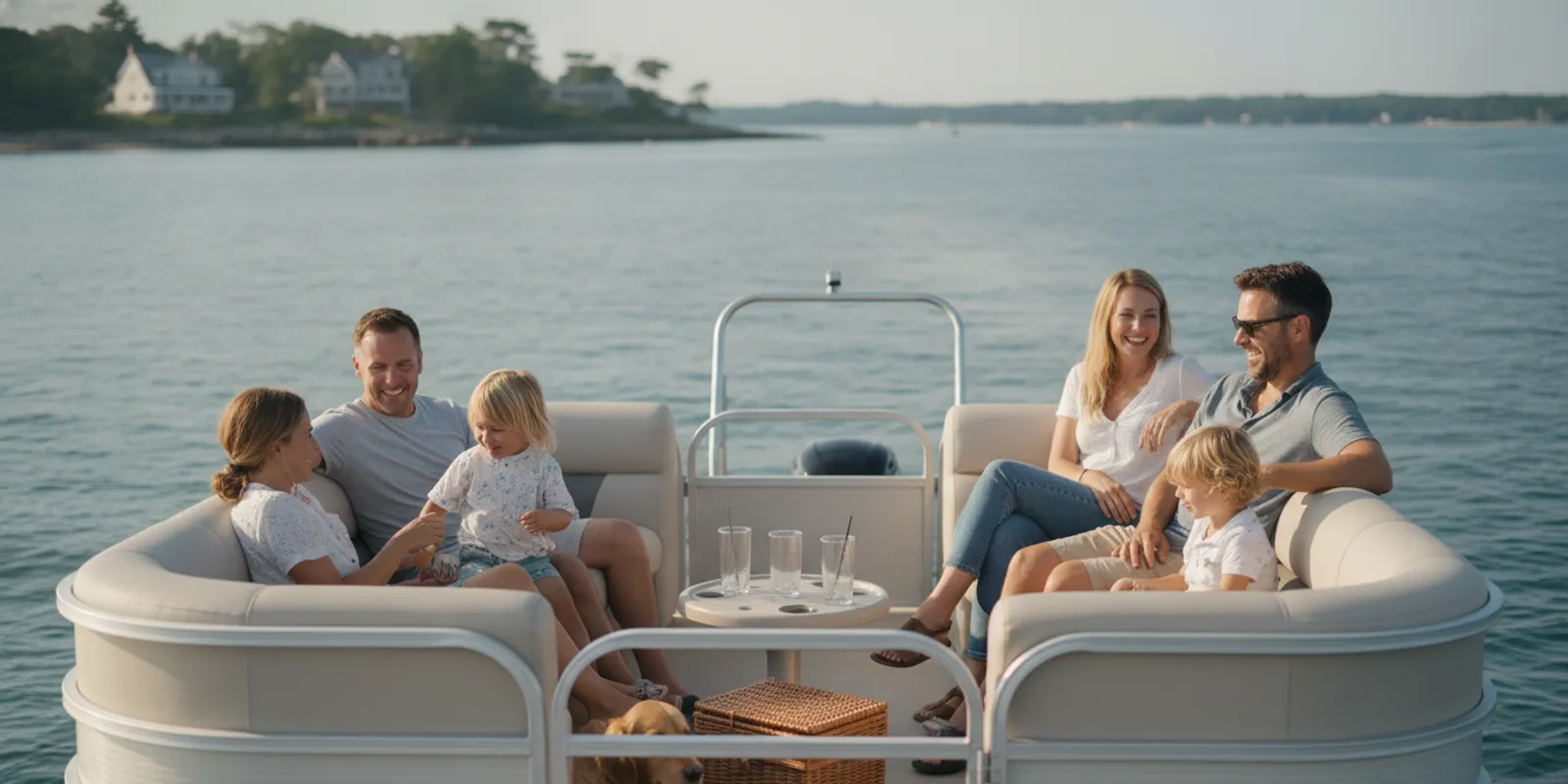
A pontoon boat is designed around a broad, open deck supported by two or more buoyant tubes, called pontoons, rather than one deep V-shaped hull. That layout can make room for conversation, easy movement, and a relaxed day on the water. For Massachusetts boaters, the right fit depends on the water you plan to explore, the people coming aboard, and how much open-deck comfort matters to you.
Schedule a tour and talk through your boating plans
How Is a Pontoon Boat Designed?
A traditional pontoon boat places a platform above two long, sealed tubes. Those tubes provide buoyancy and support the deck. Some modern designs use three tubes, often called a tritoon layout. The hull arrangement, tube dimensions, engine, deck plan, and weight all affect how a particular boat handles. The word “pontoon” tells you something about the basic structure, but it does not guarantee that every model rides or performs the same way.
The wide deck is a defining feature. Instead of arranging most seats in a narrow line, a pontoon layout often creates room for benches, a table, and open space between seating areas. This can work well for a group that wants to chat, share a meal, or enjoy a slow cruise. The deck may also make it easier to move around than on a boat with a more confined cockpit, though boarding and walking space still depend on the specific design.
There are tradeoffs. A broad deck catches wind, and a pontoon’s handling and ride can feel different from a hull shaped to cut through choppy water. Engine power and hull design matter, as do conditions and how the boat is loaded. A model built for leisurely cruising is not automatically the right tool for every kind of boating day.
When you compare layouts, look beyond the name on the boat. Check the seating arrangement, access to the water, shade, storage, and the path from the boarding point to the seats. Consider how the layout works for the people who will actually be aboard: a couple looking for room to stretch out has different needs from a family with children or a group of adults.
Think of the deck as a small shared living space, not just a collection of seats. Notice whether passengers can pass one another without stepping over bags, whether the table interrupts the main walkway, and whether the areas used for boarding remain clear when everyone is seated. If your group expects to bring a cooler, jackets, or fishing gear, imagine where those things will go before deciding that a layout feels roomy. A boat can look spacious in a photo and feel crowded once people and belongings are aboard.
What Does a Pontoon Boat Do Well?
Comfort and social space are often the main reasons people consider a pontoon. The open floor plan lets passengers face one another rather than all sitting in a row. On a calm day, that can make a short cruise feel more like time together and less like a trip from point A to point B. The layout can also suit people who want space to sit, move, and take in the view without planning a high-speed outing.
Passenger capacity is another important part of the design, but never judge it by appearance or by how many seats you can count. Capacity is a limit set for the specific boat, and it is connected to safe loading. The Wisconsin administrative code, for example, addresses a method for determining the weight capacity of certain one-deck pontoon boats; that rule is a reminder that capacity relates to weight as well as the number of people aboard. See the Wisconsin pontoon capacity provision for its specific scope. Follow the capacity information and operating instructions for the actual vessel, not a general estimate.
For a practical check, count everyone who will be aboard, then include the gear and supplies you plan to bring. A group of adults with bags and a cooler places a different load on a boat than the same number of passengers carrying only small personal items. Do not try to calculate a new safe limit yourself; use the boat’s posted capacity and ask the operator if you have questions about a planned load.
Some pontoon boats are outfitted for fishing, while others focus more on lounging or cruising. Features vary by model. Before choosing, ask what the boat includes and whether those features match your plans. A fishing setup may have different seating and storage priorities from a boat intended for a casual family outing. The Massachusetts boat fleet overview can help you understand the kinds of vessels available through the club, while a conversation with the team can clarify details for a particular day.
How Stable and Comfortable Is a Pontoon Boat?
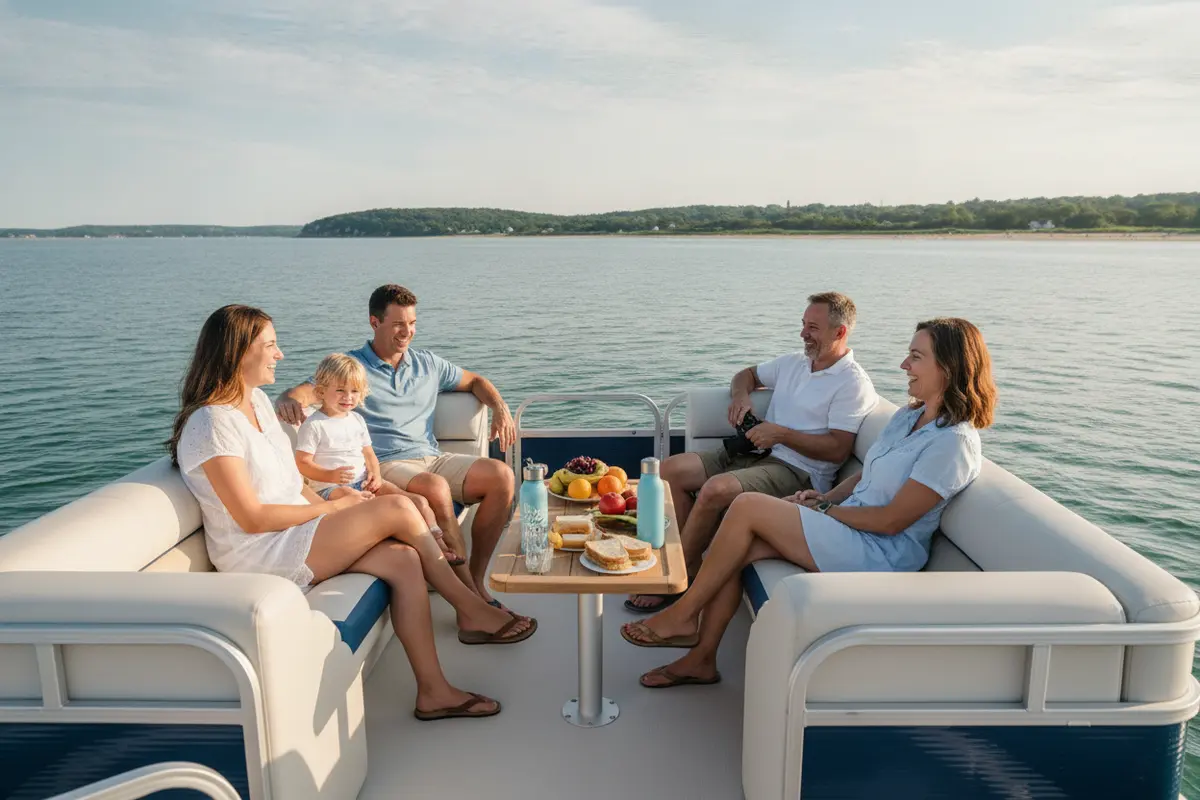
Pontoons spaced beneath a broad deck can create a steady-feeling platform in suitable conditions. That can be reassuring for passengers who prefer an unhurried ride or want to move around while the boat is stopped. Still, “stable” does not mean that a boat cannot rock, that it is suitable for every passenger, or that conditions do not matter. Wake, wind, waves, loading, and the boat’s design all affect comfort.
Comfort is also more than the ride. Think about how long you expect to be out, whether there is shade, where bags can go, how passengers get on and off, and whether everyone has a comfortable seat. If someone in your group has mobility or balance concerns, ask specific questions about the boarding arrangement and the deck before making plans. A wide platform can be helpful, but it should not be treated as a guarantee of accessibility.
Ask how the boat is intended to be operated and what conditions are appropriate for it. A pontoon that feels pleasant on protected water may not be the best choice for exposed water in changing conditions. Massachusetts offers varied boating environments, from harbor settings to more open coastal waters. Your route, forecast, and operator’s guidance should shape the plan, not just the boat’s seating capacity.
Small details can make the day more comfortable. Bring layers for a change in wind, protect items that should stay dry, and agree on where bags and gear will be stowed. If you are bringing food, check what is practical on the particular vessel. Keep walkways clear, distribute people and gear sensibly, and avoid loading one side of the boat heavily.
Before departure, ask the operator to point out the safe places to sit or hold on while underway, how passengers should move when the boat is in motion, and where to keep loose items. A short explanation at the dock helps everyone understand the same basic expectations. For a group with children or first-time passengers, decide who will help them board and where they should sit before the boat leaves the dock. Keep the plan simple, follow the operator’s directions, and adjust if conditions change.
How Should You Match a Pontoon to Your Day on Massachusetts Waters?
Start with the outing, not the boat label. Are you hoping for a quiet cruise, a few hours with family, a fishing trip, or a flexible day where the plan may change? The answer affects the amount of seating, storage, shade, and open deck you will value. Then consider where you will go, who is joining you, and how much time you want to spend underway versus at a stop.
Use this comparison as a planning aid. It describes common priorities, not a promise about every pontoon model or a substitute for the vessel’s own specifications.
| Planning priority | What to check on the boat | Why it matters |
|---|---|---|
| Conversation and relaxing | Seat arrangement, open deck, shade, and table space | These details shape how naturally your group can spend time together. |
| Family outing | Boarding points, clear walkways, storage, and the posted capacity | A practical layout helps passengers move safely and keep gear organized. |
| Fishing | Fishing-oriented features, room for equipment, and seating placement | Gear and activity needs can differ from a leisure cruise. |
| Coastal route | Intended operating conditions, forecast, and operator guidance | A comfortable day depends on matching the route and conditions to the specific vessel. |
For a North Shore outing, think through the home port and route before you reserve or plan. A Boston-based day and a day departing from Danvers or Gloucester may involve different travel and water conditions. The club’s Boston boating information, Danvers location details, and Gloucester location details offer starting points for thinking about where you want to boat. They are not a substitute for checking current availability and conditions.
Before you commit to a route, make a simple plan: identify who is coming, estimate the time on the water, decide what you will bring, and ask whether the vessel’s layout suits the group. If you are new to boating, ask what instruction and support are available. The club’s on-the-water training information explains the role of training, and its Boating 101 guide can help you get familiar with basic topics before your outing.
A useful planning sequence is to settle the people and purpose first, then the location, and only then the boat details. For example, a relaxed afternoon with a few guests may call for easy conversation, shade, and simple boarding. A group with fishing equipment may need different storage and seating arrangements. Once you have that picture, ask about the specific vessel, its capacity, and any operating limits. This prevents a common mismatch: choosing a boat for its appearance, then discovering that the gear, route, or passenger needs do not fit the plan.
Also build flexibility into the day. A route that sounds appealing on a map may feel less comfortable if wind or waves increase, so be willing to shorten or change plans based on current conditions and the operator’s advice. Agree on a simple fallback before leaving, such as returning earlier or staying in a more suitable area. The goal is not to force a planned itinerary; it is to choose an outing that remains comfortable for the people aboard.
What Should You Ask Before Choosing a Pontoon Boat?
A few direct questions can reveal whether a particular boat suits your plans. Ask for the capacity and follow the displayed limit. Confirm the boarding process and how much room passengers have to move. If shade, storage, or a specific seating arrangement matters, ask whether that feature is on the vessel you will use rather than assuming it comes with every pontoon.
It also helps to ask about the boat’s intended use and the conditions in which it is appropriate. If you expect to carry fishing equipment, coolers, or other gear, mention it when you discuss the plan. People and equipment both add weight. Do not assume that a boat with many seats has room for any number of passengers or that adding gear has no effect.
To make the conversation useful, describe a real outing rather than asking only whether the boat is “big enough.” You might explain how many people are coming, whether anyone needs extra time or help boarding, how long you expect to be out, and what you plan to bring. Then ask the operator to walk you through the layout and any limitations that matter for that plan. Concrete questions make it easier to identify a mismatch before the day begins.
For a membership-based boating option, clarify how access works, what training is included, what reservation expectations apply, and how to get help with questions. Read the Massachusetts membership overview and frequently asked questions, then speak with a real person about the details that matter to you. Karen or Eric can help prospective members understand the local operation and discuss whether the boating experience fits their plans.
Facilities can vary from boat to boat. Some boats have an onboard head (toilet); a few have sinks, and none have showers or elaborate full bathrooms. Do not assume a particular pontoon has a specific facility. Ask which vessel would be used and what it includes. Clear answers upfront make it easier to plan a comfortable outing without expecting amenities that may not be aboard.
Before you finish planning, confirm a few final details: where and when to meet, what instruction or orientation to expect, what to bring, and whom to contact if your plans change. Keep the confirmation specific to the day and vessel rather than relying on assumptions based on another boat. A short checklist can help: passenger count, posted capacity, gear, boarding needs, onboard facilities, expected conditions, and the route or outing plan. If any answer is unclear, ask before departure rather than trying to resolve it once underway.
Could a Pontoon Boat Fit Your Boating Style?
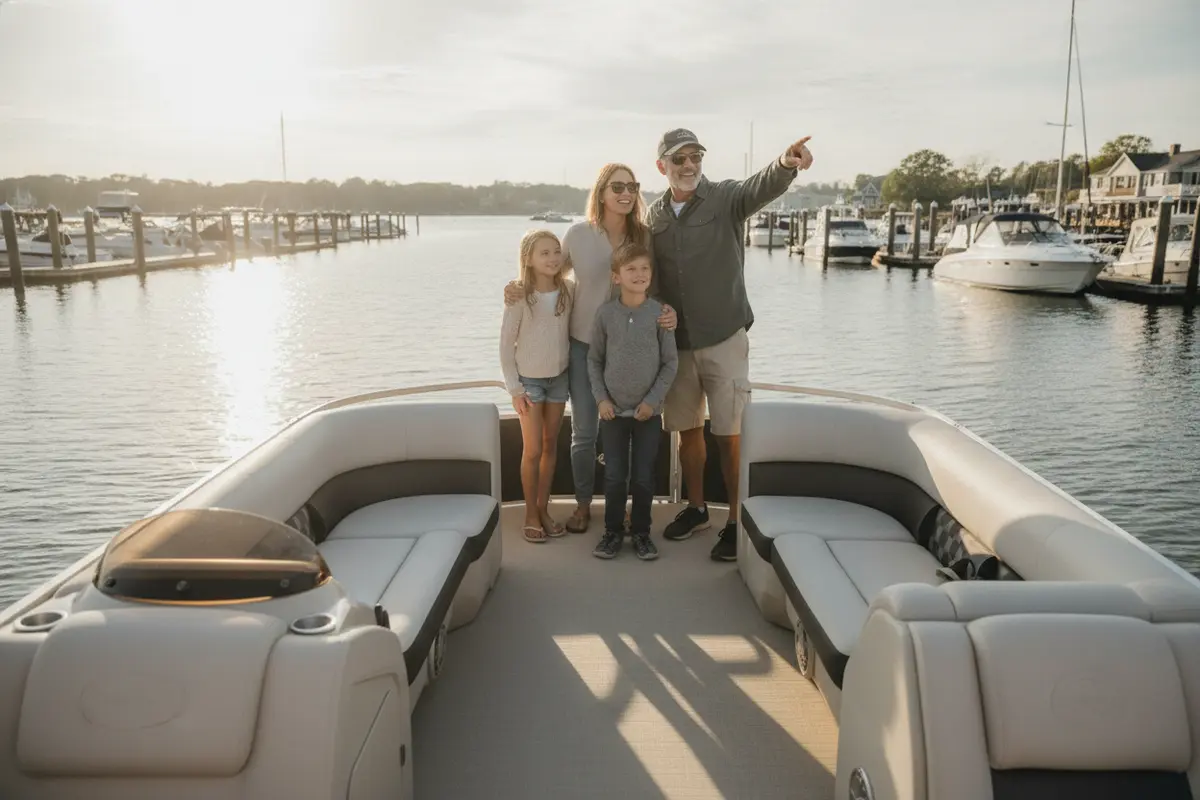
A pontoon may be worth considering if your favorite part of boating is sharing a comfortable space with other people. It can be a natural match for easygoing cruising and time together, especially when an open deck and flexible seating matter more than a performance-focused ride. The best fit is the specific vessel that suits your group and the conditions you expect.
It may be less suitable if your plans depend on a different hull design, a specialized activity, or conditions outside that boat’s intended use. Do not choose based on a general reputation or a photo alone. Compare the actual layout, capacity, operating guidance, and features with your priorities. There is no single “best” pontoon for every passenger or every day.
One simple way to decide is to list your three non-negotiables and three preferences. Non-negotiables might include enough capacity for the group, a manageable boarding arrangement, and space for essential gear. Preferences might include a particular seating layout, shade, or a table. Ask about the non-negotiables first. If the boat meets those needs, then compare the preferences. This keeps a tempting extra feature from distracting from the basics that will shape your day.
Also consider how often you want to get out and how much responsibility you want to take on. Owning a boat means managing the vessel as well as planning the outing. A boat club membership is another way to access boating, with local details and terms that you should review before deciding. The guide to what boat club membership includes can help you frame those questions without assuming that every membership or boat is the same.
Contact Karen or Eric to discuss a tour
Frequently Asked Questions About Pontoon Boats
What is the difference between a pontoon boat and a tritoon?
A pontoon boat commonly has two supporting tubes. A tritoon has three. The extra tube can change how a particular model supports its deck and performs, but it does not by itself tell you the boat’s capacity, comfort, or suitability. Compare the specifications and intended use of the actual vessel.
Are pontoon boats stable?
A pontoon’s spaced tubes and broad platform can feel steady in appropriate conditions, but no design eliminates motion or makes every condition safe. Wind, wake, waves, loading, and boat design all matter. Follow the operator’s guidance and the vessel’s capacity and operating instructions.
How many people can a pontoon boat carry?
There is no single passenger number that applies to all pontoon boats. Use the capacity information for the specific vessel and account for the weight of passengers and gear. Never estimate capacity by counting seats or comparing one model with another.
Is a pontoon boat a good choice for a Massachusetts day trip?
It can suit a relaxed outing when its layout, capacity, and intended operating conditions match your group and route. Massachusetts waters vary, so plan around the location, forecast, and boat-specific guidance. Ask questions about the exact vessel and the support available before you set out.
A little planning helps you choose a boat for the day you actually want: check the layout, capacity, facilities, route, and conditions, then make sure the people aboard know what to expect. With those details clear, you can focus on enjoying time together on the water.